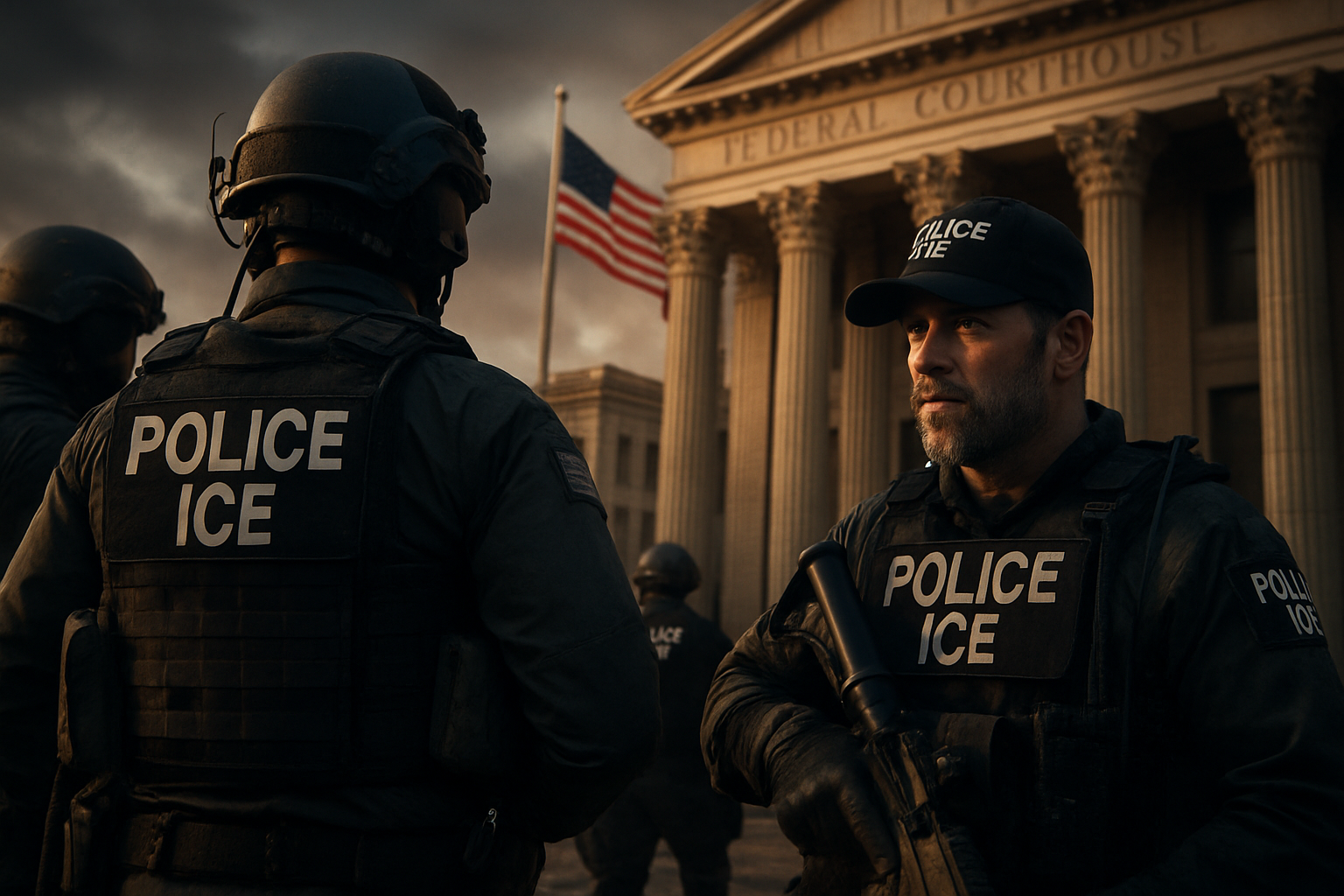
A federal judge has delivered a scathing rebuke to the Trump administration's immigration enforcement tactics, accusing officials of implementing "terror" against immigrants while striking down key detention policies, as new regulations simultaneously tighten requirements for refugees seeking permanent residence.
The dual developments represent the latest clash between federal courts and the Trump administration's expanded immigration crackdown, which has faced mounting legal challenges and public opposition since Operation Metro Surge began in December 2025.
Federal Court Strikes Down Mass Detention Policy
U.S. federal judge threw out an administrative board's decision that had endorsed the Trump administration's policy of subjecting thousands of people arrested during immigration operations to mandatory detention without bond hearings. The ruling represents a significant setback for administration officials who have dramatically expanded detention capabilities as part of their enforcement strategy.
The judge's decision came amid broader judicial pushback against immigration policies, with multiple federal courts requiring Immigration and Customs Enforcement (ICE) agents to obtain warrants before arrests unless there is an immediate flight risk. The Oregon federal court ruling has become a model for other jurisdictions seeking to establish oversight of federal immigration enforcement.
This latest judicial intervention follows a pattern of federal court resistance to Trump administration immigration policies. Federal Judge Ana Reyes previously blocked the termination of Temporary Protected Status for approximately 350,000 Haitians, citing evidence of discriminatory intent in the administration's decision-making process.
New Refugee Restrictions Take Effect
Simultaneously, the Trump administration has implemented new regulations that significantly tighten requirements for refugees without permanent resident status. Under the new rules, any refugee who has not initiated the green card application process within their first year of legal entry to the United States will be subject to arrest and detention while their immigration status undergoes review.
The policy represents a dramatic shift from previous practices that allowed refugees more flexibility in timing their permanent residence applications. Immigration attorneys warn the new requirements could affect thousands of refugees who may be unaware of the strict timeline or face barriers in accessing legal assistance.
"This measure forces refugees into an impossible situation where bureaucratic delays could result in detention and deportation,"
— Immigration rights advocate
The refugee policy change comes as the administration continues its broader immigration enforcement expansion, which has included the deployment of thousands of federal agents across multiple states and the construction of new detention facilities.
Historical Context of Enforcement Escalation
The current immigration policy battles stem from the Trump administration's dramatic escalation of enforcement activities since returning to office in January 2025. Operation Metro Surge, which began in Minnesota in December 2025, has resulted in over 4,000 arrests and the deployment of up to 3,000 federal agents at its peak.
The operation has faced intense scrutiny following the fatal shootings of two U.S. citizens, Alex Pretti and Renee Nicole Good, by ICE agents in January 2026. These incidents sparked nationwide protests and contributed to a three-day government shutdown, ultimately leading to the implementation of mandatory body cameras for ICE agents in Minneapolis.
According to a University of California study, deportations have quadrupled during the first nine months of Trump's second administration compared to previous levels. The aggressive enforcement approach has drawn criticism from civil rights organizations and prompted widespread community resistance.
Public Opinion and Political Response
Recent polling data reveals significant public concern about the administration's immigration enforcement tactics. An NPR/PBS/Marist poll found that two-thirds of Americans believe ICE has "gone too far" in its enforcement activities, representing a substantial shift in public opinion.
Congressional Democrats have responded by threatening to block Department of Homeland Security funding unless "drastic changes" are implemented in ICE operations. The current DHS funding only extends through February 13, 2026, setting up a potential political battle over immigration enforcement methods.
House Speaker Mike Johnson has scheduled two weeks of ICE reform debates in response to mounting pressure from both Democratic lawmakers and some Republicans who have expressed concerns about the scope and methods of current enforcement operations.
Economic and Social Impact
The immigration crackdown has created significant economic disruption across multiple sectors. Immigrant families are increasingly avoiding essential services, while workforce shortages have emerged in agriculture, hospitality, and healthcare industries that traditionally rely on immigrant labor.
Major corporations, including Target, have faced employee pressure over their workplace protocols regarding ICE operations and demands for clearer guidance on federal agent access to company properties. The economic ripple effects extend beyond immediate enforcement actions, affecting supply chains and business operations across affected regions.
Native American communities have reported increased incidents of racial profiling and wrongful detentions, despite tribal members' indigenous status. Some tribes have established safe zones and are providing tribal identification cards to protect community members from enforcement actions.
International Attention and Diplomatic Concerns
The immigration enforcement expansion has drawn extensive international media coverage, with European, Asian, and American outlets highlighting tensions within the U.S. immigration system. The Mexican government has issued warnings to its nationals about ICE operations during public events, including major sporting events like the Super Bowl.
Daily deportation flights from Minneapolis-St. Paul International Airport have become a visible symbol of the enforcement campaign, with professional airplane enthusiasts documenting the systematic operations using federally chartered aircraft to transport detainees to other states and countries.
Legal Challenges and Implementation Hurdles
Civil rights organizations have filed multiple lawsuits challenging various aspects of the administration's immigration policies, including visa suspensions affecting 75 countries. These legal challenges have created a complex patchwork of court rulings that federal agencies must navigate while implementing enforcement policies.
The administration faces significant implementation challenges beyond court orders. The rapid expansion of detention facilities and agent deployment has strained resources and raised questions about the sustainability of current enforcement levels. A $38.3 billion plan to retrofit warehouses into regional detention centers represents the largest immigration detention infrastructure expansion in U.S. history.
Looking Forward
The intersection of new refugee restrictions and federal court resistance to mass detention policies highlights the complex legal and political landscape surrounding immigration enforcement. While the administration has shown tactical flexibility in some areas, such as reducing agent deployment in Minnesota following public outcry, the overall enforcement strategy remains unchanged.
The coming weeks will be critical as Congress debates DHS funding and federal courts continue to weigh in on the legality of various enforcement practices. The outcome of these political and legal battles will shape immigration policy implementation for the remainder of the Trump administration and potentially influence approaches to immigration enforcement for years to come.
As the administration continues to test the boundaries of federal immigration authority, the tension between executive enforcement priorities and judicial oversight represents a fundamental challenge to the balance of powers in American governance. The resolution of these conflicts will have lasting implications for both immigration policy and the broader relationship between federal enforcement agencies and the courts that oversee them.