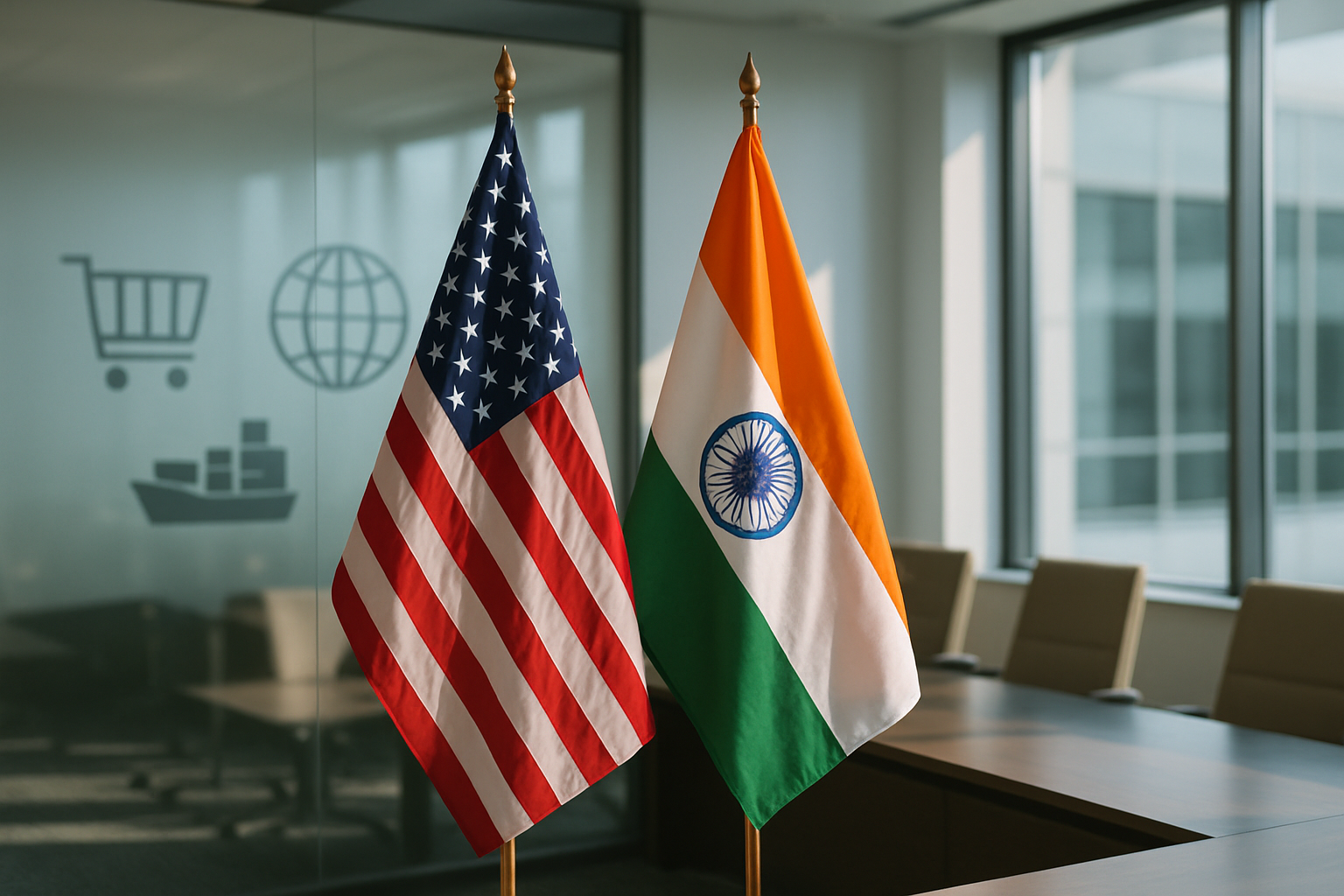
President Donald Trump announced Monday that the United States and India have reached a comprehensive trade agreement that will significantly reduce bilateral tariffs and see India end its purchases of Russian oil, marking a major diplomatic breakthrough between the world's two largest democracies.
The deal, confirmed by both Trump and Indian Prime Minister Narendra Modi following a phone conversation, represents a dramatic shift in US-India trade relations. Under the agreement, the United States will reduce its reciprocal tariff rate on Indian goods from 50% to 18%, while India will eliminate all tariffs and non-tariff barriers on American products, reducing them to zero percent.
In a post on Truth Social, Trump revealed that Modi "agreed to stop buying Russian oil, and to buy much more from the United States and, potentially, Venezuela." The US President suggested this shift could help "end the war" between Russia and Ukraine by depriving Moscow of crucial revenue used to finance its military operations.
Background: The Path to Agreement
The trade deal comes after months of escalating tensions over tariffs. Trump had previously imposed a 50% tariff on India, with 25% specifically targeting crude oil imports from Russia. Trump administration officials repeatedly argued that India's crude oil purchases from Russia helped finance the latter's war against Ukraine.
The agreement represents a significant reversal from the initial tariff war. According to sources familiar with the negotiations, Trump cited "friendship and respect" for Prime Minister Modi as key factors in reaching the deal. The reduced 18% US tariff rate on Indian goods is reportedly better than rates applied to Vietnam, Bangladesh, and Pakistan.
Modi's Response and Economic Implications
Prime Minister Modi welcomed the agreement enthusiastically, thanking President Trump "on behalf of the entire Indian population" and describing the cooperation between the world's largest democracies as beneficial for both peoples. In his response, Modi stated he looked forward to working closely with Trump "to take our cooperation to new heights."
"When two large economies and the world's largest democracies work together, it benefits people and creates new opportunities."
— Narendra Modi, Prime Minister of India
The timing of the US-India deal is particularly significant as it comes just days after India and the European Union announced what both sides called the "mother of all" trade deals. While the EU remains India's largest trading partner as an economic bloc, the United States continues to be India's single largest individual trading partner.
Energy Security and Geopolitical Impact
The agreement's provisions regarding Russian oil represent a major geopolitical shift. India has been one of Russia's largest oil customers since the Ukraine war began, with these purchases providing Moscow with substantial revenue. Trump had previously indicated that getting India to stop buying Russian oil was a priority for his administration.
Under the new arrangement, India will not only cease Russian oil imports but will "buy much more from the United States and, potentially, Venezuela." This shift aligns with broader US strategy to isolate Russia economically while strengthening energy partnerships with key allies.
The move is expected to have significant implications for global energy markets. Russia has relied heavily on oil exports to India and other Asian nations to offset reduced sales to European countries following sanctions. India's withdrawal from this market could further strain Russian finances and limit Moscow's ability to fund its military operations.
Trade Relations Context
The breakthrough in US-India trade relations represents a dramatic improvement from earlier tensions. Trump had initially imposed heavy tariffs as part of his broader trade strategy, arguing that previous administrations had allowed unfair trading relationships to develop. The 50% tariff on Indian goods was among the highest imposed on any major trading partner.
Industry analysts suggest the deal could unlock significant new trade flows between the two economies. With India eliminating tariffs on US goods entirely, American exporters are expected to gain substantial competitive advantages in the Indian market. The reduced US tariffs on Indian products should similarly boost Indian exports to America.
Regional and Global Implications
The US-India trade agreement has broader implications for regional dynamics, particularly regarding China and Russia. Strengthening economic ties between Washington and New Delhi fits into the broader framework of the Quad partnership, which also includes Australia and Japan, aimed at balancing Chinese influence in the Indo-Pacific region.
For Russia, losing India as a major oil customer represents both an economic and strategic blow. India's energy imports have provided Russia with crucial hard currency revenues during a period of extensive Western sanctions. The shift toward American and potentially Venezuelan oil suppliers marks a significant realignment in global energy relationships.
European allies are likely to view the agreement positively, as it addresses long-standing concerns about indirect financial support for Russia's military operations through energy purchases. The deal also demonstrates the effectiveness of coordinated pressure from Western allies in influencing third-party relationships with Russia.
Implementation and Future Prospects
While both leaders have announced the agreement, specific implementation timelines and mechanisms remain to be clarified. Trade experts note that such comprehensive tariff reductions typically require legislative approval and regulatory processes that can take months to complete.
The energy component of the deal will require India to restructure its oil import relationships and supply chains, which have been optimized for Russian crude over the past several years. This transition will likely involve negotiations with American energy companies and potentially new infrastructure investments.
Looking ahead, the agreement could serve as a template for broader US trade relationships under the Trump administration. The combination of tariff reductions, market access improvements, and geopolitical realignments reflects Trump's transactional approach to international relations, where economic and security considerations are closely interlinked.
The success of this deal may encourage similar negotiations with other key trading partners, particularly those currently purchasing Russian energy. For India, the agreement represents both economic opportunities and strategic positioning as it navigates relationships with major powers in an increasingly complex global environment.