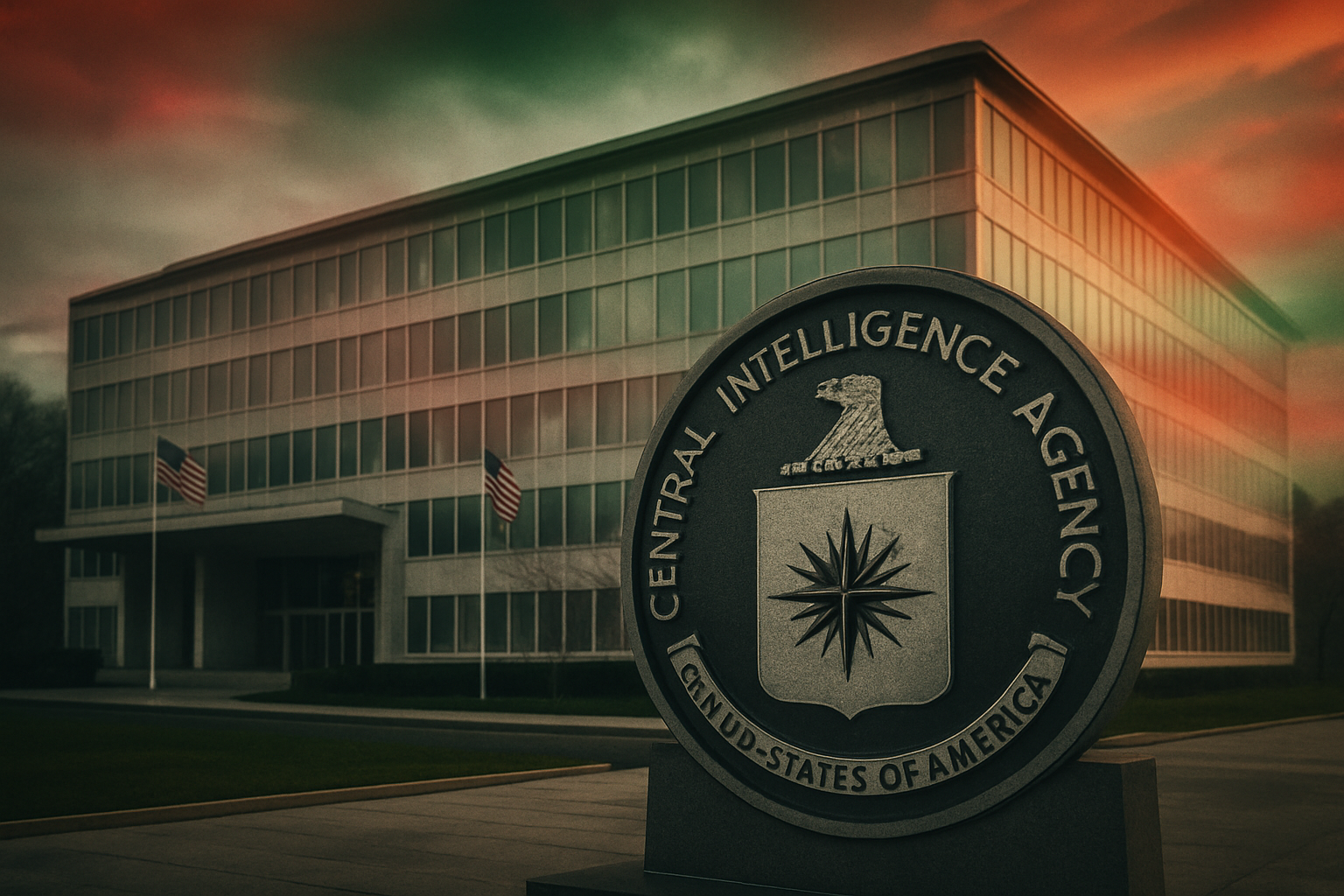
US intelligence agencies have concluded that Iran's political leadership remains largely intact and is not at immediate risk of collapse despite nearly two weeks of relentless bombardment by American and Israeli forces, contradicting President Donald Trump's public assertions of imminent regime change, according to multiple sources familiar with classified assessments.
A "multitude" of intelligence reports provide "consistent analysis that the regime is not in danger" of collapse and "retains control of the Iranian public," said one of three sources granted anonymity to discuss sensitive intelligence findings. The latest comprehensive assessment was completed within the last few days, the source confirmed.
The intelligence evaluation directly challenges President Trump's repeated claims that Operation Epic Fury has brought Iran's Islamic Republic to the brink of collapse. Trump has publicly declared Iran's "unconditional surrender" is imminent and claimed the right to personally choose Iran's next Supreme Leader, rejecting Mojtaba Khamenei as a "lightweight."
Intelligence vs. Political Narrative
The disconnect between classified intelligence assessments and public political rhetoric has created tensions within the administration as the conflict enters its second week. With mounting political pressure over soaring oil costs that have pushed prices past $80 per barrel, Trump suggested he will end what he calls "the biggest US military operation since 2003" within weeks.
However, finding an acceptable conclusion to the war could prove difficult if Iran's hardline leadership remains firmly entrenched, as intelligence reports suggest. The analysis indicates that despite the death of Supreme Leader Ali Khamenei on March 1 and the systematic targeting of Iran's military infrastructure, the regime's governance structures have adapted to wartime conditions.
Israeli officials have privately acknowledged in closed-door meetings that they lack confidence the war will lead to regime change in Iran, according to a senior official familiar with the discussions. This represents a significant departure from public statements by Israeli Defense Minister Israel Katz, who has claimed Israel has "systematic plans" to "eradicate" Iran's government.
Succession Crisis Management
The intelligence assessments reveal that Iran's constitutional succession mechanisms have functioned more effectively than anticipated. Following Khamenei's confirmed death, a three-member transitional council consisting of President Masoud Pezeshkian, judiciary head Gholamhossein Mohseni-Ejei, and Guardian Council representative Ayatollah Alireza Arafi has maintained governmental continuity.
Sources indicate that Mojtaba Khamenei, the late Supreme Leader's son, has emerged as the favored candidate for permanent succession—marking the Islamic Republic's first hereditary transition. CIA assessments suggest a Revolutionary Guards member is likely to assume the role, indicating a shift toward more hardline military governance rather than the traditional clerical leadership.
The Assembly of Experts, comprising 88 senior clerics responsible for selecting the Supreme Leader, continues to function despite wartime conditions. Intelligence reports describe a regime that has consolidated power around military and security apparatus while maintaining popular control through a combination of coercion and nationalist appeals during the foreign attack.
Global Crisis Escalation
The assessment comes as the Iran conflict has triggered the most serious international crisis since the Cold War's end, with global implications extending far beyond the Middle East. Over 18,000 flights have been cancelled worldwide—the most extensive aviation disruption since COVID-19—as eight countries maintain simultaneous airspace closures.
Iran's closure of the Strait of Hormuz, through which 40% of global oil passes, has stranded more than 150 tankers in the Persian Gulf worth billions in cargo. Major shipping companies Maersk and MSC have suspended operations entirely, while Qatar has halted LNG production, affecting approximately 20% of global exports.
Natural gas prices have surged 24% in Europe and 78% in the United States, creating energy security concerns across allied nations. The economic disruption has prompted the largest international evacuation since the Arab Spring in 2011, with Australia reporting 115,000 trapped nationals and Germany attempting to extract 30,000 stranded tourists.
Iranian Retaliation Capabilities
Operation True Promise 4, Iran's systematic retaliation campaign, has demonstrated the regime's continued military capabilities despite intensive bombardment. The Islamic Revolutionary Guard Corps has maintained its doctrine of "no red lines remain," successfully targeting US and allied facilities across the region.
Casualties from Iranian counterattacks include one civilian killed in Abu Dhabi, 32 injured in Kuwait airport strikes, eight wounded in Qatar despite Patriot missile interceptions, and significant damage to infrastructure in Cyprus—marking the first attack on European territory since World War II. The targeting has prompted an unprecedented naval coalition response involving British, Spanish, Italian, French, Dutch, and Greek vessels protecting European interests.
The intelligence assessment notes Iran's ability to maintain these operations while under intensive assault indicates substantial military resilience and command structure survival. The USS Charlotte's sinking of the Iranian frigate IRIS Dena off Sri Lanka—the first enemy vessel sunk by a US submarine since World War II—has expanded the conflict into the Indian Ocean but has not significantly degraded Iran's retaliatory capabilities.
Regional Coalition Strain
The unprecedented coalition of Saudi Arabia, UAE, Qatar, and Egypt that initially supported diplomatic engagement with Iran has come under severe strain as Iranian retaliation directly targets member territories. Egyptian President Abdel Fattah al-Sisi's condemnation of attacks on "sisterly Arab countries" and warnings of "comprehensive chaos" reflect growing regional concerns about conflict escalation.
Intelligence sources indicate that the coalition's fracturing poses strategic challenges for containing the conflict within Iran's borders. The systematic Iranian targeting of Gulf states represents a deliberate strategy to pressure regional governments and complicate US alliance structures.
Nuclear Diplomacy Breakdown Context
The current military escalation followed the complete collapse of nuclear negotiations despite achieving the most significant diplomatic progress since the 2018 JCPOA withdrawal. Geneva talks had established a "broad agreement on guiding principles" through Swiss-Omani mediation, representing the closest approach to a breakthrough in years.
However, fundamental scope disagreements proved insurmountable. Iran excluded ballistic missiles and regional proxy activities as "red lines," demanding nuclear-only negotiations, while the US insisted on comprehensive agreements addressing missiles, armed groups, and human rights concerns.
Intelligence assessments note that Iran continues uranium enrichment at 60% purity—approaching the 90% weapons-grade threshold—with over 400 kilograms of material sufficient for multiple nuclear weapons if weaponized. The regime's commitment to maintaining nuclear capabilities despite military pressure suggests strategic patience and long-term planning rather than imminent collapse.
Congressional Scrutiny Intensifies
Bipartisan congressional pressure has intensified following the intelligence assessments, with lawmakers demanding comprehensive briefings on strategy, costs, and potential ground troop deployments. Senator Richard Blumenthal expressed being "more concerned than ever" about the prospect of American boots on the ground.
The conflict's unpopularity—with only 25% of Americans supporting continued strikes according to recent polling—has created what sources describe as "almost unprecedented" opposition for a military operation in its early stages. Financial markets have emerged as what officials term the "ultimate constraint" on continued escalation, with Pakistan's KSE-100 index experiencing its largest single-day decline in history.
Operation Epic Fury has cost $3.7 billion in its first week alone, at a rate of $891.4 million daily, making it one of the most expensive military operations per day since the 2003 Iraq invasion. Pentagon officials have quietly prepared operational plans extending through September, far beyond the initial 4-6 week timeline presented to Congress.
European Security Implications
The Iranian drone attack on RAF Akrotiri in Cyprus has fundamentally altered the conflict's scope, marking the first foreign attack on European territory since World War II. The EU's activation of its ESTIA evacuation mechanism represents the first implementation of the bloc's emergency response system.
Intelligence assessments indicate Iran's targeting of European territory was deliberate, designed to test NATO Article 5 responses and complicate the alliance structure supporting US operations. The unprecedented naval coalition deployment represents the most significant European military mobilization in decades.
Nuclear Governance Crisis
The Iran conflict occurs within a broader nuclear governance crisis following the February 5 expiration of the New START treaty—the first time in over 50 years that the United States and Russia lack nuclear constraints agreements. Combined with China's nuclear expansion and Iran's advancing capabilities, UN Secretary-General António Guterres has warned that nuclear risks are at their "highest level in decades."
Intelligence assessments suggest that Iran's ability to maintain nuclear operations under bombardment demonstrates sophisticated dispersal and protection measures. The regime's calculated decision to continue enrichment activities while under attack indicates strategic prioritization of nuclear capabilities over immediate economic or military relief.
Template-Setting Implications
The crisis represents what analysts describe as a "template-setting moment" for 21st-century conflict resolution, with implications extending decades beyond current events. The rapid transition from diplomatic breakthrough to military escalation demonstrates what intelligence officials characterize as the "fragility of modern crisis management in the multipolar era."
Success in containing the conflict to a regional confrontation could provide frameworks for future nuclear crisis resolution, while failure may accelerate global preferences for military solutions over diplomatic engagement. The stakes include regional war prevention, global energy security, nuclear governance credibility, and post-World War II international law enforcement mechanisms.
Looking Forward
As the conflict enters its third week, intelligence assessments suggest that achieving Trump's stated objective of regime change may require significantly more extensive military commitment than originally anticipated. The regime's demonstrated resilience, maintained popular control, and functional succession mechanisms indicate what sources describe as "strategic depth" in Iran's governance structures.
The intelligence community's conclusion that Iran's leadership "retains control of the Iranian public" despite two weeks of intensive bombardment suggests that military pressure alone may be insufficient to achieve political transformation objectives. With global economic pressures mounting and regional allies expressing concern about escalation, the administration faces increasingly complex strategic choices.
The assessment represents the most comprehensive intelligence evaluation of Iran's regime stability since the conflict began, providing policymakers with analysis that contradicts public optimism about imminent regime collapse. As one intelligence source noted, the "multitude of reports" consistently indicate that Iran's Islamic Republic, while significantly damaged, remains "not in danger" of immediate political collapse.