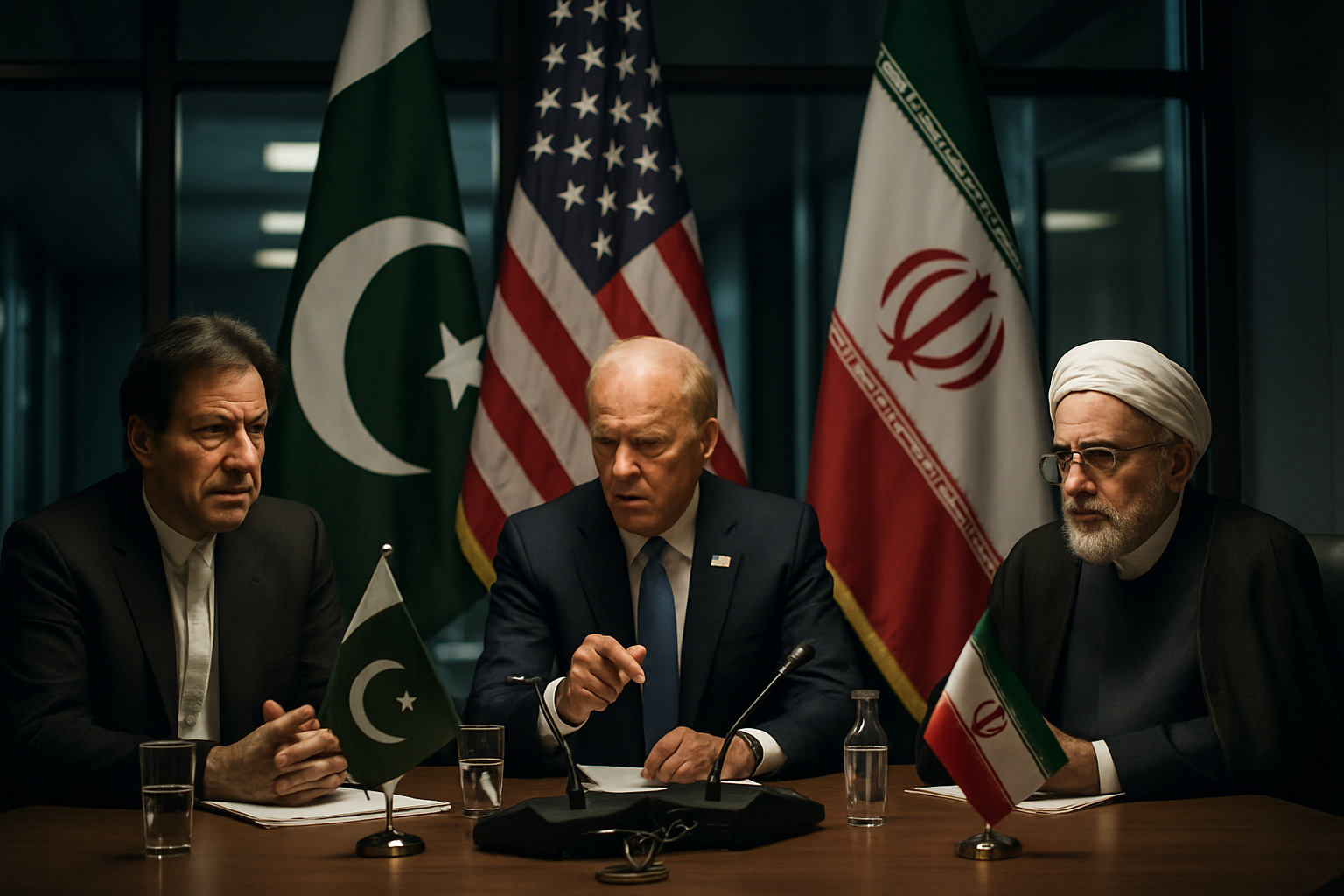
The fragile ceasefire between the United States and Iran, achieved through Pakistan's unprecedented diplomatic mediation just days ago, faces mounting pressures as regional tensions threaten to unravel the historic breakthrough that averted what many described as the most dangerous international crisis since the Cold War.
The Pakistan-mediated "Islamabad Accord" framework, which successfully brought both nations back from the brink of catastrophic conflict on April 8, 2026, is now being severely tested by multiple flashpoints across the Middle East. The agreement, reached merely 88 minutes before President Trump's "whole civilization will die tonight" deadline, had initially brought dramatic relief to global markets and ended a crisis that saw oil prices crash 20% from $119.50 Brent to below $100.
Ceasefire Under Immediate Strain
The most significant challenge to the ceasefire comes from a critical loophole regarding Lebanon's inclusion in the agreement. Israeli Prime Minister Netanyahu has explicitly stated that Lebanon operations are not covered by the US-Iran ceasefire, creating what Iranian officials call a "legitimate misunderstanding" about the scope of the accord.
This dispute has taken on deadly urgency following Israel's deadliest bombardment of Lebanon since the conflict began in March, killing 254 people and wounding over 1,100 in a single day. The strikes targeted more than 100 Hezbollah positions across Beirut, the Bekaa Valley, and southern Lebanon, creating what the World Health Organization warns is an unprecedented humanitarian catastrophe.
"Iran's parliament speaker Mohammad Bagher Ghalibaf warns 'time is running out' amid Israel's attacks on Lebanon."
— Al Jazeera reporting
Vice President J.D. Vance acknowledged the Iranian concerns as a "legitimate misunderstanding" but clarified that the United States never agreed to include Lebanon operations in the ceasefire framework. This interpretation has prompted Iran to threaten withdrawal from Friday's scheduled talks in Islamabad unless comprehensive enforcement is applied to all fronts.
Strait of Hormuz Complications
Adding to the tensions, Iran has implemented an unprecedented cryptocurrency payment system for oil tankers transiting the Strait of Hormuz, requiring $1 per barrel payments to avoid sanctions tracking. While the first ships have successfully navigated the strait under this system—including the Greek-owned NJ Earth and Liberia-flagged Daytona Beach—the arrangement represents a dramatic shift in maritime commerce affecting 40% of global oil transit.
President Trump has criticized Iran's implementation of the Strait protocols, claiming Tehran is not fully complying with the agreed-upon reopening terms. Washington accused Iran of breaching promises to fully open the strategic waterway, while Tehran cited ongoing Israeli attacks on Lebanon as justification for maintaining restrictions.
Pakistan's Historic Mediation Success
The current tensions underscore the remarkable achievement of Pakistan's diplomatic intervention. Prime Minister Shehbaz Sharif and Field Marshal Asim Munir successfully mediated the breakthrough through a sophisticated "message relay system" that maintained round-the-clock contact with US Vice President J.D. Vance and Iranian officials during the height of the crisis.
Pakistan's role as a "net regional stabilizer" represents a template-setting example of middle power diplomacy bridging major adversaries when traditional mechanisms fail. The International Monetary Fund has already warned that even with the ceasefire in place, the Iran conflict will cause permanent scarring on the global economy, reversing recent growth driven by AI investment and technological advances.
"In fact, had it not been for this shock, we would have been upgrading global growth."
— IMF Managing Director Kristalina Georgieva
Regional Coalition Under Pressure
The preservation of the unprecedented regional coalition—comprising Saudi Arabia, UAE, Qatar, and Egypt—remains critical to maintaining diplomatic momentum. This coalition weathered severe strain during the crisis when Iranian "Operation True Promise 4" attacks resulted in casualties across member territories: one killed in Abu Dhabi, 32 injured in Kuwait, and eight wounded in Qatar.
Egyptian President Abdel Fattah el-Sisi's warnings about "comprehensive chaos" have been heeded, with the coalition maintaining unified support for the diplomatic process despite the provocations. However, the current Lebanon crisis tests this unity as Arab nations watch Israel conduct systematic attacks on a neighboring Arab state.
Nuclear Diplomacy Window
The ceasefire has created a crucial window for addressing Iran's nuclear program, which had reached dangerous levels with 60% uranium enrichment and over 400kg of weapons-grade material—sufficient for multiple nuclear weapons. The crisis emerged from the complete collapse of Geneva nuclear talks in February, despite achieving what negotiators called "broad agreement on guiding principles."
This nuclear dimension adds urgency to the diplomatic efforts, particularly given that the New START treaty expired in February 2026, leaving the world without US-Russia nuclear constraints for the first time in over 50 years. UN Secretary-General António Guterres has described nuclear risks as being at their "highest in decades."
Economic Relief and Global Impact
The ceasefire has already provided significant economic relief globally. Asian markets experienced explosive rallies, with Pakistan's KSE-100 achieving a record 8.15% surge. The International Energy Agency is reducing its record 400 million barrel strategic reserve release as supply concerns ease.
Airlines are planning to resume Middle East routes after the crisis saw 18,000+ flights cancelled worldwide—the most severe aviation disruption since COVID-19. Dubai International Airport, which was shuttered due to missile damage, is preparing for reopening as regional stability improves.
However, vessel owners remain reluctant to send tankers through the Strait of Hormuz, fearing they could be stranded if the two-week ceasefire framework collapses. The shipping industry warns that full normalization will require months rather than weeks, given the complex logistics involved in remobilizing over 150 stranded tankers carrying billions in cargo.
Critical Talks Ahead
The scheduled Islamabad talks represent the most direct US-Iran diplomatic engagement in decades, with a high-level US delegation potentially including Vice President Vance, special envoy Steve Witkoff, and senior advisor Jared Kushner. Iranian President Masoud Pezeshkian has confirmed participation following what officials described as a "warm and cordial" conversation with Prime Minister Sharif.
Iran's 10-point proposal, which Trump's administration has accepted as a "workable basis for negotiations," addresses Hormuz protocols, sanctions relief, regional conflicts, and security guarantees—representing the most comprehensive US-Iran framework since the 2015 nuclear deal.
International Support and Challenges
China has expressed "full support" for Pakistan's mediation initiative, with Foreign Minister Wang Yi calling the talks "conducive to restoring normal navigation" in the Strait of Hormuz. Germany has noted "positive signs" for the direct talks, representing broader international investment in the diplomatic process.
However, fundamental disagreements persist. Iran maintains that ballistic missiles and regional proxy activities are "red lines" that cannot be included in negotiations, while the US continues to demand comprehensive agreements addressing missiles, armed groups, and human rights issues—the same structural disagreement that has prevented breakthroughs for over a decade.
Lebanon's Humanitarian Crisis
The ongoing Lebanese humanitarian catastrophe adds urgency to resolving the ceasefire scope disagreement. An estimated 1.2 million Lebanese—25% of the population—have been displaced, with emergency shelters overwhelmed and thousands sleeping on Beirut streets. The systematic targeting of medical infrastructure has resulted in 26 paramedics killed and 51 wounded since March, potentially constituting Geneva Conventions violations.
The collapse of the November 2024 US-French Israel-Hezbollah ceasefire, which had held for over a year until March 2026, demonstrates the fragility of negotiated agreements when underlying political tensions remain unresolved. Hezbollah's choice of "Iranian solidarity over Lebanese sovereignty" following Supreme Leader Ali Khamenei's death in March illustrates how regional dynamics can override local peace arrangements.
Looking Forward
The coming days will determine whether Pakistan's historic mediation success can be sustained and expanded into a lasting framework for regional stability. The two-week ceasefire window represents what UN Secretary-General Guterres has called "the greatest test of multilateral cooperation in the modern era."
Success in converting the temporary pause into a lasting peace framework could establish a new template for 21st-century conflict resolution, demonstrating that diplomatic innovation can prevail even in the darkest hours when the world faces catastrophic potential. Failure, however, could return the region to the most dangerous international crisis since the Cold War, with implications extending far beyond the Middle East.
As the world watches the unfolding diplomatic drama, the stakes remain maximum: regional war prevention, global energy security, nuclear governance credibility, and the effectiveness of international law enforcement in an increasingly multipolar world order. Pakistan's emergence as a crucial mediator demonstrates that middle powers can play decisive roles when traditional great power mechanisms fail, offering hope that innovative diplomacy can triumph over military escalation in our interconnected global system.