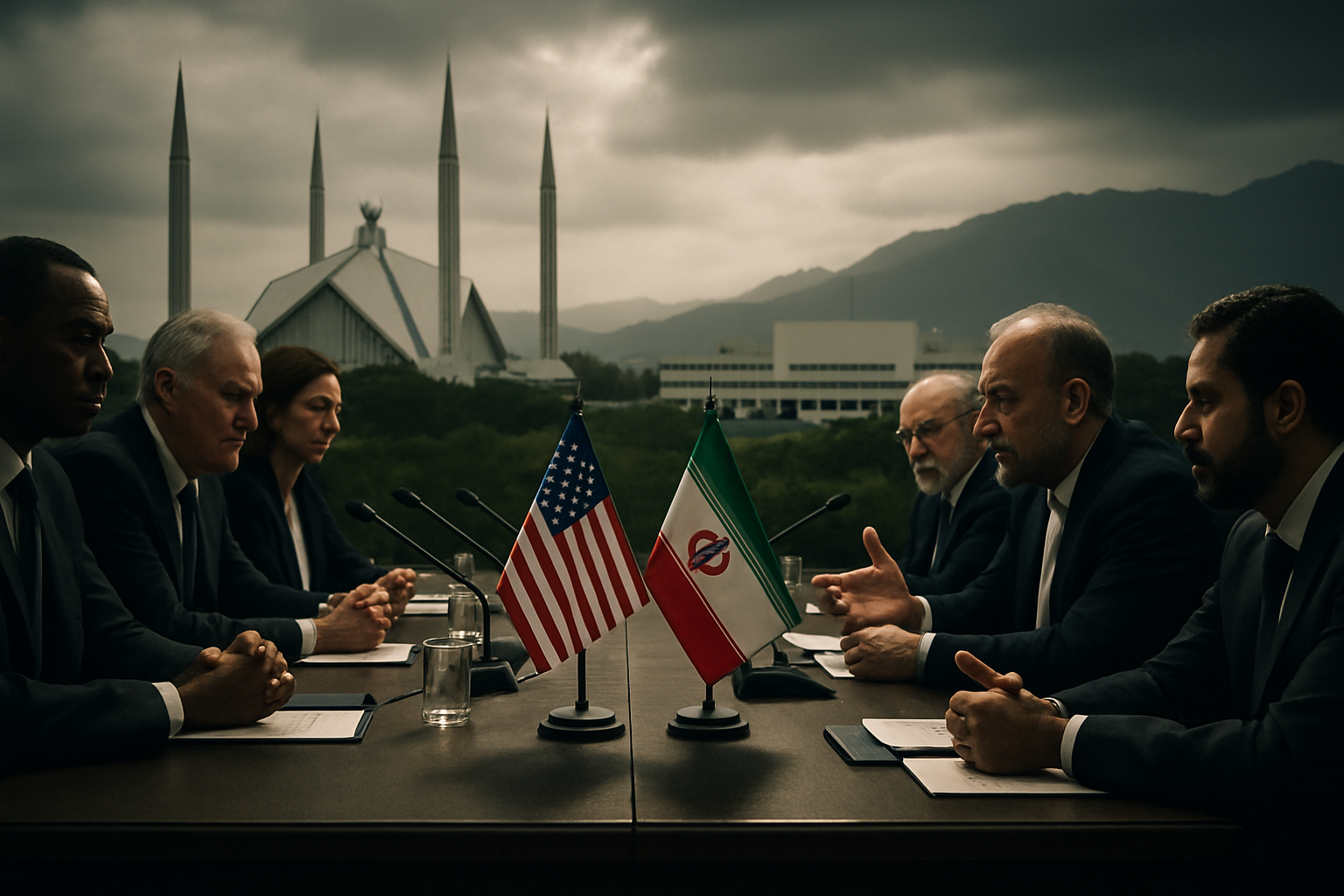
The United States and Iran find themselves at a crucial diplomatic crossroads as April 2026 unfolds, with ongoing ceasefire negotiations representing the most significant attempt at peace between the two nations since the 1979 Islamic Revolution.
Pakistan's Unprecedented Mediation Success
Pakistan has emerged as the pivotal mediator in the current crisis, with Prime Minister Shehbaz Sharif and Field Marshal Asim Munir successfully facilitating what officials term the "Islamabad Accord" framework. This breakthrough came just 88 minutes before President Trump's April 8 deadline, which he had termed a "whole civilization will die tonight" ultimatum.
The innovative "message relay system" established by Pakistani officials has maintained crucial communication channels between Vice President JD Vance and Iranian Foreign Minister Abbas Araghchi when direct contact proved impossible. This middle-power diplomacy has demonstrated unprecedented effectiveness in bridging major adversaries during international crises.
Current Negotiation Framework
Iran's comprehensive 10-point proposal addresses multiple critical areas including Strait of Hormuz protocols, sanctions relief, regional conflicts, and security guarantees. Trump administration officials have deemed this the most detailed US-Iran framework since the 2015 nuclear deal, accepting it as a "workable basis for negotiations."
The current ceasefire has enabled a partial reopening of the Strait of Hormuz, which handles 40% of global oil transit. However, Iran has implemented an innovative cryptocurrency payment system requiring $1 per barrel from oil tankers, representing a systematic circumvention of existing sanctions architecture.
"Iran has the legitimate right to enrich uranium, reaffirming Russia's support for Tehran's position under international law."
— Sergei Lavrov, Russian Foreign Minister
Nuclear Program Remains Central Sticking Point
The most significant obstacle in current negotiations remains Iran's nuclear program. Tehran continues uranium enrichment at 60% purity with an estimated 400+ kilograms of weapons-grade material - sufficient for multiple nuclear weapons if weaponized. The United States demands a firm commitment that Iran will not seek nuclear weapons development, while Iran maintains uranium enrichment as an "inalienable right."
This dispute occurs against the backdrop of the New START treaty's expiration in February 2026, marking the first time in over 50 years without US-Russia nuclear constraints. UN Secretary-General António Guterres has described nuclear risks as being at their "highest in decades."
Lebanon Crisis Threatens Broader Framework
A critical complication has emerged with Israeli Prime Minister Benjamin Netanyahu's explicit exclusion of Lebanon from the ceasefire framework. Israeli strikes have killed over 254 people in a single day, marking the deadliest bombardment since the conflict began. This has displaced 1.2 million Lebanese civilians, representing 25% of the population.
Iran has threatened withdrawal from negotiations unless comprehensive enforcement is applied to all regional fronts. VP Vance has acknowledged Iran's "legitimate misunderstanding" regarding Lebanon's inclusion, though US officials maintain they never agreed to include Israeli-Lebanese operations in the ceasefire framework.
Global Economic Impact and Recovery
The initial ceasefire breakthrough triggered dramatic market responses, with oil prices crashing 20% from $119.50 Brent to below $100 - the steepest decline in six years. Asian markets experienced explosive rallies, led by Pakistan's KSE-100 achieving a record 8.15% surge.
The aviation industry has begun planning recovery from the crisis that saw over 18,000 flights cancelled on a COVID-scale level. Dubai International Airport is preparing for reopening after missile damage, while major shipping companies are mobilizing over 150 stranded tankers worth billions in cargo.
Regional Coalition Under Strain
The unprecedented consensus among Saudi Arabia, UAE, Qatar, and Egypt supporting diplomatic solutions has been severely tested during the crisis. Iranian retaliation operations targeted these territories directly: the UAE suffered 1 fatality, Kuwait reported 32 injuries, and Qatar had 8 wounded while intercepting missiles and drones.
Egyptian President Abdel Fattah el-Sisi's warnings about "comprehensive chaos" affecting "sisterly countries" have proven prescient as the coalition maintains unity despite maximum strain from Iranian attacks on their territories.
Congressional Opposition and Domestic Pressures
President Trump faces unprecedented domestic opposition, with public support for military operations reaching historically low levels of 25%. Senator Richard Blumenthal has expressed being "more concerned than ever" about potential ground troop deployment, while Operation Epic Fury has already cost $11.3 billion in its first week - the largest Middle East operation since the 2003 Iraq invasion.
International Law and Maritime Security
The conflict has raised fundamental questions about international law enforcement and freedom of navigation principles. Iran's deployment of 2,000-6,000 naval mines in the Strait of Hormuz has effectively created a strategic chokepoint crisis, exposing dangerous over-dependence on this 21-mile waterway for global energy security.
The crisis has also seen European territory attacked for the first time since World War II, with Iranian drones striking RAF Akrotiri in Cyprus, prompting the EU to activate its ESTIA crisis mechanism for the first time in the bloc's history.
"This is the greatest test of multilateral cooperation in modern crisis management."
— António Guterres, UN Secretary-General
Template for 21st Century Diplomacy
Pakistan's mediation success demonstrates that middle powers can effectively bridge major adversaries when traditional diplomatic mechanisms fail. China has expressed "full support" for Pakistan's initiative, while Germany has noted "positive signs" for continued diplomatic momentum.
The "Islamabad Accord" framework could provide a template for 21st-century crisis resolution, showing that diplomatic innovation is possible even in the "darkest hours" when stakes affect energy security, nuclear governance, and international law enforcement simultaneously.
Critical Two-Week Window
The success or failure of current negotiations will determine whether this represents a lasting peace framework or merely temporary respite. With Vice President Vance leading the highest-level US delegation to Pakistan in decades, these talks represent the most comprehensive US-Iran framework since 2015.
The stakes extend far beyond bilateral relations, affecting territorial sovereignty principles, energy paradigm evolution, and conflict resolution approaches that will resonate for decades. Consumer relief is already beginning, with Bangladesh reviewing fuel rationing for 170 million people and Pakistan considering reversing wartime austerity measures.
Looking Ahead
As negotiations continue under Pakistan's innovative mediation framework, the international community watches to see whether diplomatic solutions can prevail over military confrontation. The outcome will establish precedents for how the world handles similar crises in an increasingly multipolar and interconnected global system.
The current talks represent the most significant diplomatic breakthrough in preventing a broader regional war with global consequences. Success would demonstrate that multilateral cooperation remains effective in our volatile, interconnected world, while failure could accelerate preferences for military solutions over diplomatic innovation in future international crises.