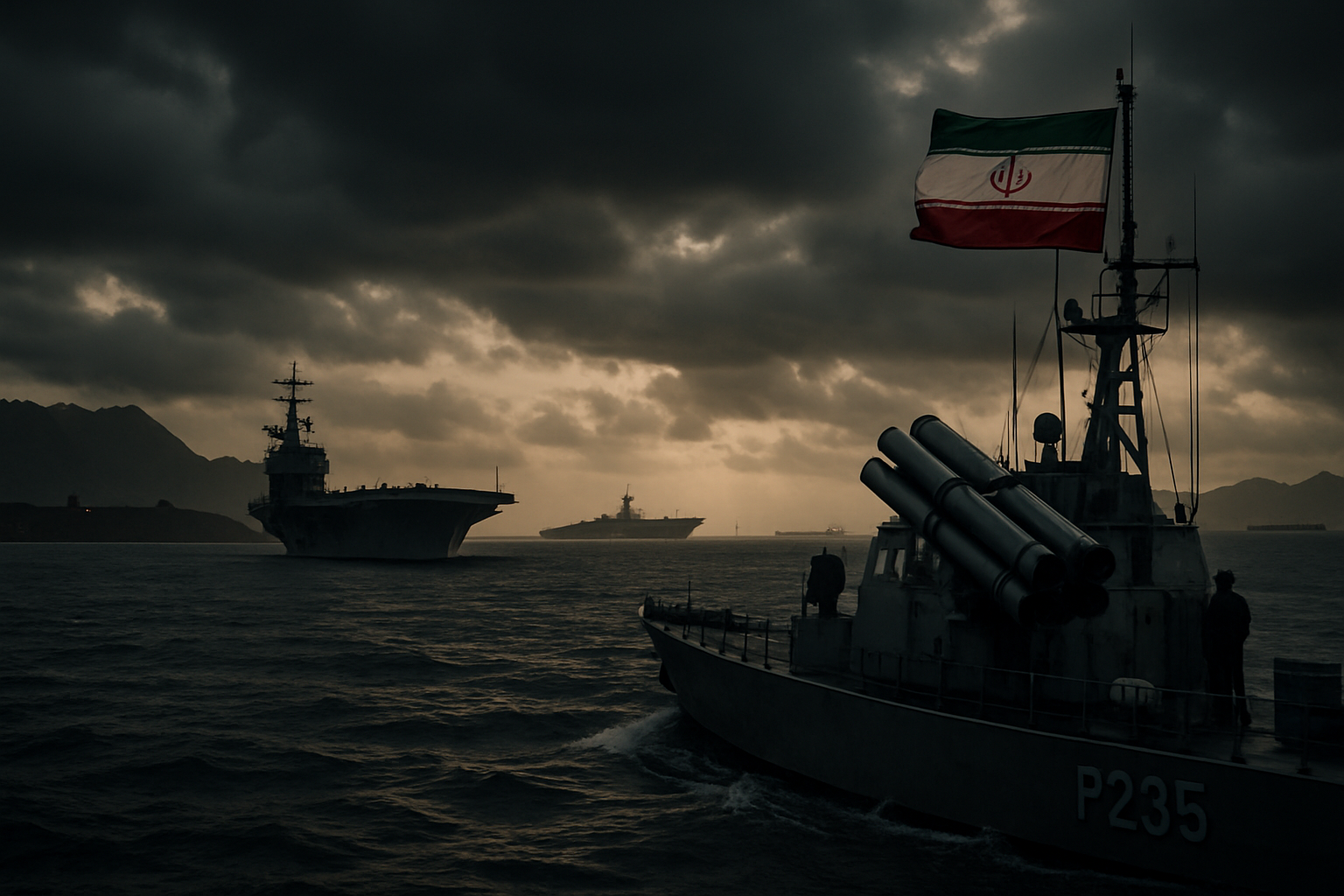
The world watches as President Donald Trump's ultimatum to Iran reaches its critical Tuesday deadline at 8 PM EST, threatening to transform the already catastrophic Middle East crisis into an unprecedented global catastrophe if Tehran fails to reopen the strategically vital Strait of Hormuz.
In an expletive-laden Easter Sunday post on Truth Social, Trump declared "Tuesday will be Power Plant Day, and Bridge Day, all wrapped up in one, in Iran," representing the most explicit threat yet against civilian infrastructure in what has become the most dangerous international crisis since the Cold War.
The Stakes of Trump's Tuesday Deadline
Iran has remained defiant in the face of Trump's threats, with the Islamic Republic's military command warning that any attacks on civilian targets would trigger a "much more devastating" response. Iranian Foreign Ministry spokesperson Esmail Baghaei responded directly to Trump's threats, stating: "Our armed forces have made it clear that in case Iran's infrastructure is attacked, we would react in kind."
The Iranian military's Central Command warned that targeting civilian infrastructure would prompt "much more devastating and widespread" retaliatory operations, escalating an already volatile situation that has claimed thousands of lives and paralyzed global commerce.
"If attacks on civilian targets are repeated, the next stages of our offensive and retaliatory operations will be much more devastating and widespread."
— Khatam al-Anbiya Central Headquarters Spokesperson
Global Diplomatic Race Against Time
As the Tuesday deadline approaches, international mediators are working frantically to broker a ceasefire. According to multiple sources cited by Axios, the United States, Iran, and regional mediators are discussing a possible 45-day ceasefire as an initial step toward reducing hostilities and opening space for broader diplomatic negotiations.
The proposed truce is being explored through Switzerland-Oman mediation, with Pakistan emerging as a crucial facilitator for potential talks. Foreign Minister Ishaq Dar confirmed Pakistan is prepared to host "meaningful talks between two sides for comprehensive and lasting settlement," representing what may be the final diplomatic window before broader regional war.
However, Iran has categorically rejected Trump's earlier 15-point peace proposal, with Revolutionary Guard officials maintaining that ballistic missiles and regional proxies remain "red lines" excluded from any negotiations. This fundamental scope disagreement has proven insurmountable throughout the crisis, despite previous diplomatic breakthroughs in Geneva talks that achieved "broad agreement on guiding principles."
The Human and Economic Toll
The month-long Operation Epic Fury has already cost over $27 billion and resulted in the first American combat deaths in the Middle East since the Iraq War. Recent US-Israeli strikes on residential areas near Tehran have killed at least 13 people, including reports of six children under 10 years old in the Tehran province, dramatically escalating civilian casualties.
The humanitarian crisis extends far beyond Iran's borders. The conflict has created unprecedented global disruption:
- Over 18,000 flights cancelled worldwide - the most severe aviation crisis since COVID-19
- Oil prices surging past $100 per barrel for the first time since 2022
- The Strait of Hormuz effectively closed, blocking 40% of global oil transit
- Natural gas prices exploding by 24% in Europe and 78% in the United States
- Eight Middle Eastern countries maintaining simultaneous airspace closures
The International Energy Agency has deployed the largest strategic petroleum reserve release in its 50-year history - 400 million barrels from 32 countries - in an attempt to stabilize global energy markets.
Iran's Defiant Response
Despite facing the largest coordinated military operation since 2003, Iran has refused to buckle under pressure. The Islamic Republic has deployed an estimated 2,000-6,000 naval mines throughout the Strait of Hormuz and maintained systematic retaliatory strikes under "Operation True Promise 4," with the Revolutionary Guard declaring "no red lines remain."
Iranian officials have consistently demanded that any negotiations address war reparations and recognize Iran's sovereignty over the Strait of Hormuz. The succession of Mojtaba Khamenei as Supreme Leader following his father's death has consolidated hardline military control, making diplomatic concessions even more unlikely.
Tehran has also positioned the crisis within the broader context of international law, with officials calling Trump's infrastructure threats "clear evidence of intent to commit war crime" and asking the international community to prevent such actions.
Congressional Opposition Mounts
Trump faces unprecedented domestic political opposition to the Iran campaign, with only 25% of Americans supporting the military action according to recent polls. Senator Richard Blumenthal expressed being "more concerned than ever" about potential ground troop deployment, while bipartisan lawmakers demand comprehensive briefings on strategy, costs, and exit plans.
The Pentagon has confirmed operations are expected to continue through September, far beyond the initial 4-6 week timeline, with costs running at approximately $1 billion daily. The deployment of 3,500 Marines aboard the USS Tripoli signals potential preparation for ground operations, further fueling congressional concerns.
Nuclear Governance Crisis
The current crisis unfolds against the backdrop of a broader nuclear governance breakdown. Iran continues enriching uranium at 60% purity - approaching weapons-grade levels - with sufficient material for multiple nuclear weapons if weaponized. The crisis coincides with the expiration of the New START treaty in February 2026, creating the first gap in US-Russia nuclear constraints in over 50 years.
UN Secretary-General António Guterres has warned that nuclear risks are at their "highest in decades," calling the current situation "the greatest test of multilateral cooperation in the modern era."
Regional Coalition Under Strain
The unprecedented regional coalition supporting diplomatic solutions - including Saudi Arabia, UAE, Qatar, and Egypt - faces severe strain as Iranian retaliatory strikes have targeted coalition members' territories. Egypt's President Sisi condemned attacks on "sisterly countries," warning of "comprehensive chaos" if the conflict continues to expand.
The first attack on European territory since World War II occurred when Iranian drones struck RAF Akrotiri in Cyprus, prompting an unprecedented naval coalition response involving British, Spanish, Italian, French, Dutch, and Greek vessels.
The Path Forward
As Tuesday's deadline approaches, the world faces a critical juncture that could determine the trajectory of 21st-century conflict resolution. The rapid transition from diplomatic breakthrough to military escalation demonstrates the fragility of crisis management in the multipolar era.
Success in containing the crisis could provide a template for nuclear dispute resolution and strengthen diplomatic precedents. However, failure may accelerate military solutions for decades, encourage nuclear proliferation globally, and undermine diplomatic credibility for territorial and security disputes worldwide.
The coming hours will test whether innovative diplomatic solutions can bridge fundamental disagreements that have prevented breakthrough for over a decade, or whether the international community must confront the most dangerous escalation since the Cold War's end.
With global energy security, nuclear governance credibility, and the post-World War II international order all hanging in the balance, Tuesday's deadline represents far more than a bilateral US-Iran dispute - it is a watershed moment that will shape international relations for generations to come.