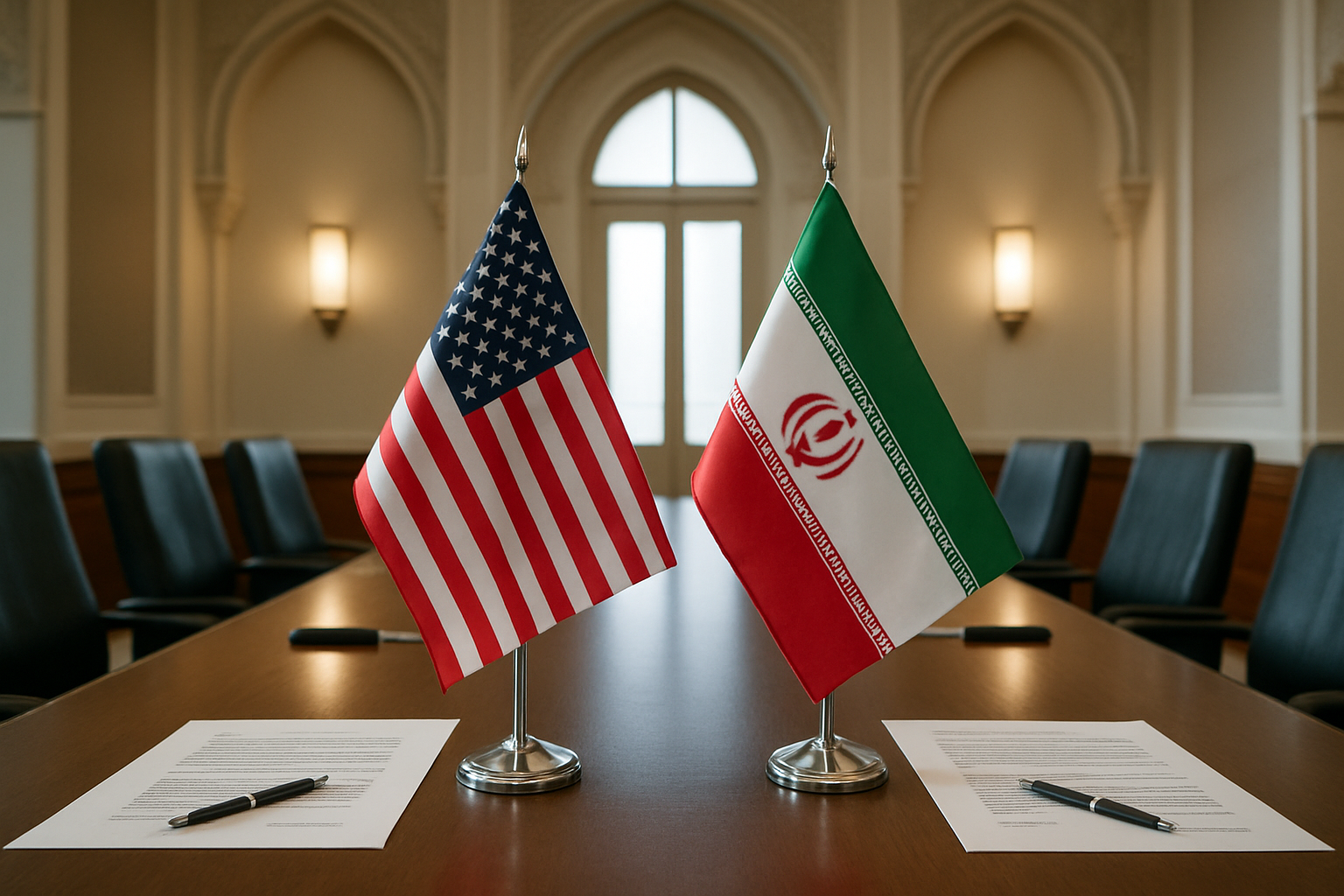
The United States and Iran have officially confirmed that nuclear talks will proceed Friday, February 7, 2026 at 10:00 AM in Muscat, Oman, despite heightened military tensions and fundamental disagreements over the scope of negotiations that threatened to derail the historic diplomatic engagement.
Iranian Foreign Minister Abbas Araghchi announced Wednesday evening that nuclear negotiations with the United States were "scheduled to be held in Muscat on Friday at 10 am," expressing gratitude to "our Omani brothers for making all necessary arrangements." The White House subsequently confirmed US participation, with Special Envoy Steve Witkoff leading the American delegation.
Venue Change Reflects Iran's Strategic Limitations
The decision to hold talks in Oman rather than the originally planned Istanbul location reflects Iran's insistence on limiting discussions exclusively to nuclear issues. Tehran demanded the venue change as part of its strategy to keep ballistic missiles and regional proxy activities as "red lines" - topics Iran considers off the table for negotiations.
US Secretary of State Marco Rubio has repeatedly stated that any comprehensive agreement must address Iran's missile arsenal and support for regional proxies, creating a fundamental disagreement over the negotiating framework that has persisted despite both sides' commitment to proceed with Friday's meeting.
"Nuclear talks with the United States are scheduled to be held in Muscat on about 10 am Friday. I'm grateful to our Omani brothers for making all necessary arrangements."
— Abbas Araghchi, Iranian Foreign Minister
Military Confrontations Shadow Diplomatic Efforts
The confirmation comes amid escalating military tensions that have tested both nations' commitment to diplomatic engagement. On Tuesday, a US F-35C fighter jet from the USS Abraham Lincoln shot down an Iranian Shahed-139 drone that aggressively approached the aircraft carrier in the Arabian Sea, approximately 800 kilometers from Iran's coast.
Navy Captain Tim Hawkins, a CENTCOM spokesperson, confirmed the self-defense action resulted in no US casualties or equipment damage. The same day, IRGC vessels harassed the US-flagged tanker Stena Imperative in the Strait of Hormuz, according to security firm Vanguard Tech. Oil prices rose more than $1 per barrel following news of the incidents.
These confrontations represent the most significant US-Iran military incidents since nuclear diplomacy resumed, highlighting the challenges of maintaining military proximity while pursuing diplomatic breakthrough. The timing - just days before the scheduled talks - underscores the delicate balance both sides must navigate between deterrence and engagement.
Regional Powers Rally Behind Diplomatic Process
Multiple regional stakeholders have expressed strong support for the diplomatic process, with Saudi Arabia, UAE, Qatar, and Egypt backing the negotiations. This broad regional consensus reflects widespread concern about the potential for military escalation and its devastating implications for Middle Eastern stability.
Oman's selection as the venue leverages the sultanate's historical role as a neutral mediator, particularly its crucial contribution to the original 2015 JCPOA negotiations. The choice represents continuity with established diplomatic precedent while providing a setting that Iran views as conducive to nuclear-focused discussions.
Regional leaders have urged both the United States and Iran to proceed with dialogue following earlier reports of potential breakdown, demonstrating the international community's investment in preventing military confrontation through diplomatic means.
Iran Faces Mounting Domestic Pressure
Iran enters these negotiations under severe domestic and international pressure that may create incentives for significant concessions. The country faces a devastating economic crisis from international sanctions, with over 42,000 people arrested during recent anti-government protests according to human rights organizations.
Iranian President Masoud Pezeshkian has set conditions for the talks to proceed "free of threats and unreasonable expectations," reflecting Tehran's desire to establish parameters that allow face-saving diplomatic engagement while potentially offering meaningful nuclear program limitations.
Reports suggest Iran may consider major concessions including a three-year uranium enrichment halt and transfer of existing stockpiles to a third country, likely Russia. Iran's current uranium enrichment at 60% purity represents a significant advancement since the JCPOA collapsed in 2018, making any rollback a substantial diplomatic achievement.
Trump Administration's Dual-Track Approach
President Trump has maintained a carefully calibrated message combining diplomatic openness with military deterrence. Asked Wednesday whether Iran's Supreme Leader Ayatollah Ali Khamenei should be worried, Trump told NBC News: "I would say he should be very worried. Yeah, he should be." He added that "they're negotiating with us" but declined to elaborate on the substance of discussions.
This dual-track approach reflects the administration's strategy of maintaining maximum pressure while creating space for diplomatic resolution. The deployment of the USS Abraham Lincoln carrier group in the Arabian Sea demonstrates continued military readiness even as diplomatic channels remain open.
US officials have emphasized that any agreement must address the full spectrum of Iranian activities that threaten regional stability, setting up what promises to be challenging negotiations over the scope and sequencing of any potential accord.
Historical Context and Stakes
Friday's talks represent the most significant US-Iran diplomatic engagement since the collapse of the Joint Comprehensive Plan of Action (JCPOA) in 2018. The original nuclear deal, negotiated during the Obama administration, provided sanctions relief in exchange for nuclear program limitations and international monitoring.
The Trump administration's withdrawal from the JCPOA and implementation of "maximum pressure" sanctions led to Iran's gradual abandonment of nuclear restrictions, creating the current crisis where Iran's nuclear program has advanced far beyond pre-2015 levels.
The stakes of Friday's negotiations extend well beyond bilateral US-Iran relations. Success could prevent a military confrontation that many regional experts warn could escalate into a broader Middle Eastern war, while failure may accelerate toward the military action that President Trump has repeatedly threatened.
Challenges and Opportunities
Despite the confirmation of Friday's meeting, fundamental disagreements persist over verification mechanisms, sanctions relief timelines, and the inclusion of non-nuclear issues in any comprehensive framework. Iran's insistence on nuclear-only discussions conflicts with US demands for a broader agreement addressing missiles and regional activities.
However, the mere fact that both sides have committed to proceed despite recent military confrontations suggests recognition of the critical importance of diplomatic engagement. The involvement of multiple regional mediators increases the likelihood of continued dialogue even if Friday's initial session fails to produce immediate breakthroughs.
The international community, including European allies and regional partners, has invested significant diplomatic capital in facilitating these negotiations, creating additional momentum for both sides to pursue serious engagement rather than allow talks to collapse over procedural disagreements.
Looking Ahead
Friday's talks in Muscat will serve as a crucial test of whether diplomatic momentum can overcome the deep mistrust and conflicting objectives that have characterized US-Iran relations for decades. The proximity of military forces and the potential for additional incidents create risks that could derail negotiations before they achieve meaningful progress.
Success will require unprecedented compromise from both sides: Iran must demonstrate genuine willingness to constrain its nuclear program and potentially address broader regional concerns, while the United States must offer meaningful sanctions relief and security guarantees that provide Iran with incentives for compliance.
The talks occur against the backdrop of multiple global crises, including the ongoing Ukraine conflict and broader tensions between major powers, making regional stability in the Middle East a crucial component of international security. The outcome of Friday's negotiations may determine whether diplomacy can prevent another military confrontation in an already volatile region.