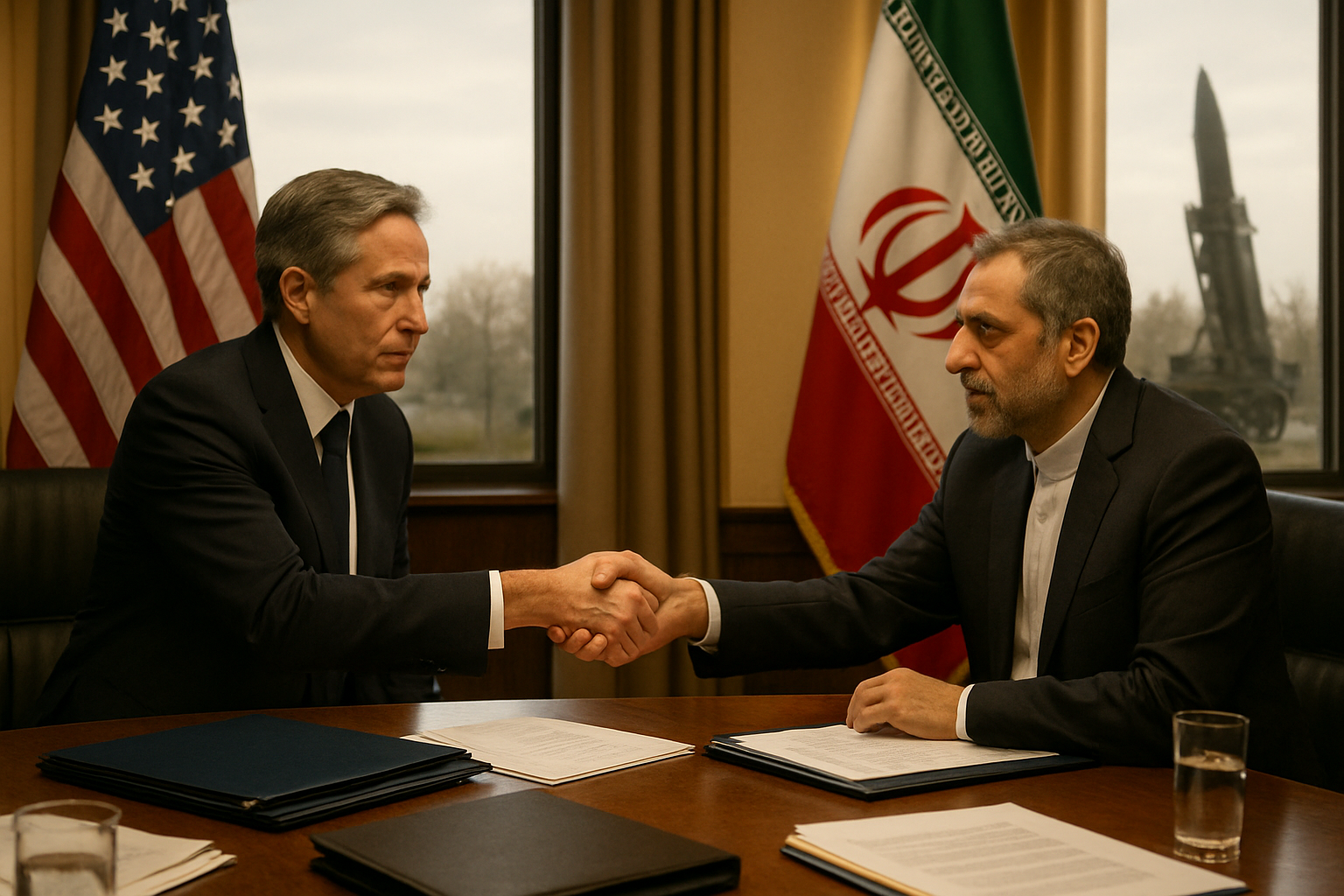
US forces at al-Udeid Air Base in Qatar have moved Patriot missiles to mobile truck launchers as tensions with Iran escalate, while diplomatic efforts to resolve the nuclear crisis continue through Omani mediation, creating a complex dual-track approach of military readiness backed by diplomatic engagement.
Satellite imagery analysis reveals that Patriot missiles at the largest US military base in the Middle East were repositioned from semi-static launcher stations to mobile M983 Heavy Expanded Mobility Tactical Trucks (HEMTT) starting in February 2026. This tactical shift demonstrates the heightened state of alert as Iran-US nuclear negotiations enter a critical phase.
Mobile Deterrence Strategy
The decision to maintain Patriot missiles in mobile configurations allows for rapid deployment both offensively and defensively, military analysts explain. Unlike fixed installations, mobile launchers can be quickly repositioned to counter Iranian missile threats or to protect against potential retaliatory strikes on US facilities across the region.
President Donald Trump has repeatedly threatened military action against Iran over its nuclear program, ballistic missile development, and support for regional proxy groups, while simultaneously maintaining that diplomatic talks continue. "We are negotiating," Trump confirmed, while warning Iran's Supreme Leader Ali Khamenei should be "very worried."
Nuclear Diplomacy Framework
Despite military preparations, substantive diplomatic progress has emerged through Omani mediation. Iranian Foreign Minister Abbas Araghchi and US Special Envoy Steve Witkoff have conducted multiple rounds of talks in Muscat, with both sides describing a "positive atmosphere" for continued negotiations.
Iran maintains uranium enrichment at 60% purity—significantly above the 3.67% limit established in the 2015 Joint Comprehensive Plan of Action (JCPOA)—approaching the 90% threshold considered weapons-grade. Intelligence reports suggest Iran may consider a three-year enrichment halt and transfer of existing stockpiles to Russia as potential concessions.
"Iran will never abandon uranium enrichment even if war is imposed on the Islamic Republic."
— Abbas Araghchi, Iranian Foreign Minister
Scope of Disagreements
Fundamental disagreements persist over the negotiations' scope. Iran has established "red lines" excluding ballistic missiles and regional proxy activities, demanding nuclear-only compartmentalized discussions. US Secretary of State Marco Rubio insists any comprehensive agreement must address Iran's missile capabilities, support for armed groups, and human rights violations.
This scope disagreement represents the core obstacle that has prevented breakthrough agreements since the JCPOA's collapse in 2018. Iranian officials view missile programs and regional activities as sovereign rights beyond negotiation, while US officials consider them integral to Iran's threat profile.
Regional Military Tensions
Military incidents have continued alongside diplomatic engagement, underscoring the volatile regional environment. A US F-35C fighter jet from the USS Abraham Lincoln shot down an Iranian Shahed-139 drone that aggressively approached the aircraft carrier in the Arabian Sea, approximately 800 kilometers from Iran's coast. The same period saw Islamic Revolutionary Guard Corps vessels harass US-flagged tankers in the Strait of Hormuz.
Oil prices rose over $1 per barrel following these incidents, demonstrating how military tensions translate directly into global economic concerns. The Persian Gulf handles approximately 40% of global oil transit, making regional stability crucial for international energy markets.
Unprecedented Regional Coalition
Remarkably, Saudi Arabia, the United Arab Emirates, Qatar, and Egypt have all endorsed the diplomatic process—representing an unprecedented Middle Eastern consensus for preventing military confrontation. This regional support provides crucial backing for sustained negotiations despite setbacks.
Oman's historical role as a neutral mediator, dating to its crucial participation in the original 2015 JCPOA negotiations, has proven essential for maintaining dialogue channels. Sultan Haitham bin Tariq's government has leveraged this neutrality to facilitate substantive discussions between historically adversarial parties.
Domestic Pressures
Iran faces severe domestic challenges that create pressure for sanctions relief. Over 42,000 protesters have been arrested since 2022 nationwide uprisings, while economic sanctions continue squeezing the Islamic Republic. However, Iranian leadership appears to prioritize nuclear capabilities over immediate economic relief, as evidenced by continued enrichment activities.
The Trump administration faces its own political pressures, with Republican hawks viewing engagement as potential appeasement while foreign policy achievements remain necessary for political success. This creates a delicate balance between maintaining "maximum pressure" campaigns and pursuing diplomatic breakthroughs.
Israeli Coordination
Israeli Prime Minister Benjamin Netanyahu's February 11 meeting with Trump specifically addressed Iran nuclear negotiations coordination. Israel views nuclear-only agreements as insufficient for addressing existential security threats, insisting that any comprehensive deal must include limitations on ballistic missiles and ending support for Iranian proxy groups.
Israeli security concerns reflect broader regional dynamics where Iranian missile capabilities and support for Hezbollah, Hamas, and Houthi forces are considered equal threats to the nuclear program itself. This creates additional complexity for negotiators seeking to balance multiple security priorities.
International Context
The Iran nuclear diplomacy occurs within a broader crisis in global nuclear governance. The New START treaty between the US and Russia expired on February 5, 2026, eliminating nuclear constraints between superpowers for the first time in over 50 years. China's nuclear expansion and North Korea's continued weapons development add further complexity to international nonproliferation efforts.
UN Secretary-General António Guterres has warned that nuclear weapon use risks are "higher than at any time in decades," creating urgency for successful diplomatic resolution of the Iran crisis as a template for broader nuclear governance.
Implementation Challenges
Any successful agreement would require unprecedented verification mechanisms given Iran's advanced centrifuge technology and expanded nuclear infrastructure. The technical complexity far exceeds the original JCPOA framework, as Iran's capabilities have significantly advanced since 2018.
Rebuilding trust between the parties, establishing inspection access, and creating monitoring systems would require years of implementation even if political agreements are reached. The mobile missile deployments and continued military readiness reflect the reality that diplomatic processes operate against a backdrop of potential military confrontation.
Stakes and Implications
Success in the negotiations could prevent a regional war that would reshape Middle Eastern geopolitics and disrupt global energy markets. The diplomatic template could provide a model for nuclear crisis resolution applicable to other international challenges. However, failure may accelerate military solutions that could destabilize the region for decades.
The combination of mobile military deterrence and diplomatic engagement represents a test of whether 21st-century nuclear crises can be resolved through innovative approaches that balance security concerns with conflict prevention. The coming weeks will prove decisive for determining whether breakthrough agreements are possible or whether the region moves toward military confrontation.
As Patriot missiles remain ready for rapid deployment from their mobile platforms, diplomats continue their careful work in Omani conference rooms, embodying the delicate balance between military preparedness and diplomatic hope that defines this critical moment in US-Iran relations.