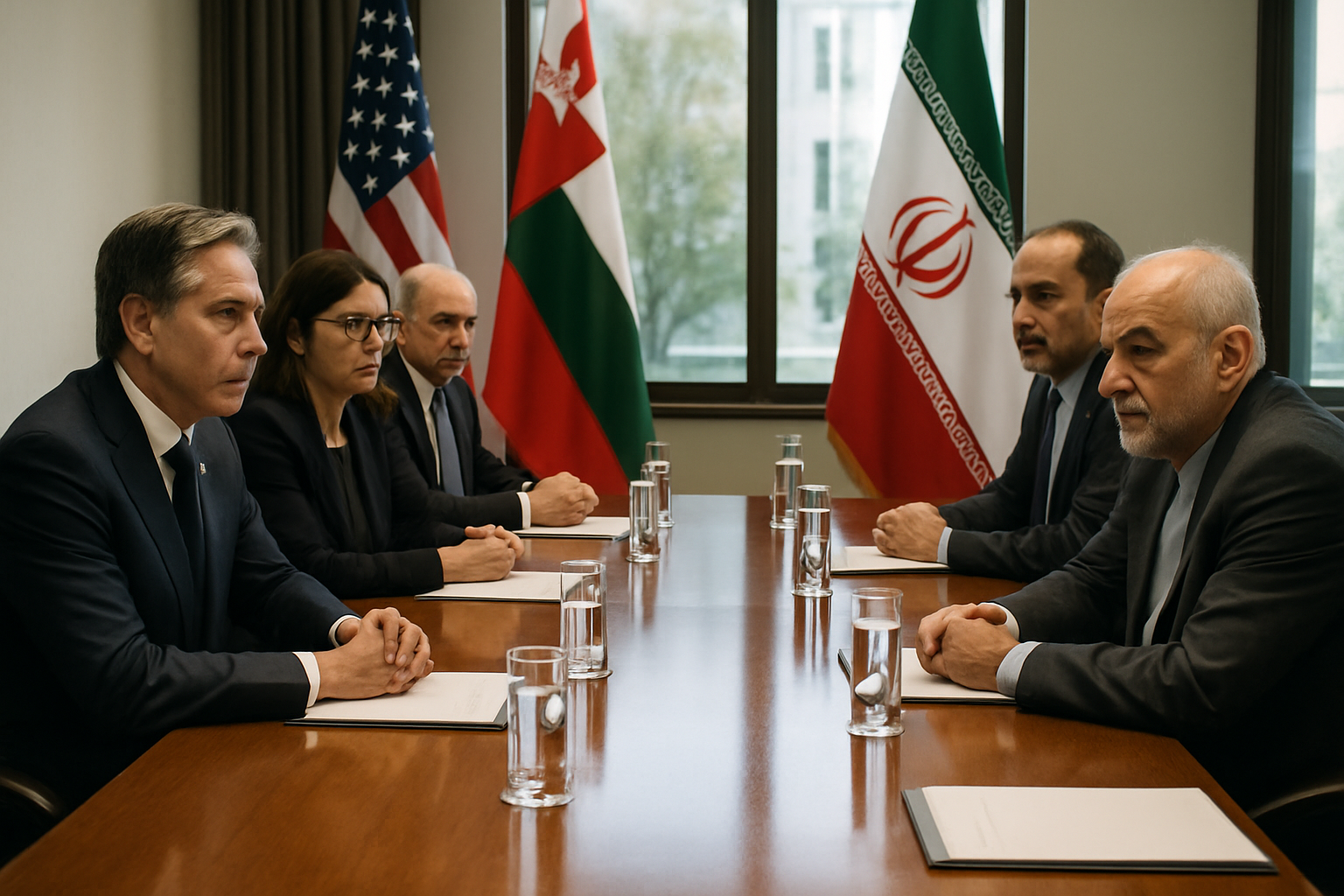
Senior United States and Iranian officials began critical nuclear negotiations in Muscat, Oman on Friday, marking the most significant diplomatic engagement between the two nations since the collapse of the Joint Comprehensive Plan of Action (JCPOA) in 2018, as fears mount over potential military confrontation in the Middle East.
The talks, confirmed by both Washington and Tehran after days of diplomatic uncertainty, bring together Iranian Foreign Minister Abbas Araghchi and US Special Envoy for the Middle East Steve Witkoff in what multiple sources describe as a make-or-break moment for preventing regional war.
Critical Venue Change Reveals Deep Disagreements
The location shift from Istanbul to Oman at Iran's specific request has exposed fundamental disagreements over the scope of negotiations. Tehran insists the talks must focus exclusively on nuclear issues, establishing what officials call "red lines" around its ballistic missile program and support for regional proxy groups.
US Secretary of State Marco Rubio made clear Wednesday that Washington seeks a comprehensive agreement addressing "Iran's nuclear programme, its ballistic missiles, support for armed groups around the region and treatment of their own people."
Iranian Foreign Ministry spokesman Esmail Baghaei emphasized that Iran is "participating with full authority, aiming to reach a fair, mutually acceptable, and dignified agreement," while restricting discussions to nuclear-related matters only.
"Iran enters diplomacy with open eyes and a steady memory of the past year. We engage in good faith and stand firm on our rights. Commitments need to be honored."
— Abbas Araghchi, Iranian Foreign Minister
Military Tensions Persist Despite Diplomatic Breakthrough
The negotiations proceed against a backdrop of escalating military confrontations. Just days before the talks, a US F-35C fighter jet from the USS Abraham Lincoln shot down an Iranian Shahed-139 drone that aggressively approached the aircraft carrier in the Arabian Sea, approximately 800 kilometers from Iran's coast.
Navy Captain Tim Hawkins of CENTCOM confirmed the incident involved "unclear intent" despite de-escalatory measures, marking the most significant US-Iran military confrontation since nuclear diplomacy resumed. The same day, Iranian Revolutionary Guard Corps vessels harassed the US-flagged tanker Stena Imperative in the Strait of Hormuz.
Oil prices rose over $1 per barrel following news of these incidents, highlighting global economic stakes in the diplomatic process.
High-Level Delegations Signal Serious Intent
The US delegation reportedly includes President Donald Trump's son-in-law Jared Kushner alongside Witkoff, demonstrating the administration's commitment to the process. Gulf media reports indicate the delegation traveled from Abu Dhabi to Qatar before arriving in Muscat.
Iran's team includes senior diplomats with extensive nuclear negotiation experience, led by Araghchi who arrived Thursday night with multiple Iranian diplomatic officials. The Iranian Foreign Ministry confirmed Iran is participating "with full authority" to reach an agreement.
Oman's selection as venue reflects the sultanate's historical role as a neutral mediator, having facilitated the original JCPOA negotiations in 2015. The Gulf nation has maintained diplomatic relations with both Washington and Tehran throughout decades of hostility.
Nuclear Program at Critical Juncture
Intelligence sources indicate Iran has significantly advanced its nuclear capabilities since the US withdrawal from the JCPOA. Tehran's uranium enrichment now reaches 60% purity, approaching the 90% threshold required for weapons-grade material, compared to the 3.67% limit under the original agreement.
Reports suggest Iran may consider major concessions, including a three-year uranium enrichment halt and transfer of existing stockpiles to a third country, likely Russia. However, the fundamental scope disagreement between the parties suggests progress will be "hard-won," as one diplomatic source described it.
Iran faces severe domestic pressure with over 42,000 arrests from recent nationwide protests and crushing economic sanctions that have contracted the economy significantly. This provides Iranian leadership with strong incentives for sanctions relief through nuclear diplomacy.
Regional Powers Rally Behind Diplomatic Solution
An unprecedented coalition of Middle Eastern powers has endorsed the negotiation framework, with Saudi Arabia, the United Arab Emirates, Qatar, and Egypt all supporting the diplomatic process. This regional consensus reflects widespread concern about the potential for military escalation.
The involvement of these traditionally competing powers demonstrates recognition that failure could trigger a broader Middle East conflict with global implications for energy markets, maritime security, and regional stability.
Trump Administration's Strategic Calculus
President Trump has maintained a dual approach, expressing hope for diplomatic success while warning of severe consequences if negotiations fail. "We are negotiating," Trump confirmed, while cautioning that Iran's Supreme Leader Ali Khamenei should be "very worried."
The timing coincides with broader Trump administration diplomatic initiatives, including ongoing Ukraine-Russia-US trilateral peace talks in Abu Dhabi and the recent expiration of the New START nuclear arms control treaty with Russia on February 5.
Iranian President Masoud Pezeshkian has set conditions that negotiations must be "free of threats and unreasonable expectations," highlighting the delicate balance required for diplomatic progress.
Stakes Extend Beyond Nuclear Issues
Beyond preventing immediate military confrontation, the talks carry implications for global nuclear governance, Middle East security architecture, and international diplomatic precedent. Success could provide a rare example of diplomatic resolution amid multiple global crises, while failure may accelerate military solutions that could destabilize the region.
The US has issued urgent security alerts for American citizens in Iran to "leave now," while authorities have restricted internet access and implemented widespread security measures across the Islamic Republic.
Multiple regional allies, including Israel, are closely monitoring the proceedings with concerns about any agreement that fails to address Iran's missile capabilities and support for armed groups across the Middle East.
Historical Precedent and Future Implications
These negotiations represent the first major US-Iran diplomatic engagement since the June 2025 military confrontation that led to the current crisis. The original JCPOA, negotiated during the Obama administration and abandoned by Trump in 2018, had successfully limited Iran's nuclear program through comprehensive monitoring and sanctions relief.
The current talks occur in a dramatically different strategic environment, with Iran having significantly advanced its nuclear capabilities, regional proxy network, and ballistic missile program during the years since the agreement's collapse.
International observers note that while both sides have signaled willingness to engage diplomatically, the fundamental disagreements over scope and verification mechanisms that plagued previous negotiations remain largely unresolved.
As senior officials from both nations sit down in Muscat, the international community watches anxiously to see whether diplomacy can once again pull the Middle East back from the brink of a potentially catastrophic military confrontation.