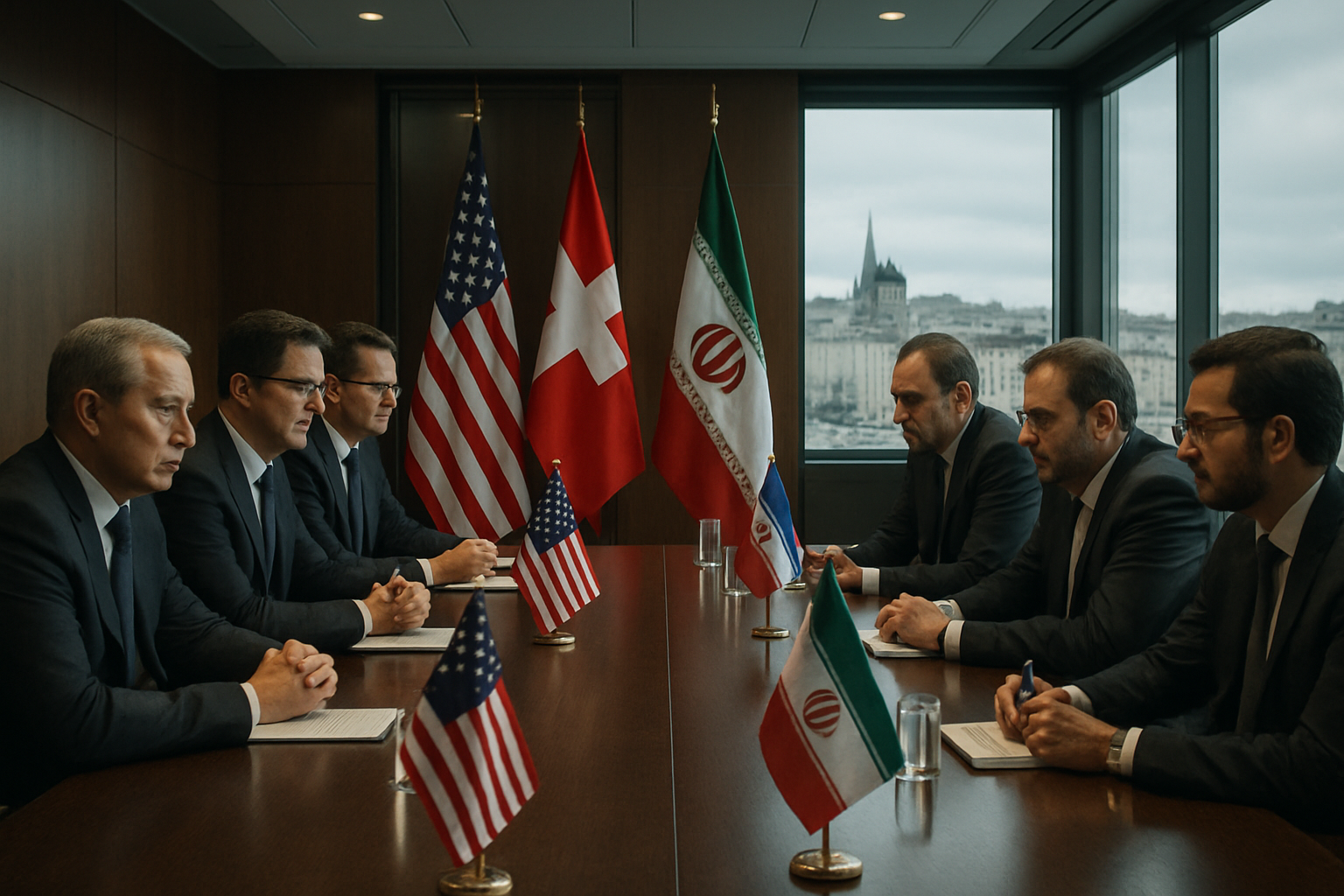
The third round of high-stakes nuclear negotiations between the United States and Iran concluded Thursday in Geneva with reports of "significant progress" according to mediators, though substantial differences persist on key issues including uranium enrichment limits and the scope of any potential agreement.
Oman's Foreign Minister Badr al-Busaidi, who has been facilitating the indirect talks alongside Swiss officials, expressed cautious optimism following the conclusion of negotiations. He described "significant progress" in the discussions and announced that technical-level talks would resume next week in Vienna to work out details of a potential accord.
Framework Breakthrough Amid Structural Deadlock
The Geneva talks represent the culmination of diplomatic momentum that began with February meetings in Muscat, where Iranian Foreign Minister Abbas Araghchi and US Special Envoy Steve Witkoff established initial contact. Previous rounds achieved what Araghchi termed "broad agreement on guiding principles" - the most substantial diplomatic development since the Joint Comprehensive Plan of Action (JCPOA) collapsed in 2018.
However, the fundamental scope disagreement that has plagued nuclear diplomacy for over a decade remains unchanged. Iran continues to exclude ballistic missiles and regional proxy activities as "red lines" from nuclear-only discussions, while US Secretary of State Marco Rubio insists any comprehensive agreement must address missiles, armed groups, and human rights issues.
"We have achieved a framework for continued dialogue, but the core challenges that have prevented breakthrough for years persist,"
— Senior Western diplomatic source
Nuclear Status and Military Tensions
Iran currently enriches uranium at 60% purity, significantly exceeding the 3.67% limit established under the original JCPOA and approaching the 90% threshold considered weapons-grade. Intelligence assessments confirm Iran possesses sufficient enriched uranium for multiple nuclear weapons if weaponized, creating urgent pressure for diplomatic resolution.
Despite the diplomatic engagement, military tensions have escalated dramatically. The United States has deployed an unprecedented dual-carrier strike force - the USS Gerald R. Ford and USS Abraham Lincoln - representing approximately one-third of the active US Navy fleet positioned 800 kilometers from Iran's coast. This constitutes the largest American naval presence in the Middle East since the 2003 Iraq invasion.
Recent incidents include a US F-35C fighter shooting down an Iranian Shahed-139 drone near the Abraham Lincoln, and Islamic Revolutionary Guard Corps (IRGC) vessels harassing American tankers in the Strait of Hormuz. These confrontations have contributed to oil price increases of over $1 per barrel, highlighting the global economic stakes given that 40% of worldwide oil transit passes through the Persian Gulf.
Unprecedented Regional Coalition
In a remarkable development, traditional Middle Eastern rivals have formed an unprecedented coalition backing the diplomatic process. Saudi Arabia, the United Arab Emirates, Qatar, and Egypt have all endorsed continued negotiations - an extraordinary consensus that reflects regional investment in preventing military confrontation.
Switzerland's official support for hosting the talks, combined with Oman's historical mediation role dating back to the original 2015 JCPOA negotiations, has created a robust diplomatic framework. The venue evolution from Muscat to Geneva signals growing international momentum for a peaceful resolution.
Domestic Pressures and Human Rights Concerns
Iran faces severe domestic pressure with over 42,000 arrests since the 2022 protests, ongoing economic sanctions, and recent sentencing of Nobel Peace Prize laureate Narges Mohammadi to additional prison time. Despite these challenges, the Iranian regime appears to prioritize nuclear capabilities over economic relief through sanctions removal.
The Trump administration must balance competing pressures, including Republican hawks who view engagement as appeasement and foreign policy needs for diplomatic achievements. Israeli coordination through multiple Netanyahu-Trump meetings has emphasized comprehensive security requirements that go beyond nuclear issues to include ballistic missile limitations and ending support for Iranian proxy groups.
International Nuclear Governance Crisis
The talks occur against the backdrop of a broader nuclear governance crisis. The New START treaty between the US and Russia expired on February 5, marking the first time in over 50 years without constraints on US-Russian nuclear arsenals. China's nuclear expansion and UN Secretary-General António Guterres' warnings that nuclear risks are at their "highest in decades" add urgency to finding diplomatic solutions.
Verification Challenges and Technical Obstacles
Any potential agreement would face unprecedented verification challenges. Iran's nuclear infrastructure has expanded significantly since 2018, featuring advanced centrifuge technology, sophisticated facilities, and dispersed capabilities that would require monitoring mechanisms far exceeding the original JCPOA's complexity. The International Atomic Energy Agency suspended inspections in November 2025, further complicating oversight efforts.
Intelligence reports suggest potential Iranian concessions, including a three-year uranium enrichment halt and transferring existing stockpiles to Russia. However, Araghchi's repeated declarations that Iran will "never abandon enrichment even if war is imposed" cast doubt on the likelihood of such compromises.
Economic Implications and Strategic Stakes
The economic implications extend far beyond the Middle East. Oil market volatility, natural gas price increases of 24% in Europe and 78% in the US, and potential supply chain disruptions underscore the global stakes. A regional conflict could destabilize worldwide energy markets and affect international economic stability.
The Trump administration maintains its "maximum pressure" campaign with 25% tariffs threatened on countries trading with Iran, demonstrating a dual-track approach combining economic coercion with diplomatic engagement. This strategy tests whether sustained pressure can enhance negotiation effectiveness or undermine trust-building efforts.
Vienna Technical Talks and Future Prospects
Next week's Vienna meetings will focus on technical details, potentially addressing verification protocols, sanctions relief mechanisms, and implementation timelines. These discussions represent a crucial test of whether the framework progress achieved in Geneva can translate into substantive agreements.
Success could prevent regional war, provide a diplomatic template for 21st-century nuclear crisis resolution, and strengthen global non-proliferation norms. Failure may accelerate military solutions, reshape Middle Eastern geopolitics for decades, encourage nuclear proliferation elsewhere, and undermine diplomatic credibility for international disputes.
The talks represent a template-setting moment for diplomacy versus military confrontation in the multipolar era, with implications extending far beyond current administration policies. As technical teams prepare for Vienna discussions, the world watches to see if innovative compromise solutions can bridge decade-old challenges or whether this represents another false start in nuclear crisis resolution.