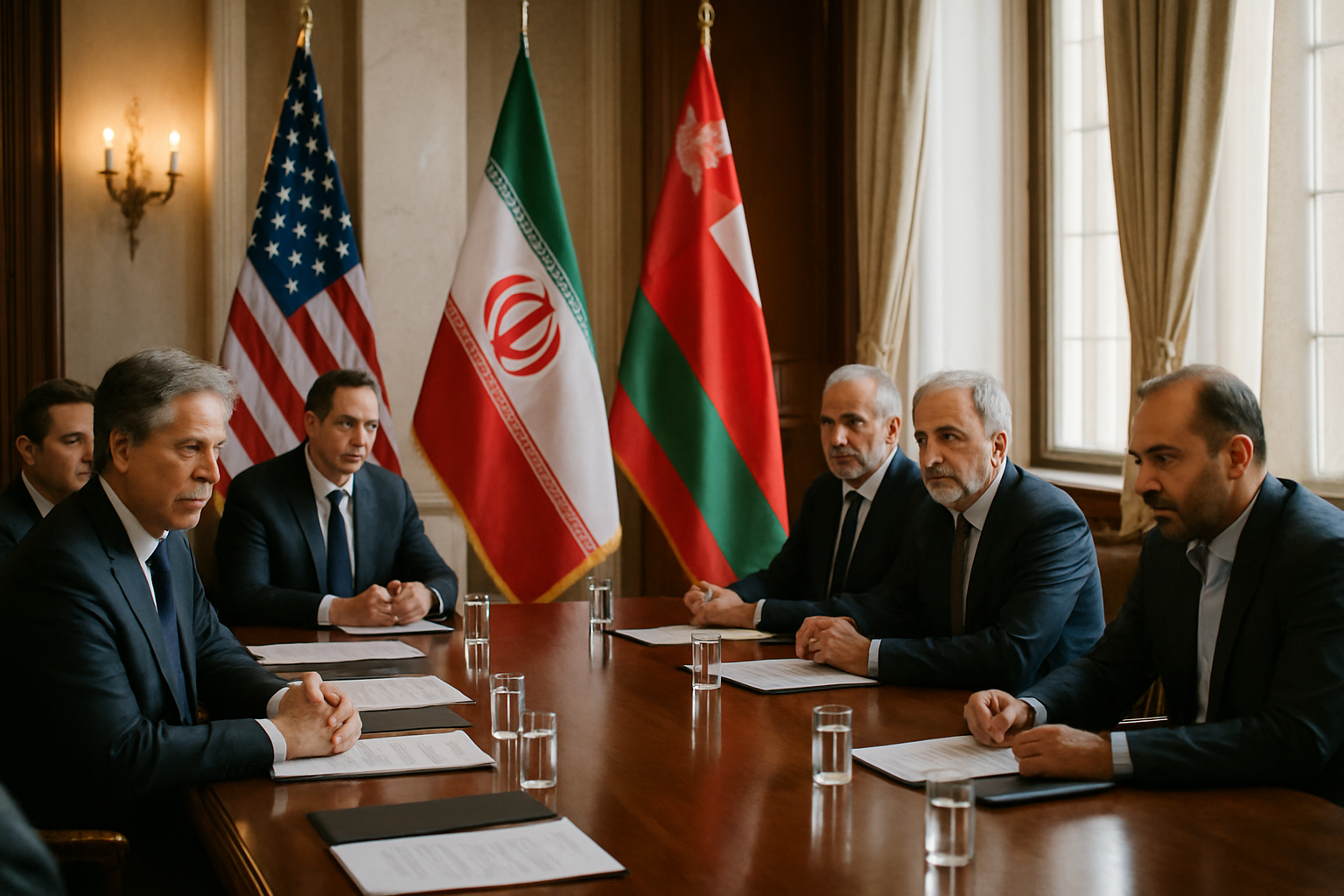
The United States and Iran are set to resume critical nuclear negotiations in Geneva on Tuesday, with President Donald Trump issuing a stark warning of "consequences" if Tehran fails to reach an agreement, as military tensions mount in the Persian Gulf and diplomatic efforts intensify to prevent regional conflict.
The second round of nuclear talks, mediated by Oman, represents the most significant diplomatic engagement between Washington and Tehran since the collapse of the Joint Comprehensive Plan of Action (JCPOA) in 2018. US envoys Steve Witkoff and Jared Kushner will participate in negotiations alongside Iranian Foreign Minister Abbas Araghchi, with Omani Foreign Minister Badr al-Busaidi continuing his crucial mediation role.
Trump's Direct Warning
Speaking aboard Air Force One, President Trump delivered his most explicit threat yet regarding the nuclear negotiations, declaring "I don't think they want the consequences of not making a deal." He confirmed his indirect involvement in the Geneva talks, emphasizing their critical importance: "I'll be involved in those talks, indirectly. And they'll be very important."
The President's comments represent an escalation in rhetoric, coming just hours after he announced the deployment of a second aircraft carrier to the Middle East. Trump's dual-track approach combines maximum pressure tactics with diplomatic engagement, as he simultaneously imposed new sanctions targeting Iran-trading countries while expressing hope for a negotiated settlement.
Fundamental Disagreements Persist
Despite positive atmosphere reports from previous talks in Muscat, Oman, fundamental disagreements remain unchanged. Iran continues enriching uranium at 60% purity versus the 3.67% limit established under the original JCPOA, approaching the 90% threshold needed for weapons-grade material.
"We will never abandon uranium enrichment even if war is imposed on us."
— Abbas Araghchi, Iranian Foreign Minister
The scope of negotiations remains a core obstacle. Iran maintains that ballistic missiles and regional proxy activities are "red lines" excluded from nuclear-only talks. In contrast, US Secretary of State Marco Rubio insists any comprehensive agreement must address missiles, armed groups, and human rights violations.
Military Tensions Escalate
The diplomatic efforts unfold against a backdrop of unprecedented military escalation. The US has deployed dual aircraft carriers - the USS Gerald R. Ford and USS Abraham Lincoln - creating the largest American naval presence in the Middle East in years, positioned approximately 800 kilometers from Iran's coast.
Military incidents continue despite ongoing diplomacy. A US F-35C fighter jet recently shot down an Iranian Shahed-139 drone that aggressively approached the USS Abraham Lincoln in the Arabian Sea. The same day, Islamic Revolutionary Guard Corps (IRGC) vessels harassed a US-flagged tanker in the strategically vital Strait of Hormuz, through which 40% of global oil transits.
Iran has responded with its own military exercises in the Persian Gulf and Sea of Oman, aimed at demonstrating readiness against "potential security and military threats." The timing of these exercises, concurrent with diplomatic engagement, raises questions about coordination between Iran's political and military leadership.
Regional Coalition Emerges
In a remarkable development, an unprecedented regional coalition has formed to support the diplomatic process. Saudi Arabia, the UAE, Qatar, and Egypt - traditionally opposing powers in the Middle East - have all endorsed the negotiation framework, representing extraordinary consensus for preventing military confrontation.
Oman's role as neutral mediator has proven essential, leveraging its historical success in facilitating the 2015 JCPOA negotiations. The sultanate's unique position - maintaining diplomatic relations with both Washington and Tehran - provides crucial trust-building capabilities despite the atmosphere of deep mistrust.
Nuclear Status Raises Urgent Concerns
Intelligence assessments confirm that Iran possesses sufficient enriched uranium for multiple weapons if weaponized, creating urgent pressure for diplomatic resolution. Reports suggest Iran may consider significant concessions, including a three-year uranium enrichment halt and transfer of existing stockpiles to Russia.
However, hardline statements from Iranian officials suggest such compromises remain uncertain. The Islamic Republic has significantly expanded its nuclear capabilities since withdrawing from the JCPOA, developing advanced centrifuge technology and sophisticated infrastructure that would require unprecedented verification mechanisms exceeding the original agreement's complexity.
Domestic Pressures on Both Sides
Both governments face intense domestic pressures affecting negotiation dynamics. Iran confronts severe economic sanctions and internal unrest, with over 42,000 protest arrests documented since the 2022 uprising. The regime has prioritized maintaining nuclear capabilities over economic relief, viewing the program as essential for regime survival.
The Trump administration must balance competing pressures from Republican hawks who view engagement as appeasement against the need for foreign policy victories. Israeli Prime Minister Benjamin Netanyahu has coordinated closely with Trump, emphasizing that any agreement must include "limiting ballistic missiles and ending Iranian axis support."
International Context Adds Urgency
The talks occur amid a broader nuclear governance crisis. The New START treaty between the US and Russia expired on February 5, 2026, marking the first time in over 50 years without nuclear constraints between the superpowers. China's nuclear expansion and the breakdown of multilateral arms control frameworks add urgency to preventing Iranian weapons development.
UN Secretary-General António Guterres has warned that nuclear risks are "higher than in decades," making success in Geneva crucial for global nuclear governance. The talks serve as a test case for whether diplomatic innovation can address 21st-century nuclear proliferation challenges.
Economic and Strategic Stakes
The economic implications extend far beyond the immediate parties. Oil prices have already risen $1 per barrel due to Persian Gulf tensions, with energy analysts warning that regional conflict could disrupt global supply chains. Natural gas prices have surged 24% in Europe and 78% in the US amid geopolitical pressures.
Regional war risks would destabilize energy markets worldwide, given the Persian Gulf's role in handling 40% of global oil transit. The potential closure of the Strait of Hormuz would create catastrophic supply disruptions affecting the global economy.
Verification Challenges Loom Large
Any successful agreement would face unprecedented technical challenges. Iran's nuclear program has advanced significantly since 2018, requiring monitoring mechanisms far exceeding the original JCPOA's complexity. Advanced centrifuge technology, 60% enrichment capability, and dispersed facilities would demand innovative verification approaches.
Years of implementation would be needed to rebuild trust between historically antagonistic parties. The technical obstacles remain substantial even if political scope disagreements can be resolved through diplomatic innovation.
Looking Ahead: Critical Juncture
The Geneva talks represent the most significant diplomatic opportunity since the JCPOA's collapse. Framework establishment from previous rounds demonstrates that structured dialogue is possible despite fundamental disagreements and trust deficits.
Success could prevent regional warfare that would reshape Middle Eastern geopolitics for decades while providing a template for nuclear crisis resolution in the 21st century. Failure may accelerate military solutions, encourage nuclear proliferation elsewhere, and undermine diplomatic credibility for resolving territorial and security disputes globally.
"We can prudently conclude that the American position on Iran's nuclear issue is more realistic this time."
— Iranian diplomatic source
The coming days will test whether innovative diplomatic solutions can bridge decade-old challenges or whether the talks represent another false start in nuclear crisis resolution. With military preparations ongoing and rhetoric escalating, the window for diplomatic breakthrough may be narrowing.
The international community watches closely as Geneva hosts this critical test of diplomacy versus military confrontation - a template-setting moment for 21st-century conflict resolution with implications extending far beyond the nuclear file to global governance, territorial sovereignty enforcement, and the credibility of international law in an increasingly multipolar world.