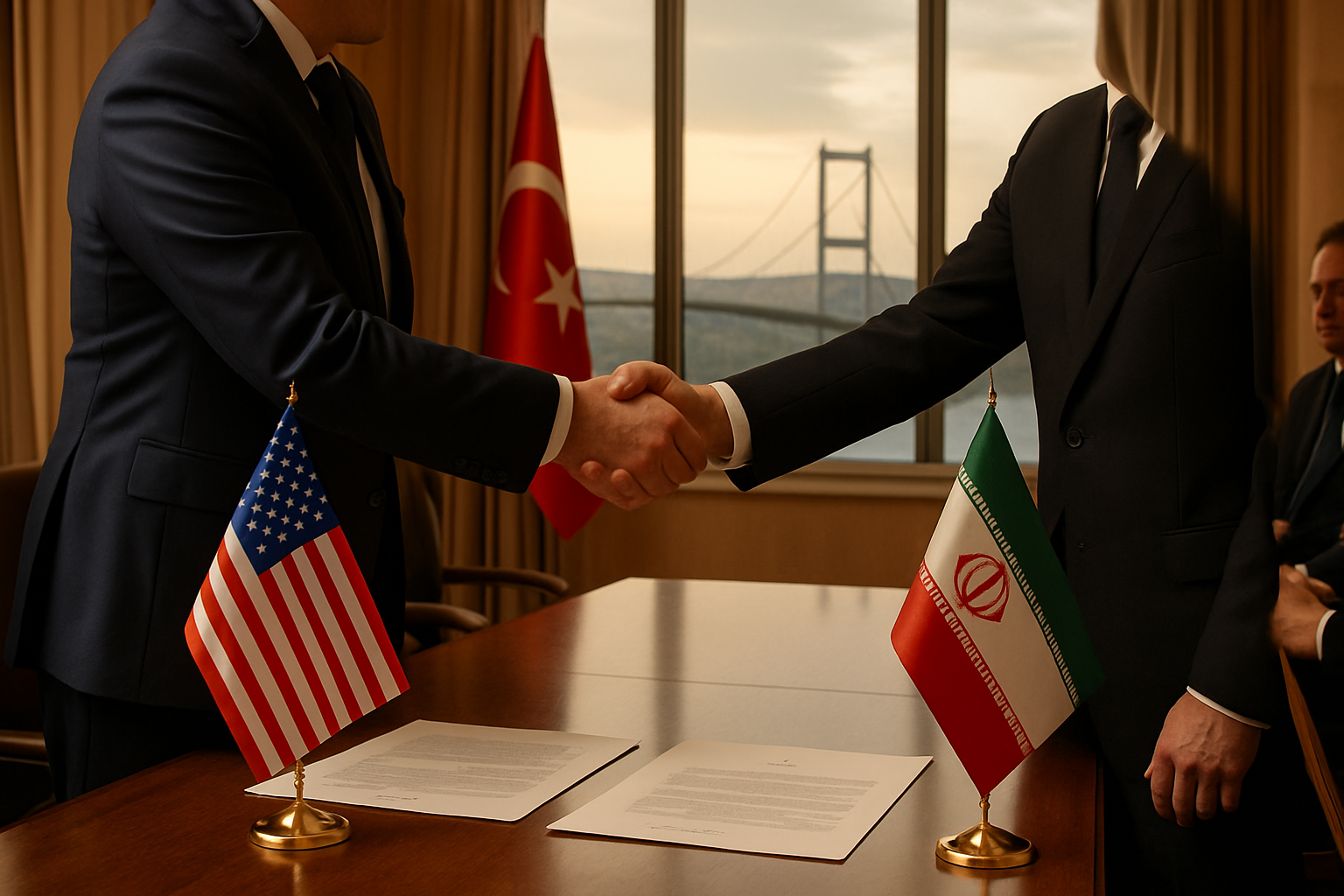
The United States and Iran are set to resume high-stakes nuclear negotiations in Istanbul this Friday, marking the most significant diplomatic engagement between the two nations since the collapse of the Joint Comprehensive Plan of Action (JCPOA) in 2018.
Iranian President Masoud Pezeshkian officially confirmed the talks in a statement posted on X platform, announcing that he has instructed Foreign Minister Abbas Araghchi to "pursue fair and equitable negotiations" with the United States. The announcement comes as regional tensions reach critical levels, with both nations maintaining substantial military forces in the region while exploring diplomatic alternatives to armed conflict.
Key Players and Venue
US Special Envoy Steve Witkoff is expected to meet with Iranian Foreign Minister Abbas Araghchi in Istanbul, with Turkey serving as the primary host nation. According to diplomatic sources, the United Arab Emirates has been prepared as an alternative venue should the Istanbul talks face complications.
Regional diplomatic sources indicate that representatives from Saudi Arabia, Egypt, Qatar, and the UAE may also participate in the broader discussions, highlighting the multilateral nature of efforts to resolve the nuclear standoff. This regional involvement underscores the widespread concern about potential military escalation and the desire for a diplomatic solution.
"The efforts are continuing very intensively," said Qatar's Foreign Ministry spokesperson Majed al-Ansari during a press conference in Doha. "We are working and cooperating with neighboring countries and friendly nations."
— Majed al-Ansari, Qatar Foreign Ministry Spokesperson
Diplomatic Framework and Conditions
President Pezeshkian has set clear conditions for the negotiations, emphasizing that any dialogue must be conducted in an atmosphere "free of threats and unreasonable expectations." The Iranian leader stated that the initiative for talks came from "friendly governments in the region," indicating substantial behind-the-scenes diplomatic coordination.
The talks represent a significant shift from the military posturing that has characterized US-Iran relations in recent months. Iran maintains that its nuclear program is entirely peaceful and has signaled openness to negotiations while insisting on mutual respect and the removal of what it considers unjust sanctions.
Military Tensions as Backdrop
The diplomatic overture occurs against a backdrop of unprecedented military tensions. The United States has deployed the USS Abraham Lincoln carrier strike group to the Arabian Sea, while Iran has conducted extensive naval exercises in the strategic Strait of Hormuz, including live-fire drills that demonstrated its military capabilities.
President Trump has maintained a position of strength while expressing cautious optimism about the talks. Speaking to reporters, Trump stated that if dialogue succeeds, "super," but warned that if negotiations fail, "bad things would probably happen." The president confirmed that US naval vessels are currently positioned near Iranian waters, emphasizing America's military readiness.
Iran's Supreme Leader Ayatollah Ali Khamenei has previously warned of potential "regional war" if the United States launches military strikes against Iranian territory, while the Islamic Revolutionary Guard Corps (IRGC) claims to have prepared "action plans for hostile scenarios."
Historical Context and Stakes
The upcoming talks carry enormous significance given the deterioration of US-Iran relations since the Trump administration's withdrawal from the JCPOA nuclear deal in 2018. Subsequent events, including the US assassination of Iranian General Qasem Soleimani in 2020, Iran's uranium enrichment beyond treaty limits, and various proxy conflicts across the region, have brought bilateral relations to their lowest point in decades.
The current crisis was further exacerbated by recent events, including Iran's bloody crackdown on nationwide protests that resulted in over 42,000 arrests according to human rights organizations, and reciprocal terrorist designations between Iran and European Union nations. US-Israeli strikes on Iranian nuclear facilities in 2025 added another layer of complexity to the relationship.
Regional Implications
The regional dimension of the talks cannot be overstated. The Middle East has witnessed increasing instability, and neighboring countries are acutely aware that any military confrontation between the US and Iran could have catastrophic consequences for regional security and economic stability.
The UAE has been particularly vocal in calling for diplomatic solutions, with officials emphasizing that "the Middle East does not need another war" and urging both parties to use the talks to achieve a "long-term solution" to the nuclear standoff.
Negotiation Challenges
Despite the diplomatic opening, significant challenges remain. Iran has indicated that it expects talks to focus exclusively on nuclear matters and sanctions relief, while reportedly resisting discussions about its ballistic missile program or support for regional proxy groups.
The United States, conversely, has signaled that any comprehensive agreement must address Iran's broader regional activities, including support for groups in Lebanon, Syria, Yemen, and Iraq. This fundamental disagreement over the scope of negotiations could complicate efforts to reach a sustainable agreement.
Intelligence sources suggest that Iran may be considering major concessions, potentially including transferring uranium stockpiles to Russia and agreeing to significant restrictions on its nuclear program. However, such reports remain unconfirmed and would require Supreme Leader Khamenei's explicit approval.
International Support and Oversight
The international community has broadly welcomed the prospect of renewed US-Iran dialogue. French President Emmanuel Macron has indicated that European nations are preparing for potential engagement with various regional powers, suggesting a broader diplomatic realignment in the Middle East.
Russia, which maintains significant influence in regional affairs and has historical ties with Iran's nuclear program, has stated that it believes the Iranian nuclear issue should be resolved through diplomatic means rather than military action.
Economic Dimensions
The talks occur against a backdrop of severe economic pressure on Iran due to international sanctions. Iran's economy has suffered significantly under the "maximum pressure" campaign, with oil exports reduced to a fraction of pre-sanctions levels and banking restrictions severely limiting international commerce.
Any successful agreement would likely include substantial sanctions relief, potentially freeing up billions of dollars in frozen Iranian assets and allowing resumed oil exports. Such economic benefits could provide powerful incentives for Iranian flexibility in negotiations.
Looking Ahead
The Istanbul talks represent a critical juncture for Middle Eastern stability and international non-proliferation efforts. Success could establish a framework for broader regional dialogue and reduced tensions, while failure might lead to increased military confrontation with unpredictable consequences.
Regional powers have invested significant diplomatic capital in facilitating these talks, suggesting strong international support for a negotiated solution. The involvement of multiple mediating nations also provides various channels for continued dialogue even if initial meetings encounter difficulties.
As diplomats prepare for Friday's historic meeting in Istanbul, the stakes could not be higher. The outcome will likely determine whether the Middle East moves toward stability and cooperation or faces a period of increased conflict and instability that could have global implications.
Both Washington and Tehran appear to recognize that diplomatic engagement, however challenging, offers the best path forward for addressing their fundamental disagreements while avoiding the devastating consequences of military confrontation in one of the world's most volatile regions.