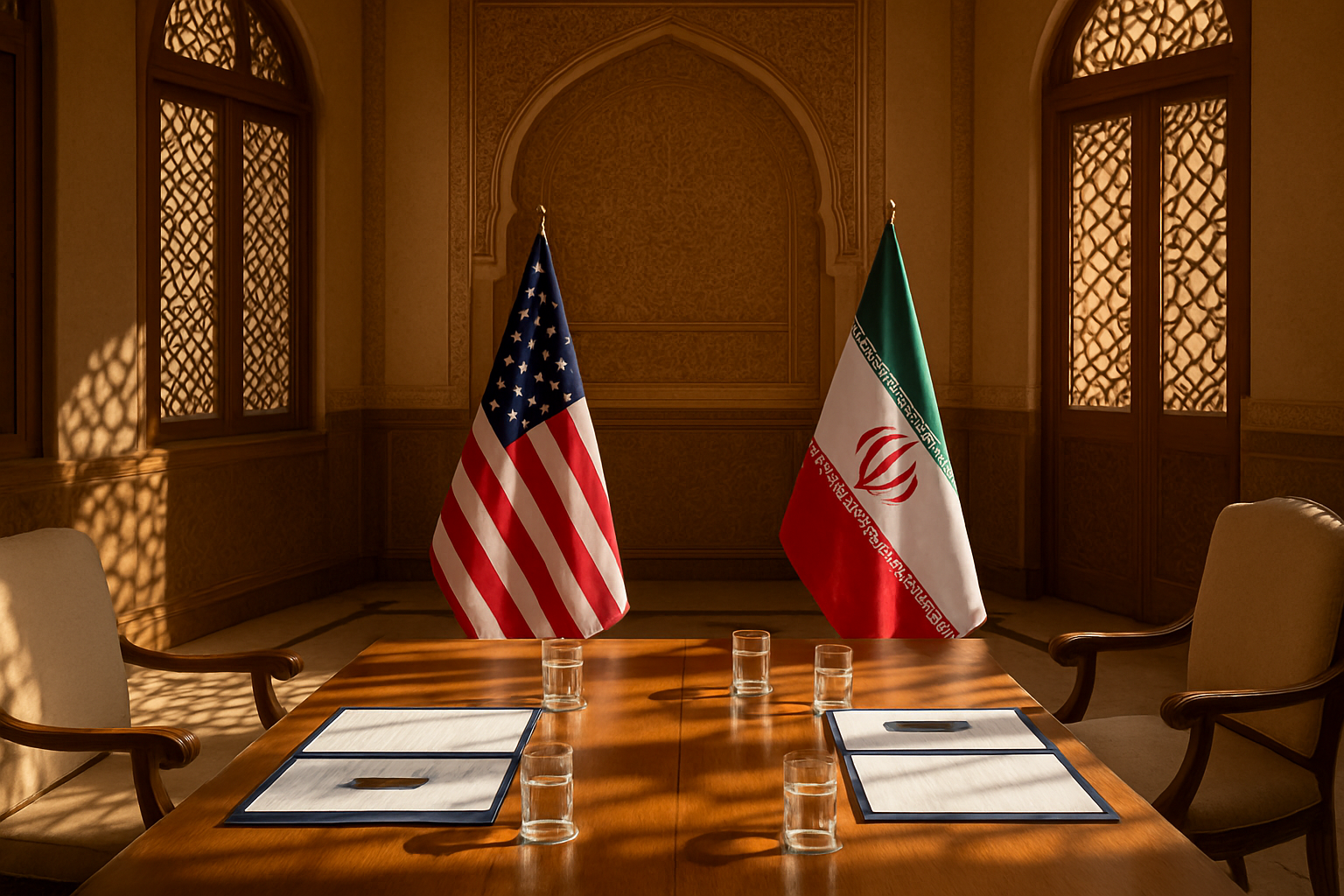
The first direct nuclear talks between the United States and Iran since the collapse of the JCPOA in 2018 concluded Friday in Muscat, Oman, with Iranian Foreign Minister Abbas Araghchi describing the negotiations as a "good start" that could "have a good continuation," even as Washington announced new sanctions moments after the discussions ended.
The talks, mediated by Oman, marked a critical diplomatic moment amid escalating tensions that have raised fears of military confrontation between the two nations. The venue change from Istanbul to Oman reflected Iran's insistence on limiting discussions exclusively to nuclear issues, excluding ballistic missiles and regional proxy activities that the US had sought to include.
Diplomatic Progress Amid Fundamental Disagreements
Speaking to Iranian state media in Muscat, Foreign Minister Araghchi acknowledged that while no concrete agreement was reached, the discussions represented "a significant step forward" in reducing tensions. He emphasized that a "significant challenge" remains in overcoming the prevailing atmosphere of distrust between Washington and Tehran.
"Iran's priority is to overcome this distrust and then establish an agreed framework for the talks and the issues on the table."
— Abbas Araghchi, Iranian Foreign Minister
The Iranian delegation was led by Araghchi, while the US side included Special Envoy Steve Witkoff and notably, President Trump's son-in-law Jared Kushner. Omani Foreign Minister Badr Al-Busaidi facilitated the indirect negotiations, describing them as "serious" and confirming they helped "clarify the positions and orientations of both sides."
Scope Disagreements Persist
A fundamental sticking point emerged over the talks' agenda. Iran established clear "red lines" around its ballistic missile program and regional proxy relationships, demanding that negotiations focus solely on nuclear matters. However, US Secretary of State Marco Rubio has insisted that any comprehensive agreement must address Iran's missile capabilities and support for armed groups in the region.
According to multiple sources, Iran presented a framework plan to "manage the current situation" between the two countries, which was transmitted to the US delegation. The discussions reportedly centered on finding an operational framework for future negotiations rather than substantive nuclear commitments.
Military Tensions Continue
The diplomatic outreach occurred against a backdrop of serious military incidents. Just days before the talks, a US F-35C fighter jet from the USS Abraham Lincoln aircraft carrier shot down an Iranian Shahed-139 drone that had approached aggressively in the Arabian Sea, approximately 800 kilometers from Iran's coast. The same day, Iranian Revolutionary Guard Corps vessels harassed a US-flagged tanker in the Strait of Hormuz.
These incidents, along with the massive US naval presence in the region, underscored the high stakes of the diplomatic engagement. Oil prices rose more than $1 per barrel following news of the military confrontations, highlighting the global economic implications of US-Iran tensions.
Nuclear Program Status
Iran's nuclear program has advanced significantly since the US withdrew from the Joint Comprehensive Plan of Action (JCPOA) in 2018. Tehran is currently enriching uranium at 60% purity, far above the 3.67% limit established in the original nuclear deal and approaching the 90% threshold needed for weapons-grade material.
Reports suggest Iran may be considering major concessions, including a three-year halt to uranium enrichment and the transfer of existing stockpiles to a third country, likely Russia. However, these potential measures would require verification mechanisms far more sophisticated than those in the original JCPOA, given Iran's expanded nuclear capabilities.
Sanctions Announcement Dampens Optimism
Any optimism from the talks was immediately dampened when the United States announced new sanctions on Iran's oil sector just hours after the negotiations concluded. The sanctions package targets 14 vessels and aims to further restrict Iran's petroleum exports, which have been a crucial source of revenue despite existing international restrictions.
The timing of the sanctions announcement drew criticism from Iranian officials and raised questions about the US commitment to diplomatic engagement. Lithuania's foreign ministry confirmed that the sanctions were announced "immediately after" the indirect negotiations ended in Oman.
Regional Support and International Stakes
The diplomatic effort received unprecedented support from regional powers, with Saudi Arabia, the United Arab Emirates, Qatar, and Egypt all endorsing the negotiation process. This remarkable consensus among typically opposing Middle Eastern powers reflects the region's investment in preventing a military confrontation that could have catastrophic implications for global energy markets and maritime security.
Oman's role as mediator builds on its historical neutral position and successful facilitation of the original JCPOA negotiations in 2015. The sultanate has consistently maintained diplomatic relations with both Washington and Tehran, making it an ideal venue for such sensitive discussions.
Domestic Pressures on Both Sides
Both governments face significant domestic pressures that could influence future negotiations. Iran is grappling with the aftermath of widespread protests that resulted in over 42,000 arrests, according to human rights organizations, while severe economic sanctions continue to squeeze the country's economy.
The Trump administration, meanwhile, faces pressure from Republican hawks who view engagement with Iran as appeasement, while also seeking a foreign policy victory that avoids military risks. The president has repeatedly warned that "bad things would happen" if diplomatic efforts fail, while simultaneously expressing hope that the sides can "work something out."
Next Steps and Future Challenges
According to Iranian media reports, both delegations agreed to continue talks, with the next round to be scheduled through consultations between Tehran and Washington. However, the fundamental disagreement over scope – Iran's insistence on nuclear-only discussions versus US demands for a comprehensive framework – remains unresolved.
Any future agreement would need to address technological advances in Iran's nuclear program, including sophisticated centrifuges and expanded uranium enrichment capabilities that did not exist during the original JCPOA negotiations. The verification and compliance mechanisms would require unprecedented complexity and international cooperation.
Global Context and Implications
The talks occur amid a complex international landscape, including ongoing Ukraine-Russia peace negotiations in Abu Dhabi, the recent expiration of the New START nuclear treaty between the US and Russia, and broader tensions across the Middle East. Success could provide a diplomatic template for other regional conflicts, while failure might accelerate military solutions that could destabilize the entire Persian Gulf region.
The Persian Gulf handles approximately 40% of global oil transit, making the stakes of US-Iran relations far broader than bilateral concerns. Israeli officials have expressed concerns about any agreement that fails to address what they view as existential threats from Iran's missile program and regional proxy network.
Assessment and Outlook
Despite the mixed signals – diplomatic engagement coupled with new sanctions – both sides appear committed to continued dialogue. The willingness to engage directly, even through mediators, represents a significant shift from the complete absence of communication that has characterized US-Iran relations in recent years.
However, the fundamental challenges remain formidable. The trust deficit, scope disagreements, domestic political pressures, and complex regional dynamics all pose obstacles to meaningful progress. The international community will be watching closely to see whether this diplomatic opening can evolve into sustained engagement capable of addressing one of the world's most dangerous nuclear proliferation challenges.
The coming weeks will be critical in determining whether the Muscat talks represent a genuine breakthrough or merely another false start in the long history of US-Iran nuclear diplomacy. Success would require unprecedented compromise from both sides and innovative solutions to problems that have defied resolution for over a decade.