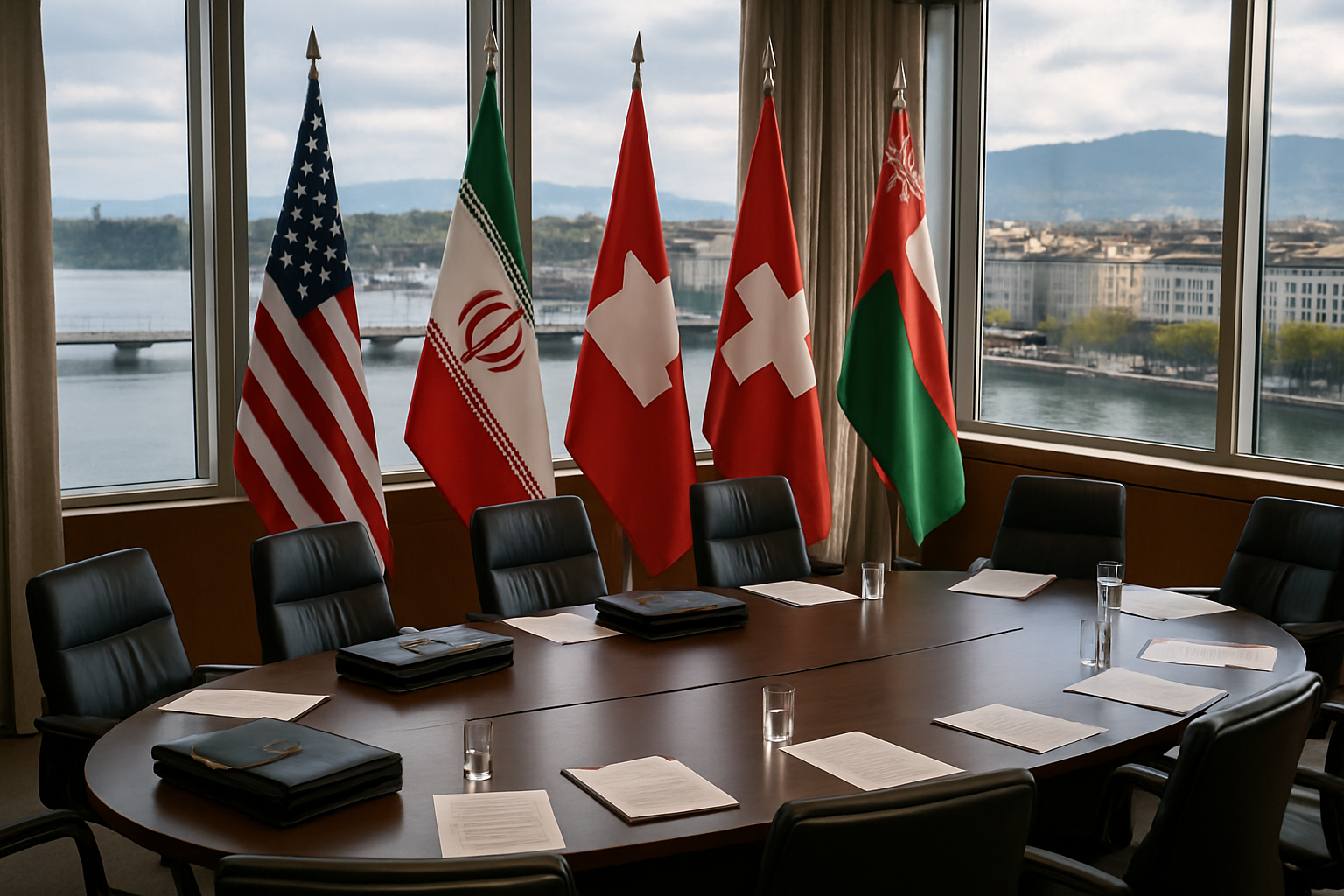
The United States and Iran are set to resume critical nuclear negotiations in Geneva on Thursday, marking a pivotal moment in the long-running diplomatic crisis that has shaped Middle Eastern geopolitics for over a decade, as both sides navigate between cautious optimism and entrenched positions on uranium enrichment and regional security concerns.
According to multiple international sources, Oman's Foreign Minister Badr al-Busaidi confirmed that a new round of talks between the two nations will take place in Geneva, stating there will be a "positive push to make an additional effort to finalize the agreement." The announcement represents a continuation of diplomatic momentum following previous rounds of negotiations that achieved what Iranian Foreign Minister Abbas Araghchi described as "broad agreement on guiding principles."
Nuclear Status and Core Disagreements
The negotiations occur against a backdrop of escalating nuclear tensions, with Iran continuing to enrich uranium at 60% purity—far exceeding the 3.67% limit established under the 2015 Joint Comprehensive Plan of Action (JCPOA) and approaching the 90% threshold considered weapons-grade. Intelligence assessments confirm that Iran now possesses sufficient enriched uranium for multiple nuclear weapons if weaponized, creating urgent pressure for diplomatic resolution.
Iranian officials maintain that uranium enrichment remains an "inalienable right," with Araghchi declaring that Iran would "never abandon enrichment even if war is imposed." This stance represents a fundamental obstacle to any comprehensive agreement, as Tehran continues to frame nuclear development as essential to national sovereignty and technological advancement.
"Iran is negotiating 'only nuclear' at present and is confident a deal can be reached."
— Iranian Foreign Minister, according to Al Jazeera reporting
Scope of Negotiations Remains Contentious
A critical challenge facing negotiators is the fundamental disagreement over the scope of discussions. Iran insists on nuclear-only talks, explicitly excluding ballistic missile programs and regional proxy activities as "red lines" that cannot be subject to negotiation. Iranian officials argue for compartmentalized discussions focused exclusively on nuclear technology and sanctions relief.
Conversely, the United States maintains that any comprehensive agreement must address what it views as Iran's integrated threat network, including ballistic missile capabilities and support for regional armed groups. This position reflects broader American and Israeli security concerns about Iran's influence across the Middle East through proxies in Lebanon, Gaza, Yemen, and Iraq.
Regional Coalition and International Support
Remarkably, the current diplomatic initiative enjoys unprecedented regional support, with Saudi Arabia, the United Arab Emirates, Qatar, and Egypt all backing the negotiation process. This extraordinary Middle Eastern consensus reflects shared concerns about the potential for military confrontation and its implications for regional stability and energy markets.
Oman continues to play a crucial mediation role, leveraging its historical neutrality and successful facilitation of the 2015 JCPOA negotiations. The venue evolution from Muscat to Geneva signals growing international investment in diplomatic resolution, with Switzerland officially supporting the talks while Oman maintains its mediating function.
Military Tensions and Economic Pressures
The diplomatic efforts unfold amid significant military tensions in the Persian Gulf. Recent incidents include a U.S. F-35C fighter jet shooting down an Iranian Shahed-139 drone near the USS Abraham Lincoln carrier group, and continued harassment of commercial tankers by Iranian Revolutionary Guard Corps vessels in the Strait of Hormuz, through which approximately 40% of global oil exports transit.
These military incidents have contributed to oil price volatility, with markets responding to both escalatory developments and diplomatic progress. The economic stakes extend beyond energy markets, as Iran faces severe domestic pressure from widespread sanctions while grappling with ongoing civil unrest that has resulted in over 42,000 arrests since 2022.
Domestic Political Dynamics
Iranian domestic politics add complexity to the negotiations, as the government faces significant internal pressure from multiple directions. Recent developments include the sentencing of Nobel Peace Prize laureate Narges Mohammadi to an additional 7.5 years in prison on charges of "gathering and collusion," demonstrating the regime's continued crackdown on dissent even during sensitive diplomatic periods.
The Iranian government appears to prioritize maintaining nuclear capabilities over immediate economic relief, suggesting that leadership views technological advancement and regional influence as essential to long-term survival despite the severe economic costs of international isolation.
International Nuclear Governance Context
The U.S.-Iran negotiations occur within a broader crisis of international nuclear governance. The New START treaty between the United States and Russia expired on February 5, marking the first time in over 50 years without nuclear arms control constraints between the two largest nuclear powers. Combined with China's expanding nuclear arsenal and broader multilateral arms control breakdown, the Iran crisis represents a critical test for 21st-century nuclear diplomacy.
United Nations Secretary-General António Guterres has warned that nuclear risks are "higher than they have been in decades," emphasizing the global stakes of successful crisis resolution. A diplomatic breakthrough could provide a template for managing nuclear proliferation challenges in an increasingly multipolar world.
Verification and Technical Challenges
Any eventual agreement would face unprecedented technical challenges given Iran's nuclear advancement since the JCPOA's collapse in 2018. The country has deployed sophisticated centrifuge technology, expanded its nuclear infrastructure across multiple dispersed facilities, and developed 60% enrichment capabilities that significantly exceed the original agreement's parameters.
International Atomic Energy Agency inspections have been suspended since November 2025, creating additional obstacles to verification and transparency. Rebuilding effective monitoring mechanisms would require innovative approaches that account for technological developments and trust deficits accumulated over years of confrontation.
Israeli Security Concerns
Israeli officials continue to emphasize that nuclear-only agreements would be insufficient to address their existential security concerns. Israeli Prime Minister Benjamin Netanyahu's coordination with various international partners has stressed that comprehensive solutions must include limitations on ballistic missile programs and ending Iranian support for regional proxy groups.
From Israel's perspective, Iran's nuclear program operates as part of an integrated threat network that includes advanced missile capabilities and armed groups positioned along Israel's borders. This integrated threat assessment shapes Israeli red lines and influences international negotiating positions.
Path Forward and Strategic Implications
The resumption of talks represents both diplomatic progress and the persistence of fundamental challenges that have prevented breakthrough for over a decade. While both sides have demonstrated willingness to engage in structured dialogue despite deep mistrust and ongoing military tensions, core disagreements over enrichment rights, verification mechanisms, sanctions relief, and negotiation scope remain largely unchanged.
Success in these negotiations could prevent regional military confrontation, strengthen global non-proliferation norms, and provide a diplomatic template for nuclear crisis resolution in the 21st century. Conversely, failure might accelerate military solutions that could reshape Middle Eastern geopolitics for decades, encourage nuclear proliferation elsewhere, and undermine diplomatic credibility for resolving territorial and security disputes globally.
"There will be a positive push to make an additional effort to finalize the agreement."
— Badr al-Busaidi, Oman's Foreign Minister
Economic and Energy Security Stakes
Beyond the immediate nuclear concerns, the negotiations carry significant implications for global energy security and economic stability. The Persian Gulf region handles approximately 40% of global oil transit, making regional stability crucial for worldwide energy markets. Any military confrontation could disrupt supply chains far beyond the immediate Middle Eastern scope, affecting natural gas prices and broader economic conditions globally.
Iran has positioned potential economic cooperation as a significant incentive for agreement, emphasizing opportunities in energy, mining, and infrastructure sectors that could benefit all parties. However, maximum pressure economic campaigns continue alongside diplomatic engagement, creating tension between coercive measures and trust-building necessary for sustainable agreements.
Coming Days Will Be Decisive
As negotiators prepare to reconvene in Geneva, the international community watches closely for signs of genuine breakthrough versus another false start in nuclear crisis resolution. The talks represent a critical test of whether innovative diplomatic solutions can bridge longstanding disagreements or whether fundamental positions remain unbridgeable despite years of conflict and negotiation.
The framework established through previous rounds demonstrates that structured dialogue is possible despite trust deficits and military tensions. However, translating diplomatic momentum into substantive agreements addressing uranium enrichment, verification mechanisms, sanctions relief, and regional security concerns will require unprecedented compromise from all parties.
The stakes extend far beyond the immediate U.S.-Iran relationship, affecting regional stability, global nuclear governance, international law enforcement, and establishing precedents for diplomatic versus military solutions in an increasingly complex multipolar world. The coming days in Geneva may well determine whether diplomacy can prevail over the gravitational pull toward military confrontation that has characterized this crisis for more than a decade.