Global oil prices have surged above $115 per barrel as escalating US-Iran military tensions reach a critical juncture, with President Donald Trump threatening to seize Iran's Kharg Island oil hub while Tehran maintains its closure of the Strait of Hormuz, paralyzing 40% of global oil transit and triggering the worst energy crisis in decades.
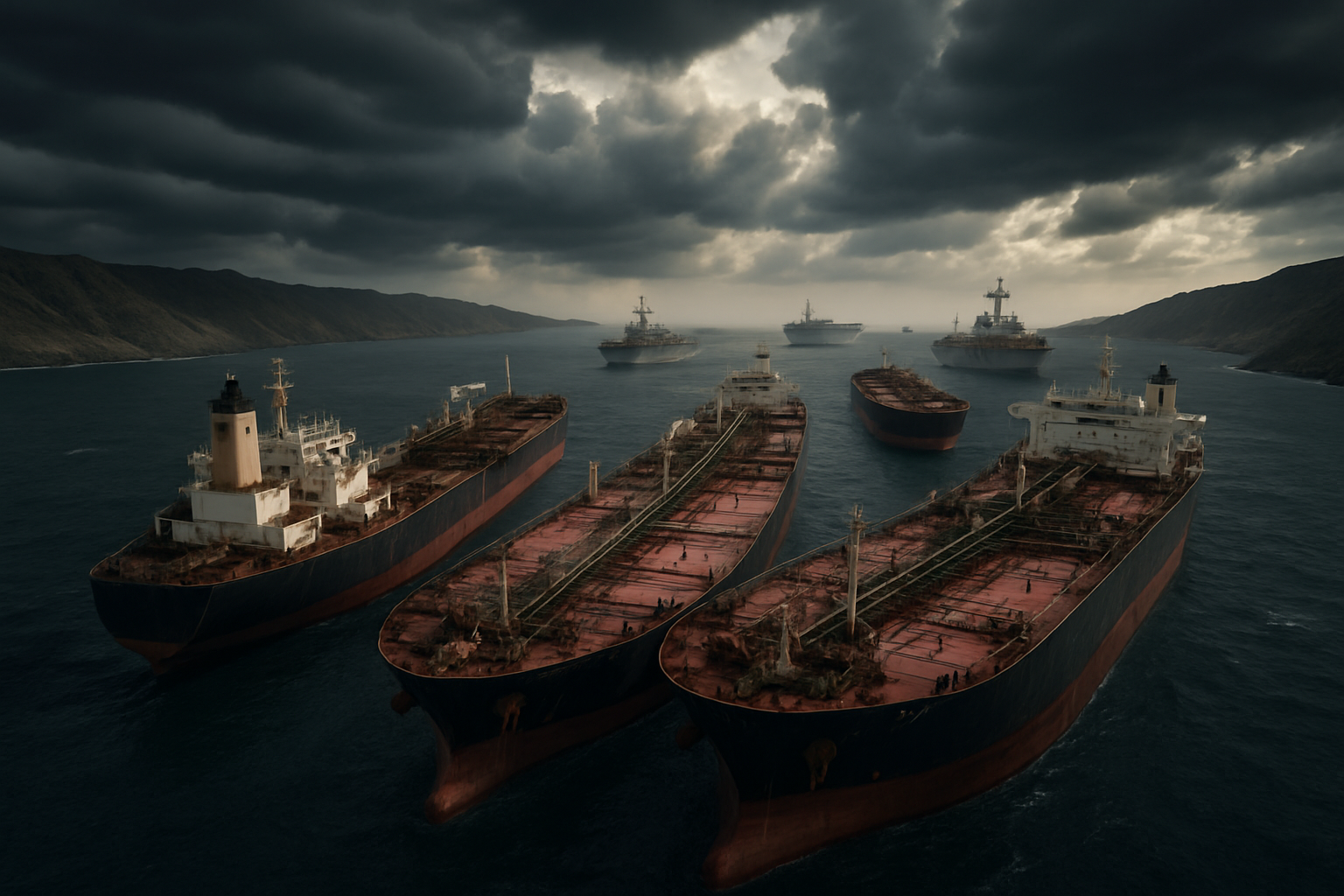
The crisis has reached unprecedented levels as Iran's Revolutionary Guard continues mining the strategic 21-mile waterway, stranding over 150 oil tankers worth billions in cargo while oil prices surge toward $200 per barrel warnings. The situation represents the most dangerous international crisis since the Cold War, with global implications extending far beyond energy markets.
Trump's Aggressive Oil Strategy
In a dramatic escalation, President Trump revealed his administration's consideration of seizing Iran's oil infrastructure, specifically targeting Kharg Island, which processes approximately 90% of Iran's crude oil exports. Speaking to the Financial Times, Trump declared he would "like to take the oil in Iran" but acknowledged that "some stupid people say we can't do that."
"To be honest, I'd love to take the oil in Iran, but some stupid people in the US say we can't do that."
— President Donald Trump, Financial Times Interview
Trump specifically mentioned Kharg Island as a primary target, stating that American forces "could take it very easily" due to Iran's weakened defenses. The island, located 300 miles northwest of the Strait of Hormuz, represents Iran's economic lifeline, processing 1.6 million barrels per day and serving as the critical chokepoint for Iranian petroleum exports.
Military Escalation Reaches Peak
The Pentagon is preparing for what sources describe as potentially weeks-long ground operations against Iran, with hundreds of US special operations forces arriving in the Middle East to join the 3,500 Marines already deployed aboard the USS Tripoli. Combined with the unprecedented dual-carrier deployment of the USS Gerald Ford and USS Abraham Lincoln, the US now has approximately 17,000+ troops positioned in the region.
Operation Epic Fury, the largest US-Israeli campaign since 2003, has already cost $11.3 billion in its first week alone, with Pentagon operations extending through September—far beyond the initial 4-6 week timeline. The operation has resulted in 150 US troops wounded (8 critical) and 3 confirmed deaths, marking the first American casualties in the largest Middle East operation since the Iraq invasion.
Iran's Revolutionary Response
Iran's Revolutionary Guard has deployed between 2,000-6,000 naval mines throughout the Strait of Hormuz under "Operation True Promise 4," effectively declaring the waterway "unsafe for shipping." The Iranian response has expanded beyond military targets to include systematic attacks on regional allies supporting the US coalition.
Recent Iranian strikes have caused civilian casualties across the Gulf region: one civilian killed in Abu Dhabi, 32 injured in Kuwait airport strikes, and 8 wounded in Qatar despite Patriot missile interceptions of 65 missiles and 12 drones. Most significantly, Iranian drones struck RAF Akrotiri in Cyprus—marking the first attack on European territory since World War II.
Global Energy Crisis Intensifies
The International Energy Agency has authorized the largest strategic petroleum reserve release in its 50-year history—400 million barrels from 32 countries, more than double the 182.7 million barrels released during the 2022 Ukraine crisis. Japan is releasing 80 million barrels for the first time since the 2011 Fukushima disaster, reflecting the severity of the situation for a country dependent on Middle Eastern oil for 95% of its imports.
Natural gas prices have exploded by 24% in Europe and 78% in the United States, reaching €47.32/MWh—the highest level since February 2025. Qatar has halted LNG production at its Ras Laffan and Mesaid facilities, representing approximately 20% of global LNG exports.
Aviation Industry in Crisis
The conflict has triggered an aviation crisis of unprecedented scale, with over 18,000 flights cancelled worldwide—the most extensive disruption since COVID-19. Eight Middle Eastern countries have simultaneously closed their airspace: Iran, Iraq, Israel, UAE, Qatar, Syria, Kuwait, and Bahrain, effectively severing Europe-Asia air corridors.
Dubai International Airport, the world's busiest with 86 million passengers annually, remains completely shut down due to missile damage. Major carriers including Emirates, Air France-KLM, Wizz Air, and Bulgaria Air have suspended operations indefinitely, stranding hundreds of thousands of passengers globally.
Pakistan's Diplomatic Mediation
Amid the escalating military crisis, Pakistan has emerged as the primary mediator, with Foreign Minister Ishaq Dar officially confirming that Pakistan is facilitating indirect talks between the US and Iran through a message relay system. The United States has shared a 15-point peace proposal that Iran is currently deliberating, while Iran has responded with five stringent counter-conditions.
Iran's conditions include: complete cessation of all military aggression, concrete guarantees preventing future attacks, full war damage reparations from the US and Israel, ending warfare against all resistance groups including Hezbollah and Hamas, and recognition of Iranian sovereignty over the Strait of Hormuz.
"Pakistan will be honored to host and facilitate meaningful talks between the two sides in the coming days, for a comprehensive and lasting settlement of the ongoing conflict."
— Deputy Prime Minister Ishaq Dar
Nuclear Diplomacy Breakdown
The current military crisis emerged from the complete collapse of US-Iran nuclear negotiations, despite achieving "broad agreement on guiding principles" in Geneva talks—the most progress since the 2018 JCPOA collapse. The fundamental disagreement centered on scope: Iran excluded ballistic missiles and regional proxies as "red lines," demanding nuclear-only talks, while the US insisted on comprehensive agreements including missiles, armed groups, and human rights.
Iran continues enriching uranium at 60% purity with over 400kg of weapons-grade material—sufficient for multiple nuclear weapons if weaponized. The collapse occurred amid the broader nuclear governance crisis following the New START treaty's expiration in February 2026, marking the first time in over 50 years without US-Russia nuclear constraints.
Regional Coalition Under Strain
The unprecedented regional coalition of Saudi Arabia, UAE, Qatar, and Egypt that had backed the diplomatic process is now severely strained due to Iranian retaliation targeting their territories. Egyptian President Sisi condemned attacks on "sisterly countries," warning of "comprehensive chaos" if the conflict continues to expand.
The strain on this coalition represents a significant shift from the extraordinary Middle Eastern consensus that had previously prevented military confrontation and supported diplomatic solutions to the nuclear crisis.
Economic Impact Worldwide
Financial markets have crashed globally, with Pakistan's KSE-100 recording its largest single-day decline in history at -8.97%, and South Korea's KOSPI falling 12% with circuit breakers triggered as the Korean won hit 17-year lows. Supply chains dependent on Persian Gulf logistics are facing severe disruptions affecting automotive, electronics, and textiles manufacturing worldwide.
Consumer impacts are severe globally: Bangladesh has implemented fuel rationing for 170 million people, Pakistan has introduced wartime austerity measures including four-day work weeks, and European nations are experiencing dramatic fuel price increases with some regions approaching crisis thresholds.
Congressional Opposition Mounting
Bipartisan lawmakers in Congress are demanding answers about the administration's Iran war strategy, costs, and potential ground troop deployment. Senator Richard Blumenthal expressed being "more concerned than ever" about boots on the ground, while conflict unpopularity has reached "almost unprecedented" levels with only 25% American support.
The financial markets are emerging as the "ultimate constraint" on conflict escalation, with massive economic disruptions forcing reconsideration of military strategies and timelines.
Historical Significance and Template-Setting Implications
UN Secretary-General António Guterres has called this crisis "the greatest test of multilateral cooperation in the modern era." The rapid transition from diplomatic framework to military escalation demonstrates the fragility of crisis management in the multipolar era, with implications extending decades beyond current events.
The crisis is template-setting for 21st-century conflict resolution, determining whether diplomatic solutions or military confrontation will become the precedent for future nuclear disputes, territorial conflicts, and energy security crises. Success in containing the conflict could provide a framework for nuclear crisis resolution, while failure may accelerate military solutions worldwide, encourage nuclear proliferation, and undermine diplomatic credibility globally.
Looking Ahead
As the crisis enters its most dangerous phase, with Trump threatening ground operations to seize Iranian oil infrastructure and Iran warning that American troops will be "set on fire," the Pakistani mediation represents potentially the last diplomatic opening before broader regional war with global consequences affecting energy markets, supply chains, and nuclear proliferation mechanisms for decades to come.
The stakes could not be higher: regional war prevention, global energy security, nuclear governance credibility, and international law enforcement principles are all being tested simultaneously in what experts are calling the most dangerous international crisis since the end of the Cold War.