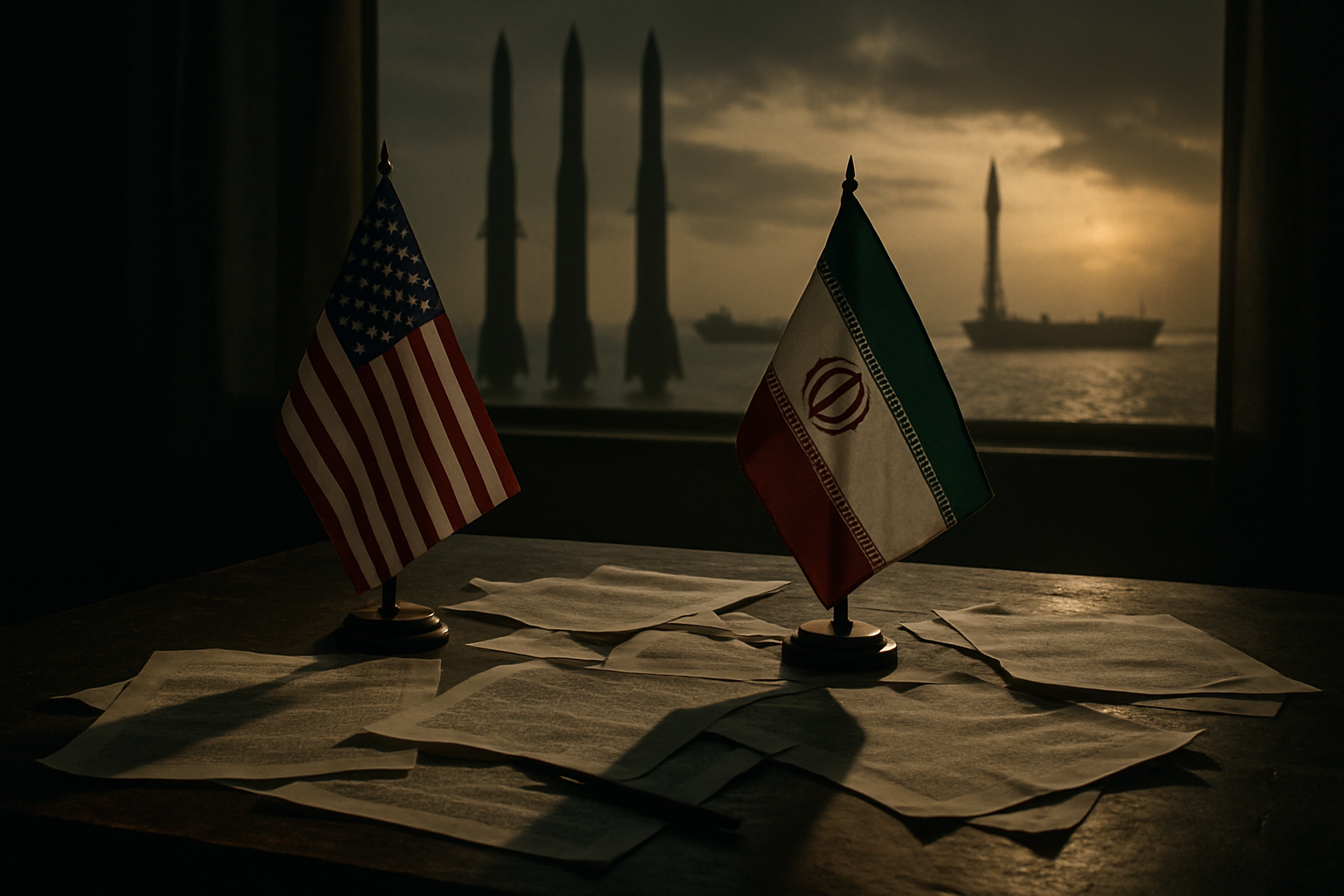
The Trump administration has sent Iran a detailed 15-point peace plan through diplomatic intermediaries while deploying thousands of additional troops to the Middle East, as Tehran publicly rejects claims of any negotiations amid ongoing military exchanges with US and Israeli forces.
Multiple international sources confirm that the United States transmitted the comprehensive proposal to Iranian authorities through Pakistani mediators, representing the most significant diplomatic initiative since the collapse of nuclear negotiations in Geneva earlier this year. The plan addresses Iran's nuclear program, ballistic missiles, regional proxy activities, and the reopening of the critical Strait of Hormuz shipping lane.
The 15-Point Framework
According to Israeli Channel 12 and other media reports, the plan includes demands for Iran to dismantle nuclear facilities at Natanz, Isfahan, and Fordow, while ensuring transparency and oversight from the International Atomic Energy Agency (IAEA). The proposal also requires Iran to abandon its uranium enrichment program and halt all missile production.
Key provisions reportedly include:
- Complete dismantlement of nuclear enrichment facilities
- Permanent commitment not to pursue nuclear weapons
- Ending financial and military support to regional proxy groups
- Reopening the Strait of Hormuz to international shipping
- Limiting future missile production to defensive purposes only
In exchange, Washington offers comprehensive sanctions relief and full diplomatic normalization, marking a potential shift from the "maximum pressure" campaign that has characterized US-Iran relations in recent years.
Iranian Rejection and Contradictory Signals
Iran's response has been both defiant and contradictory. Lieutenant Colonel Ebrahim Zolfagari, spokesperson for the joint command of Iranian Armed Forces, dismissed Trump's claims in a pre-recorded video broadcast on state television.
"Has the level of your inner struggle reached the stage of you negotiating with yourself? People like us can never get along with people like you. As we have always said, no one like us will make a deal with you. Not now. Not ever."
— Ebrahim Zolfagari, Iranian Armed Forces Spokesperson
However, CNN reported citing an Iranian source that Tehran remains "ready to listen to sustainable proposals to end the war," suggesting potential flexibility despite the harsh public rhetoric. This contradictory messaging reflects the complex dynamics within Iran's leadership structure during a period of unprecedented external pressure.
Pakistan's Critical Mediation Role
Pakistani Prime Minister Shehbaz Sharif has emerged as a key intermediary, formally offering Islamabad as a venue for direct US-Iran talks. Pakistani sources indicate that the 15-point plan was transmitted through Pakistani military and diplomatic channels, with Sharif personally engaging both Washington and Tehran.
"Pakistan supports ongoing efforts to pursue dialogue aimed at ending the war in the Middle East and restoring regional stability," Sharif stated on social media, positioning his country as a neutral facilitator in the crisis.
The Pakistani mediation represents a significant diplomatic development, as Islamabad maintains relations with both adversaries and has successfully facilitated backchannel communications in previous regional crises.
Military Escalation Continues
Despite diplomatic initiatives, military confrontations have intensified across the region. The United States is deploying approximately 3,000 troops from the elite 82nd Airborne Division to the Middle East, bringing total American military personnel in the region to levels not seen since the height of operations in Iraq and Afghanistan.
Iranian forces have continued launching attacks against Israeli targets, with the Revolutionary Guards claiming strikes on Tel Aviv and other Israeli cities. Meanwhile, Israel has conducted extensive bombardment campaigns against Iranian infrastructure in Tehran and other major cities.
The conflict has also expanded beyond the immediate combatants, with Kuwait, Saudi Arabia, and other Gulf states reporting drone attacks on their territories. Kuwait International Airport was struck by drones targeting fuel storage facilities, causing fires but no casualties according to the Civil Aviation Authority.
Global Economic Impact
The ongoing crisis has sent shockwaves through global energy markets, with oil prices surging past $100 per barrel as Iran maintains its closure of the Strait of Hormuz, through which approximately 40% of the world's oil transits. The shipping disruption has stranded over 150 tankers worth billions of dollars in the Persian Gulf.

Aviation has been severely affected, with over 18,000 flights cancelled worldwide as eight Middle Eastern countries simultaneously closed their airspace. Dubai International Airport, the world's busiest, remains shuttered due to missile damage, affecting hundreds of thousands of passengers.
The economic warfare has expanded beyond the immediate region, with natural gas prices surging 24% in Europe and 78% in the United States as markets price in prolonged supply disruptions.
Regional Coalition Under Strain
The unprecedented Saudi-UAE-Qatar-Egypt diplomatic coalition that had supported earlier peace efforts now faces severe strain as Iranian retaliation has directly targeted member territories. Egyptian President Abdel Fattah al-Sisi condemned attacks on "sisterly Arab countries" and warned of "comprehensive chaos" spreading across the region.
The coalition members now face difficult choices between maintaining their alliance with the United States and avoiding further Iranian retaliation against their own territories and citizens.
Historical Context and Nuclear Dimension
The current crisis represents the collapse of what had been the most promising diplomatic engagement between Washington and Tehran since the 2018 withdrawal from the Joint Comprehensive Plan of Action (JCPOA). Earlier Geneva negotiations had achieved what Iranian Foreign Minister Abbas Araghchi called "broad agreement on guiding principles" before breaking down over fundamental scope disagreements.
Iran continues to enrich uranium at 60% purity, approaching the 90% threshold required for weapons-grade material. Intelligence assessments suggest Iran now possesses sufficient enriched uranium for multiple nuclear weapons if the decision were made to weaponize the program.
The crisis occurs against the broader backdrop of global nuclear governance breakdown, with the New START treaty between the US and Russia having expired in February 2026, leaving the world without major power nuclear constraints for the first time in over 50 years.
Congressional and Public Opposition
The military operations have encountered significant domestic resistance in the United States, with only 25% of Americans supporting the current approach according to recent polling - representing what analysts describe as "almost unprecedented" early-stage unpopularity for a military operation.
Bipartisan lawmakers in Congress have demanded detailed briefings on strategy, costs, and the potential for ground troop deployments. Senator Richard Blumenthal stated he is "more concerned than ever" about the possibility of boots-on-the-ground involvement.
The financial costs are mounting rapidly, with "Operation Epic Fury" expenses reaching $27 billion and running at approximately $1 billion per day, making it one of the most expensive military campaigns since the 2003 Iraq invasion.
International Mediation Efforts
Beyond Pakistan's central role, other regional powers including Turkey, Egypt, and Qatar have engaged in active backchannel diplomacy to prevent further escalation. European diplomatic sources confirm that multiple countries are serving as message relays between the adversaries despite the absence of formal negotiations.
The Vatican has also entered the diplomatic arena, with Pope Leo XIV delivering his strongest peace appeal yet, calling for an immediate ceasefire and warning that "violence can never lead to the justice, stability and peace that the people are waiting for."
Trump's Strategic Calculations
President Trump's approach reflects a complex dual-track strategy combining maximum military pressure with selective diplomatic engagement. His previous statements have oscillated between declaring the war "virtually over" and threatening massive escalation if Iran continues its resistance.
The 15-point plan represents a potential off-ramp from the military confrontation, though Trump has also made explicit regime change comments, calling Iranian government overthrow "the best thing that could happen" and claiming the right to personally select Iran's next Supreme Leader.
Looking Ahead: Critical Diplomatic Window
The current diplomatic initiative represents what many observers consider the last major opportunity to prevent a broader regional war that could reshape Middle Eastern geopolitics for decades. The success or failure of the Pakistani mediation effort will likely determine whether the conflict expands further or can be contained through negotiated settlement.
The stakes extend far beyond the immediate Middle East, affecting global energy security, nuclear governance credibility, and the viability of diplomatic solutions to international crises in an increasingly multipolar world order.
As both sides maintain their public positions while engaging through intermediaries, the coming days will prove decisive for determining whether the 15-point framework can bridge fundamental disagreements that have prevented breakthrough agreements for over a decade.
The template-setting nature of this crisis means that its resolution - whether through diplomacy or continued military confrontation - will influence international approaches to conflict resolution well beyond the current administration and far into the 21st century.