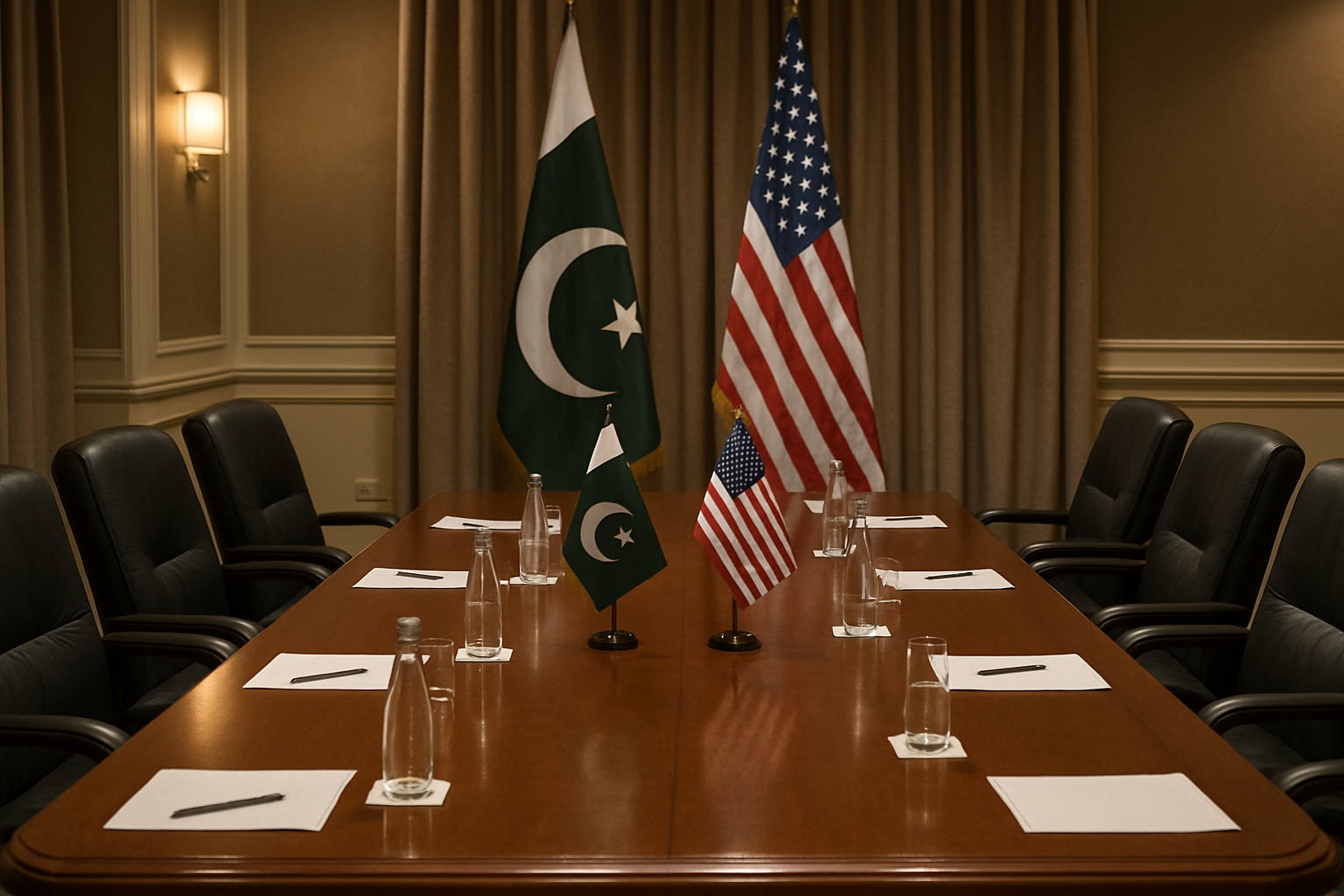
High-stakes diplomatic negotiations between the United States and Iran have ended without agreement after 21 hours of marathon talks in Islamabad, marking the collapse of the most direct diplomatic engagement between the two nations since the 1979 Islamic Revolution.
Vice President JD Vance announced the failure to reach agreement on Sunday, delivering a sobering assessment of negotiations that had raised international hopes for resolving the nuclear crisis and regional tensions that have plagued US-Iran relations for decades.
"After 21 hours of substantive discussions with the Iranians, we have not reached an agreement," Vance said during a press conference in the Pakistani capital. "This is bad news for Iran, much more bad news for the United States."
Pakistan's Historic Mediation Effort
The failure represents a significant setback for Pakistan's unprecedented mediation efforts, which had successfully brokered the "Islamabad Accord" ceasefire framework just days earlier. Prime Minister Shehbaz Sharif and Field Marshal Asim Munir had achieved what many considered impossible - bringing the world's most bitter adversaries to the negotiating table through an innovative "message relay system."
Pakistan's mediation success had already prevented what UN Secretary-General António Guterres called the "greatest test of multilateral cooperation in the modern era." The initial ceasefire, reached just 88 minutes before President Trump's April 8 deadline, had crashed oil prices by 20% from $119.50 to below $100 per barrel and ended the most dangerous international crisis since the Cold War.
"Pakistan is ready to continue facilitating dialogue between the parties."
— Foreign Minister Ishaq Dar, Pakistan
Despite the current impasse, Pakistani Foreign Minister Ishaq Dar urged both sides to maintain their ceasefire commitments and indicated Pakistan's willingness to continue its mediation role.
Nuclear Program at Center of Disagreement
According to multiple sources familiar with the negotiations, the primary sticking point centered on Iran's nuclear program. The United States demanded an affirmative commitment from Iran not to seek nuclear weapons development or rapid production capability. Iran, however, maintained its position on continuing uranium enrichment at 60% purity - significantly above the 3.67% limit set by the 2015 Joint Comprehensive Plan of Action (JCPOA).
Iran currently possesses over 400 kilograms of weapons-grade enriched uranium, according to former IAEA inspector Dr. Yusri Abu Shadi, making nuclear weapons development "easily achievable" if Tehran chooses to pursue that path. This nuclear advancement represents the most serious proliferation challenge since the original Iran nuclear deal collapsed in 2018.
Iranian Foreign Ministry Spokesman Nasser Kanaani confirmed that "two or three important topics" remained unresolved during the talks, including new issues related to Strait of Hormuz control mechanisms.
The Lebanon Complication
A critical factor in the talks' failure emerged from what negotiators called the "Lebanon loophole." Israeli Prime Minister Benjamin Netanyahu had explicitly excluded Lebanon from the ceasefire framework, creating a fundamental disagreement between the parties. During the negotiations, Israeli strikes killed 254+ people in a single day - the deadliest bombardment since the conflict began - with 1.2 million Lebanese displaced.
Iran had threatened to withdraw from negotiations unless comprehensive enforcement covered all fronts, including Lebanon. Vice President Vance acknowledged Iran had a "legitimate misunderstanding" about the scope of the ceasefire, but maintained that the United States had never agreed to include Lebanese operations.
Economic and Energy Implications
The failure of the Islamabad talks threatens to reverse the significant economic relief that began following the initial ceasefire. Oil markets, which had stabilized after the dramatic price crash, now face renewed uncertainty. Iran's innovative cryptocurrency payment system requiring $1 per barrel for oil tankers transiting the Strait of Hormuz continues to affect 40% of global oil transit.
Major shipping companies remain hesitant to send vessels through the strategic waterway, fearing they could become stranded if the fragile agreements collapse entirely. The failure also jeopardizes consumer relief measures that were being planned in Bangladesh, Pakistan, and Europe, where fuel rationing and austerity measures had been implemented during the crisis.
Regional Coalition Under Strain
The unprecedented regional coalition of Saudi Arabia, the UAE, Qatar, and Egypt has maintained its support for diplomatic solutions throughout the crisis, despite severe strains from Iranian attacks on member territories during the conflict. The UAE suffered 1 death in Abu Dhabi, Kuwait reported 32 injuries at airports, and Qatar intercepted missiles and drones that wounded 8 people.
Egyptian President Abdel Fattah al-Sisi had warned of "comprehensive chaos" if diplomatic efforts failed, making the preservation of this coalition crucial for regional stability.
International Nuclear Governance Crisis
The talks took place against the backdrop of a broader nuclear governance crisis. The New START treaty between the United States and Russia expired in February 2026, marking the first time in over 50 years that there are no nuclear constraints between the superpowers. This context made the Iran nuclear negotiations even more critical for establishing 21st-century nuclear crisis resolution precedents.
The current crisis had emerged from the complete collapse of Geneva talks in February, despite achieving "broad agreement on guiding principles" - the most progress in US-Iran nuclear diplomacy since the JCPOA breakdown in 2018.
Congressional and Public Pressure
The diplomatic failure comes amid unprecedented Congressional opposition to military operations. American public support for Operation Epic Fury had fallen to just 25% - described as "almost unprecedented" unpopularity for early-stage military operations. Senator Richard Blumenthal had expressed concern about potential ground troops deployment, adding domestic pressure for diplomatic solutions.
The operation had cost $11.3 billion in its first week alone, making it one of the most expensive recent military campaigns and creating what officials described as an "ultimate constraint" from financial markets.
Looking Forward
With Vice President Vance indicating the US delegation would be departing after presenting their "final best offer," the immediate diplomatic window appears to have closed. However, both sides have indicated willingness to continue dialogue through Pakistan's mediation framework, suggesting this may represent a temporary setback rather than a complete breakdown.
The failure of these historic talks represents a critical test of whether 21st-century diplomatic innovation can ultimately triumph over military confrontation. Pakistan's achievement in bringing the world's most bitter adversaries to the negotiating table demonstrates that innovative solutions are possible even in the darkest circumstances.
Historical Significance
The Islamabad talks, regardless of their outcome, represent a watershed moment in international relations. They mark the first direct US-Iran negotiations since 1979 and showcase Pakistan's emergence as a crucial mediator capable of bridging major power divides when traditional mechanisms fail.
As the international community processes this diplomatic setback, the template-setting significance remains clear: these talks have demonstrated both the potential for innovative crisis management and the persistent challenges of resolving decades-old fundamental disagreements between major powers.
The coming days will determine whether this represents a temporary pause in diplomatic efforts or a return to the dangerous military escalation that had threatened global energy security and regional stability.