Vice President JD Vance announced the failure of historic US-Iran peace negotiations in Islamabad after 21 hours of intensive talks, with President Trump immediately ordering a naval blockade of the Strait of Hormuz in response to Iran's refusal to abandon its nuclear ambitions.
The collapse of the Pakistan-mediated talks marks the end of the most direct diplomatic engagement between Washington and Tehran since the 1979 Islamic Revolution, dashing hopes for a peaceful resolution to the crisis that had previously brought the world to the brink of catastrophic conflict.
Nuclear Program Remains Central Sticking Point
According to multiple sources from the negotiations, the primary obstacle centered on Iran's nuclear program. The United States demanded an affirmative commitment from Iran not to pursue nuclear weapons development, while Tehran insisted on maintaining its 60% uranium enrichment levels with over 400kg of weapons-grade material.
Iranian negotiators, led by Parliament Speaker Mohammad Bagher Qalibaf and Foreign Minister Abbas Araghchi, rejected US conditions requiring complete suspension of uranium enrichment activities. The Islamic Republic maintains that uranium enrichment is an "inalienable right" under international law and refuses to compromise on what it considers fundamental sovereignty issues.
"Iran showed it was very close to having an agreement but could not give up its nuclear ambitions," Vance stated during his departure from Islamabad, describing the talks as having "substantive discussions" but ultimately reaching an impasse on "two or three important topics."
Lebanon Crisis Complicates Negotiations
A critical complication arose from what negotiators termed the "Lebanon loophole." Israeli Prime Minister Benjamin Netanyahu had explicitly excluded Lebanon from the earlier ceasefire framework, allowing Israeli operations against Hezbollah to continue. During the talks, Israeli strikes killed over 254 people in a single day - the deadliest bombardment since the conflict began.
Iran threatened to withdraw from negotiations unless comprehensive enforcement covered all fronts, including Lebanon. With 1.2 million Lebanese displaced and systematic targeting of medical personnel, Iranian officials viewed the continued violence as a fundamental breach of good faith.
Vance acknowledged Iran's "legitimate misunderstanding" regarding Lebanon's inclusion but clarified that the United States had never agreed to halt Israeli operations against Iranian-backed groups.
Trump Orders Immediate Naval Blockade
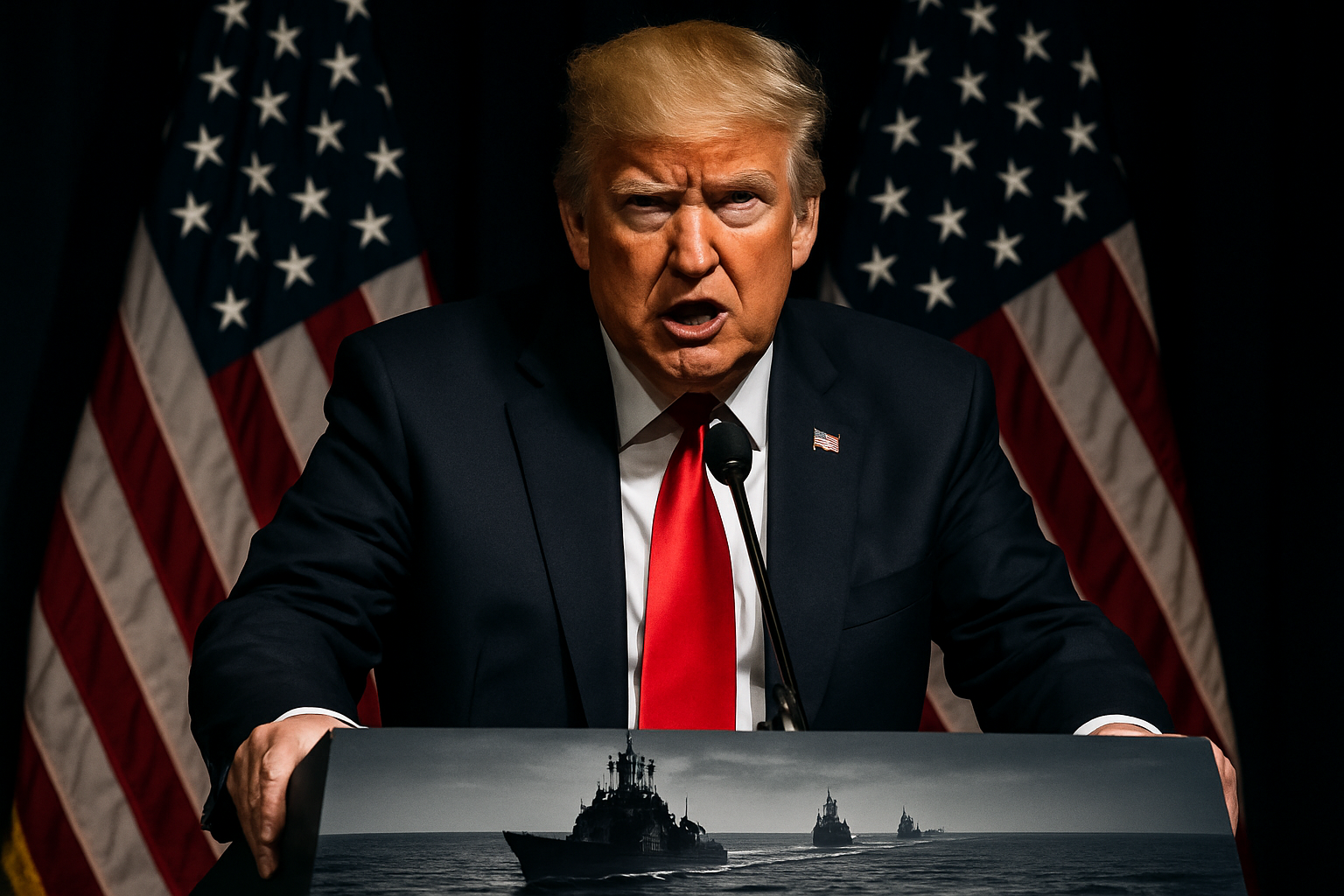
Within hours of the talks' collapse, President Trump announced via Truth Social that the US Navy would "blockade all ships" attempting to enter or exit the Strait of Hormuz. The directive, widely considered an act of war under international law, threatens to paralyze global energy markets.
In characteristically explosive language, Trump declared: "Any Iranian who fires at us, or at peaceful vessels, will be BLOWN TO HELL!" The announcement sent shockwaves through financial markets and prompted emergency consultations among allied governments.
The Strait of Hormuz handles approximately 40% of global seaborne oil transit, making it one of the world's most critical energy chokepoints. Iran has already deployed thousands of naval mines in the waterway and implemented a cryptocurrency payment system requiring $1 per barrel for oil tankers.
Pakistan's Unprecedented Mediation Effort
The collapse represents a significant setback for Pakistan's unprecedented diplomatic initiative. Prime Minister Shehbaz Sharif and Field Marshal Asim Munir had successfully brokered the "Islamabad Accord" framework, achieving a temporary ceasefire just 88 minutes before Trump's previous "whole civilization will die tonight" deadline on April 8.
Pakistan's innovative "message relay system" had enabled indirect communication between the adversaries when direct contact proved impossible. The mediation effort received support from China, with Foreign Minister Wang Yi expressing "full support" for the initiative, while Germany noted "positive signs" for diplomatic progress.
Despite the failure, Pakistani officials indicated their continued commitment to facilitating dialogue. Foreign Minister Ishaq Dar urged both sides to maintain ceasefire commitments and expressed readiness to continue mediation efforts.
Iran's Revolutionary Guard Issues Counter-Threat
Iran's Islamic Revolutionary Guards Corps (IRGC) responded defiantly to Trump's blockade threat, declaring "complete control" over the Strait of Hormuz. In a statement loaded with military imagery, the Guards warned that enemies would be trapped in a "deadly whirlpool" if they attempted to challenge Iranian sovereignty over the waterway.
"The strait is under the control and smart management of Iran's Navy," the Guards stated, adding that it remains "open for the safe passage of non-military vessels in accordance with specific regulations." The IRGC emphasized that any military vessels approaching the strait would be considered a violation of the ceasefire.
Global Economic Implications
The talks' failure threatens to reverse significant economic relief that had followed the initial ceasefire. Oil prices, which had crashed 20% from $119.50 Brent to below $100 following the Pakistan-mediated breakthrough, face renewed volatility as markets brace for potential supply disruptions.
The International Energy Agency (IEA) had been reducing its record 400-million-barrel strategic reserve release - the largest in 50 years - but may need to reconsider if the crisis escalates. Asian markets, which had seen explosive rallies including Pakistan's KSE-100 record 8.15% surge, now face uncertainty.
Aviation industry recovery from the previous crisis, which saw over 18,000 flights canceled globally, remains fragile. Dubai International Airport, which had been preparing to reopen after missile damage, may delay operations pending security assessments.
Regional Coalition Under Strain
The unprecedented regional coalition supporting diplomatic solutions faces severe testing. Saudi Arabia, UAE, Qatar, and Egypt had maintained extraordinary consensus despite Iranian attacks during the previous escalation, with the UAE suffering 1 killed, Kuwait 32 injured, and Qatar 8 wounded during "Operation True Promise 4."
Egyptian President Abdel Fattah al-Sisi's earlier warnings about "comprehensive chaos" affecting "sisterly countries" appear increasingly prophetic as the region braces for renewed conflict.
Congressional Opposition Intensifies
The failure reignites congressional opposition to military action, with only 25% American support for military operations - described as "almost unprecedented" unpopularity for early-stage conflicts. Senator Richard Blumenthal expressed being "more concerned than ever" about potential ground troop deployments.
The Pentagon had estimated operations could extend through September, far beyond initial 4-6 week projections, with costs already reaching $11.3 billion in the first week of "Operation Epic Fury." Financial market constraints had been identified as the "ultimate constraint" on prolonged military action.
Nuclear Governance Crisis Context
The diplomatic failure occurs against the backdrop of a broader nuclear governance crisis. The New START treaty between the US and Russia expired in February 2026, marking the first time in over 50 years that the superpowers operate without nuclear constraints. Iran's continued 60% uranium enrichment with weapons-grade material adds urgency to global non-proliferation concerns.
Former IAEA inspector Dr. Yusri Abu Shadi has confirmed that Iran possesses sufficient enriched uranium to make nuclear weapons "easily achievable," creating a narrow window for diplomatic solutions before the crisis potentially escalates beyond conventional boundaries.
Historical Significance and Future Implications
UN Secretary-General António Guterres had described the Pakistan mediation as the "greatest test of multilateral cooperation in the modern era." The failure represents a significant blow to diplomatic solutions in an increasingly volatile international environment.
The collapse has template-setting implications for 21st-century conflict resolution, testing whether innovative middle-power diplomacy can bridge major adversarial divides or whether military confrontation becomes the default option for resolving international crises.
With both sides now returning to military postures, the international community faces the prospect of the most dangerous crisis since the Cold War's end resuming in earnest. The stakes extend far beyond bilateral US-Iran relations, affecting global energy security, nuclear governance credibility, and international law enforcement mechanisms for decades to come.
Path Forward Uncertain
As VP Vance's delegation departed Islamabad, immediate prospects for renewed diplomatic engagement appear dim. Trump's naval blockade order, widely considered an act of war under international maritime law, signals a return to maximum pressure tactics that preceded the current crisis.
Iran's cryptocurrency payment system for oil tankers and deployed naval mines in the Strait of Hormuz create a dangerous environment where miscalculation could trigger broader conflict. With European territory already attacked during the previous escalation - marking the first such incident since World War II - the crisis's geographic scope threatens to expand beyond the Middle East.
The failure of the most direct US-Iran diplomatic engagement since 1979 leaves the international community with few options beyond renewed military confrontation or accepting an Iranian nuclear capability that could reshape regional and global security architectures for generations.