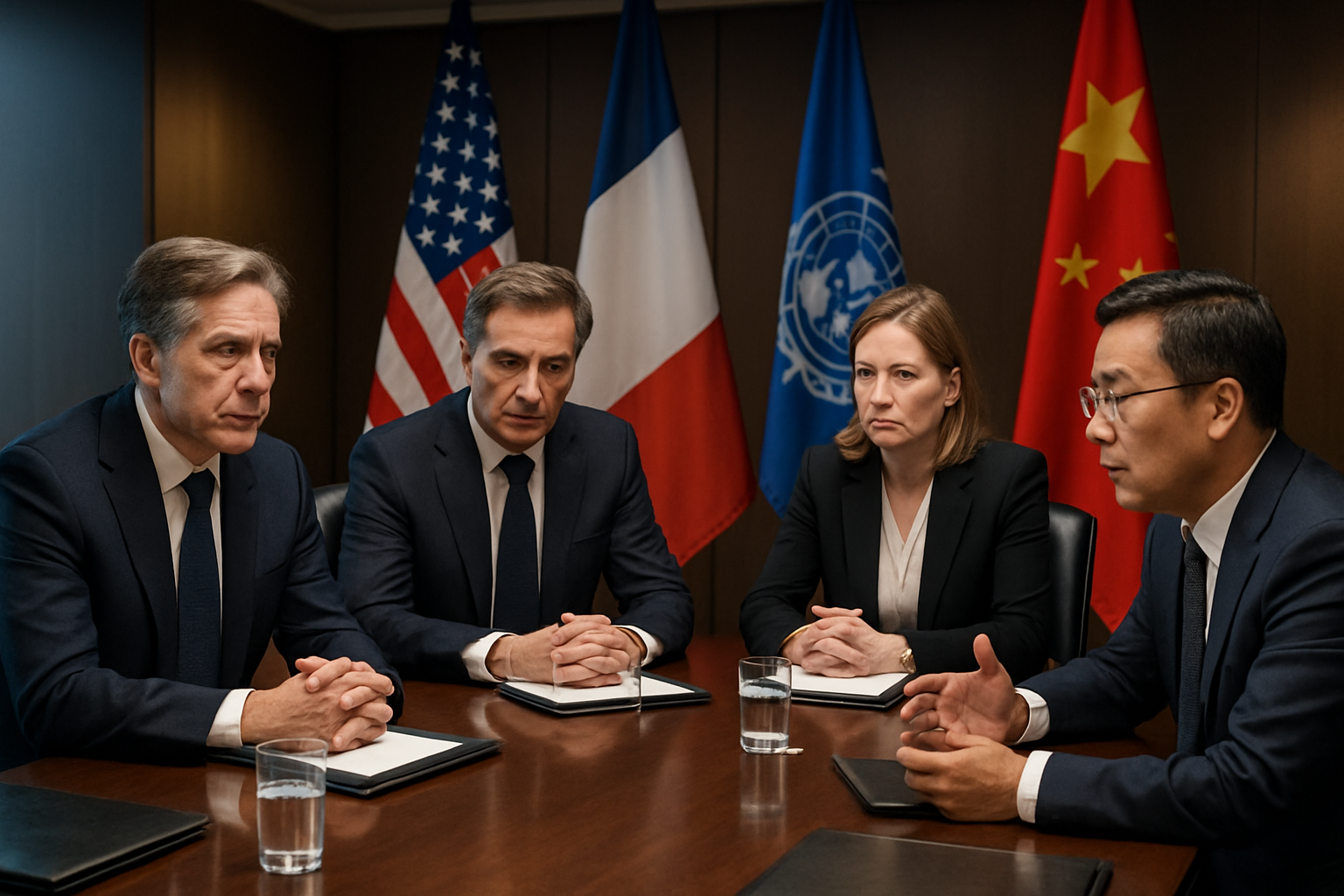
The second round of historic US-Iran peace negotiations in Islamabad faces profound uncertainty as Iranian officials delivered mixed signals on their participation, casting doubt over what could be the most significant diplomatic engagement between Washington and Tehran since the 1979 Islamic Revolution.
Iranian Foreign Ministry spokesperson Baghaei declared Monday that Iran has "no plans for further negotiations with the US," citing a lack of trust and genuine intent from Washington. However, Parliament Speaker Mohammad Bagher Ghalibaf's emphasis on trust deficits while leaving the door open for dialogue suggests Tehran's final decision remains unclear, creating diplomatic confusion as global attention focuses on Pakistan's capital.
American Delegation En Route Despite Iranian Hesitation
President Trump told the New York Post that Vice President JD Vance and an American delegation are en route to Islamabad, expected to arrive within hours. The delegation's departure underscores Washington's commitment to pursuing diplomatic solutions despite the uncertainty surrounding Iranian participation.
Trump expressed willingness to personally meet with Iranian leaders if a breakthrough emerges, telling Fox News that an agreement could be signed "today," though this timeline appears overly optimistic given Tehran's apparent reluctance to engage.
Pakistan's Unprecedented Mediation Framework
The current diplomatic initiative builds on Pakistan's historic mediation success from early 2026, when Prime Minister Shehbaz Sharif and Field Marshal Asim Munir achieved the groundbreaking "Islamabad Accord." Their innovative "message relay system" facilitated communication between the adversaries when direct contact proved impossible, representing a template for 21st-century middle power diplomacy.
The previous ceasefire, achieved just 88 minutes before Trump's "whole civilization will die" deadline in April, triggered an immediate 20% crash in oil prices from $119.50 to $100 per barrel Brent crude—the steepest decline in six years. This demonstrated the profound global implications of US-Iran relations and the critical importance of successful mediation.
Naval Incident Complicates Diplomatic Efforts
Recent tensions escalated following Sunday's naval incident in the Gulf of Oman, where US forces seized the Iranian cargo vessel M/V Touska after the crew refused stop orders. The USS Spruance fired on the ship's engine room when it attempted to evade capture, prompting Iran to threaten "swift retaliation against armed piracy."
This incident reflects the broader challenge of maintaining diplomatic momentum while ongoing US naval blockade of Iranian ports continues to affect the Strait of Hormuz, through which 40% of global oil transit flows. Iran's Revolutionary Guard maintains "complete control" over the waterway, creating a volatile maritime environment that complicates peace efforts.
"The nuclear program remains the core sticking point—the US demands Iran abandon nuclear weapons development and suspend uranium enrichment, while Iran maintains 60% enrichment levels with over 400kg of weapons-grade material."
— Senior Diplomatic Source
Nuclear Program: The Central Obstacle
The fundamental disagreement that collapsed previous negotiations persists: Iran's nuclear program. Washington demands a firm commitment that Iran will not pursue nuclear weapons development and will suspend uranium enrichment activities. Tehran maintains its 60% uranium enrichment levels with over 400 kilograms of weapons-grade material—sufficient for multiple nuclear weapons if weaponized.
Iranian Foreign Minister Abbas Araghchi previously declared Iran would "never abandon enrichment even if war is imposed," highlighting the structural disagreement that has prevented breakthrough since the 2018 JCPOA collapse. This nuclear impasse occurs against the backdrop of the New START treaty's expiration in February 2026, marking the first time in over 50 years without US-Russia nuclear constraints.
The Lebanon Loophole Crisis
A critical complication emerged from Israeli Prime Minister Netanyahu's explicit exclusion of Lebanon from the ceasefire framework, creating what analysts term a "critical loophole." During previous talks, Israeli strikes killed over 254 people in a single day—the deadliest bombardment since the conflict began—displacing 1.2 million Lebanese civilians, representing 25% of the country's population.
Iran has consistently demanded comprehensive enforcement across all fronts, threatening withdrawal from negotiations unless the Lebanon situation is addressed. VP Vance previously acknowledged Iran's "legitimate misunderstanding" about Lebanon's inclusion, but emphasized that the US never agreed to include Israeli-Hezbollah operations in the ceasefire scope.
Massive Security Preparations in Islamabad
Pakistan has implemented extraordinary security measures befitting the negotiations' significance. Interior Minister Mohsin Naqvi conducted separate meetings with US and Iranian envoys to coordinate arrangements. The capital's Red Zone has been sealed, public transport suspended in the twin cities, and over 10,000 security personnel deployed.
The Serena Hotel reportedly serves as the exclusive venue for foreign delegations, reflecting the enormous stakes of these comprehensive negotiations. The security arrangements underscore Pakistan's determination to provide a secure environment for what could be the most important diplomatic initiative of the decade.
Regional Coalition Under Strain
The unprecedented unity among Saudi Arabia, the UAE, Qatar, and Egypt—despite Iranian attacks on their territories during previous escalations—demonstrates extraordinary regional consensus supporting diplomatic solutions. The coalition weathered maximum strain when Iranian retaliation resulted in casualties: one killed in Abu Dhabi, 32 injured at Kuwait's airport, and eight wounded in Qatar despite Patriot missile intercepts.
Egyptian President Sisi's warnings about "comprehensive chaos among sisterly countries" proved prophetic as diplomatic challenges mounted, yet the coalition's preservation represents a remarkable achievement in Middle Eastern diplomacy.
Global Economic Stakes
The economic implications extend far beyond the Middle East. The previous Pakistan-mediated breakthrough crashed oil prices by 20% in the steepest decline in six years, while the Strait of Hormuz's partial closure through Iranian mining operations affects global supply chains. Major shipping companies remain reluctant to send vessels through the waterway, fearing they could be stranded if negotiations fail.
Consumer relief measures are at stake globally: Bangladesh's fuel rationing affecting 170 million people, Pakistan's potential austerity reversal, and European energy cost reductions all depend on successful conflict resolution. The template-setting nature of these negotiations will influence energy security paradigms for decades to come.
Congressional Opposition and International Skepticism
Domestic US opposition remains unprecedented, with only 25% American support for Operation Epic Fury—historically low approval ratings that forced the administration toward diplomatic solutions. The $11.3 billion first-week costs, with Pentagon operations projected through September, created financial market pressures that served as the "ultimate constraint" pushing toward negotiations.
International allies have largely resisted broader military engagement, with the UK, France, and Germany emphasizing diplomatic approaches over military solutions. This represents the most significant rejection of American military leadership since the 2003 Iraq War, highlighting the global preference for peaceful resolution.
Template for 21st-Century Diplomacy
UN Secretary-General Guterres characterized these efforts as the "greatest test of multilateral cooperation in the modern era." Pakistan's emergence as a crucial mediator demonstrates middle power capability to bridge major adversaries when traditional great power mechanisms fail.
The success or failure of Pakistan's mediation will establish precedents for diplomatic versus military solutions in 21st-century international relations. China's "full support" and Germany's "positive signs" indicate international backing for the innovative diplomatic framework.
Uncertain Path Forward
The current uncertainty highlights the same structural obstacles that have prevented US-Iran breakthroughs for decades: Iran's ballistic missiles and regional proxies represent "red lines" that Tehran refuses to abandon, while Washington demands comprehensive disarmament covering missiles, armed groups, and human rights issues.
The coming days will determine whether Pakistan's historic achievement in bringing the world's most bitter adversaries to the negotiating table can be converted into a lasting peace framework, or whether the world returns to the most dangerous crisis since the Cold War's end.
The stakes extend far beyond bilateral relations, affecting territorial sovereignty enforcement, energy security paradigms, nuclear governance credibility, and international law enforcement mechanisms with implications extending decades into the future. Pakistan's template for middle power crisis management in a volatile, interconnected world may prove to be one of the most significant diplomatic innovations of our time.