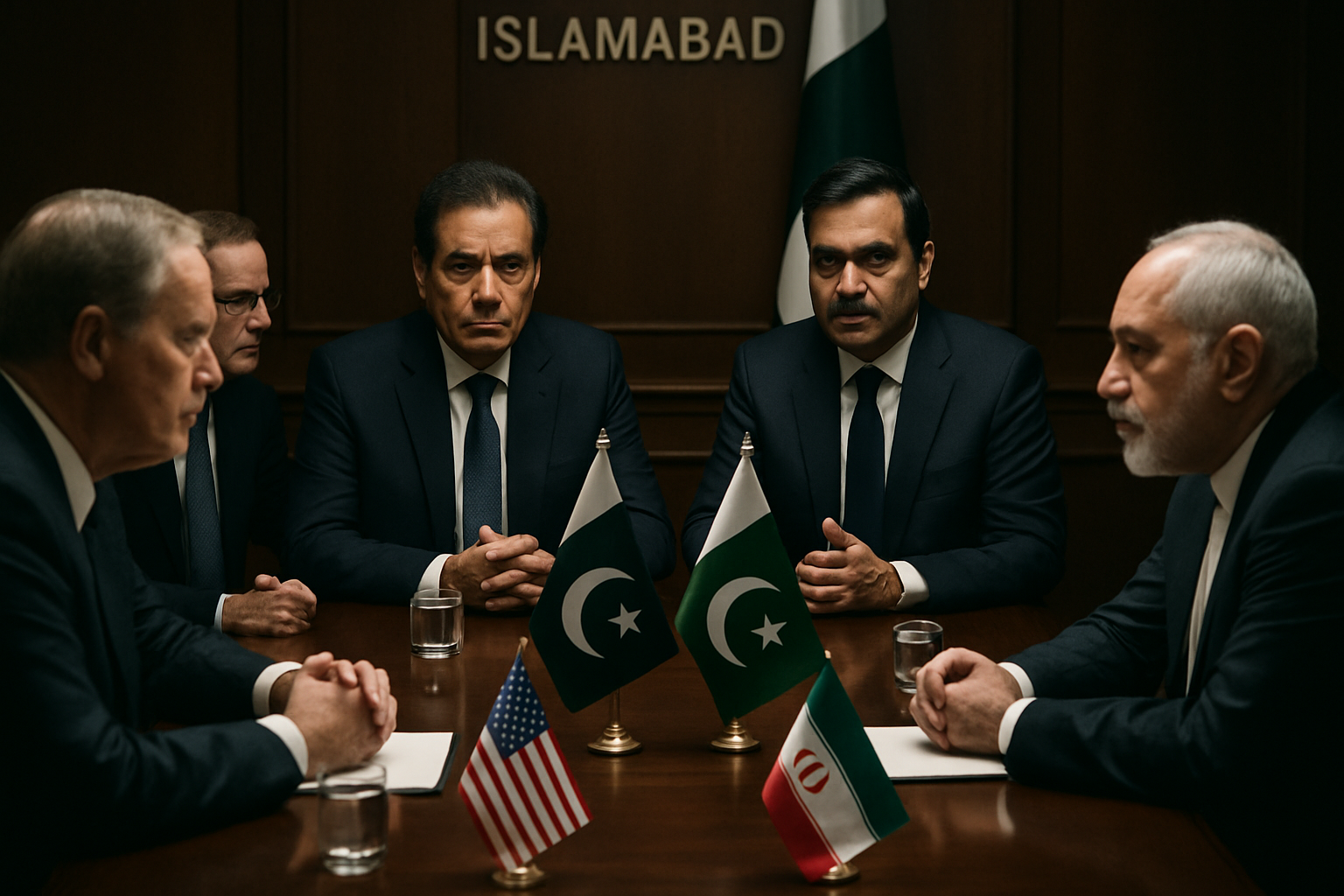
Uncertainty surrounds the second round of US-Iran peace talks scheduled in Islamabad as Iranian officials signal mixed responses to renewed negotiations while President Trump claims his delegation is en route to Pakistan for what could be the most critical diplomatic engagement in decades.
The talks, mediated by Pakistan Prime Minister Shehbaz Sharif and Field Marshal Asim Munir, represent a continuation of the historic "Islamabad Accord" framework that achieved a dramatic ceasefire just 88 minutes before Trump's "whole civilization will die tonight" deadline in early April 2026.
Mixed Iranian Signals Create Diplomatic Confusion
Iranian Foreign Ministry spokesman Esmail Baghaei declared on Monday that Tehran sees "no genuine intent from Washington to reach an agreement," stating Iran has "no plans to hold further negotiations with the United States." This contradicts earlier signals suggesting Iranian participation in renewed talks.
The confusion deepened as Iranian Parliament Speaker Mohammad Bagher Qalibaf highlighted the "lack of trust in Washington," while other Iranian sources suggested the country has yet to make a final decision on participation in the next round of negotiations.
Adding to the uncertainty, Iran's recent seizure of a US cargo ship in the Strait of Hormuz has further complicated diplomatic relations. The US Navy had to fire on and seize the Iranian vessel Touska as part of Washington's ongoing blockade of Iranian ships in the vital waterway.
Trump Administration Pushes Forward
Despite Iranian hesitation, President Trump told The New York Post that US Vice President JD Vance and an American delegation were en route to Islamabad and expected to land within hours. Trump expressed willingness to meet with senior Iranian leaders if a breakthrough emerges from the Pakistan-mediated talks.
Portuguese media reported Trump's optimistic assessment to Fox News that an agreement with Iran would be signed "today" in Pakistan, though this timeline appears overly ambitious given Iranian reluctance to participate.
The Trump administration has maintained that negotiations would proceed despite the mixed signals from Tehran, with Interior Minister Mohsin Naqvi holding separate meetings with both US and Iranian envoys to discuss arrangements for potential talks.
Security Preparations in Islamabad
Pakistani authorities have implemented extraordinary security measures in anticipation of the high-stakes negotiations. The Red Zone in Islamabad has been sealed, and public transport in the twin cities has been suspended. Over 10,000 security personnel have been deployed, with the Serena Hotel reportedly reserved as the exclusive venue for foreign delegations.
The security preparations reflect the enormous stakes involved in these talks, which address Iran's comprehensive 10-point proposal covering Strait of Hormuz protocols, sanctions relief, regional conflicts, and security guarantees - the most detailed US-Iran framework since the 2015 nuclear deal.
Nuclear Program Remains Central Sticking Point
The primary obstacle to any agreement remains Iran's nuclear program. The United States continues to demand a firm commitment that Iran will not pursue nuclear weapons development and will suspend its uranium enrichment activities. Iran currently maintains 60% uranium enrichment levels with over 400kg of weapons-grade material - sufficient for multiple nuclear weapons if weaponized.
Iranian Foreign Minister Abbas Araghchi has previously stated that "Iran will never abandon enrichment even if war is imposed," highlighting the fundamental disagreement that has prevented breakthrough negotiations since the collapse of the Joint Comprehensive Plan of Action (JCPOA) in 2018.
The nuclear issue has gained additional urgency following the expiration of the New START treaty in February 2026, marking the first time in over 50 years that there are no nuclear constraints between the US and Russia.
Lebanon Crisis Complicates Regional Framework
A critical complication threatening the broader peace framework is the ongoing Lebanon crisis. Israeli Prime Minister Benjamin Netanyahu explicitly excluded Lebanon from the Pakistan-mediated ceasefire, creating what Iranian officials have called a "critical loophole."
Israeli strikes have killed over 254 people in a single day during previous negotiations - the deadliest bombardment since the conflict began. With 1.2 million Lebanese displaced (25% of the population), Iran has threatened withdrawal from talks unless there is comprehensive enforcement of ceasefire arrangements on all fronts.
VP Vance has previously acknowledged Iran's "legitimate misunderstanding" about Lebanon's inclusion, though US officials maintain they never agreed to include Israeli-Hezbollah operations in the ceasefire scope.
Economic and Energy Implications
The outcome of these talks carries massive global economic implications. The previous ceasefire framework achieved through Pakistani mediation caused oil prices to crash 20% from $119.50 to below $100 per barrel - the steepest decline in six years.
Currently, the Strait of Hormuz - which handles 40% of global oil transit - remains partially closed due to Iranian mining operations and a cryptocurrency payment system requiring $1 per barrel from oil tankers. Major shipping companies remain reluctant to send vessels through the waterway, fearing they could become stranded if diplomatic efforts fail.
The broader economic relief anticipated from successful negotiations includes potential reversals of fuel rationing affecting 170 million people in Bangladesh, austerity measures in Pakistan, and surging energy costs across Europe.
Regional Coalition Under Strain
The unprecedented coalition of Saudi Arabia, UAE, Qatar, and Egypt has maintained unity in supporting diplomatic solutions despite Iranian attacks on their territories during the crisis. The UAE suffered one fatality in Abu Dhabi, Kuwait had 32 injured at airports, and Qatar experienced 8 wounded while intercepting missiles and drones.
Egyptian President Abdel Fattah el-Sisi's warnings about "comprehensive chaos" affecting "sisterly countries" have proven prophetic as diplomatic solutions face mounting challenges. The regional coalition's preservation depends largely on successful conflict resolution through diplomatic rather than military means.
Historical Context and Pakistan's Role
Pakistan's emergence as a crucial mediator represents a template-setting moment in 21st-century diplomacy. The innovative "message relay system" developed by PM Sharif and Field Marshal Munir successfully bridged US-Iran communications when direct contact was impossible, achieving the historic breakthrough that prevented global catastrophe.
Chinese Foreign Minister Wang Yi has expressed "full support" for Pakistan's initiative, while German officials have noted "positive signs" for potential direct talks. This demonstrates how middle powers can effectively bridge major adversaries when traditional diplomatic mechanisms fail.
Congressional Opposition and Domestic Pressures
The talks take place amid unprecedented domestic opposition in the United States, with congressional support for military operations reaching historic lows of just 25%. Senator Richard Blumenthal has expressed being "more concerned than ever" about potential ground troop deployment.
Operation Epic Fury has already cost $11.3 billion in its first week, with Pentagon timelines extending through September - far beyond initial projections. Financial market pressures have served as an "ultimate constraint" forcing the administration toward diplomatic solutions.
Template-Setting Significance for Global Governance
UN Secretary-General António Guterres has described the current situation as the "greatest test of multilateral cooperation in the modern era." The success or failure of these Pakistan-mediated talks will establish critical precedents for diplomatic versus military solutions in 21st-century international relations.
The stakes extend far beyond bilateral US-Iran relations, affecting territorial sovereignty enforcement, energy security paradigms, nuclear governance credibility, and international law enforcement mechanisms with implications extending decades into the future.
Uncertain Path Forward
As uncertainty continues over Iranian participation, the international community watches closely to see whether Pakistan's innovative mediation can overcome the fundamental disagreements that have prevented US-Iran breakthrough negotiations for decades.
The current impasse highlights the same structural obstacles that have prevented progress since the JCPOA collapse: Iran's insistence on maintaining its ballistic missile program and regional proxy relationships as "red lines," versus US demands for comprehensive disarmament including missiles, armed groups, and human rights improvements.
The coming days will determine whether this historic diplomatic opportunity can convert temporary achievements into a lasting peace framework, or whether the world will return to the most dangerous international crisis since the end of the Cold War. The success of Pakistan's middle-power mediation could provide a crucial template for future crisis management in an increasingly volatile and interconnected world.