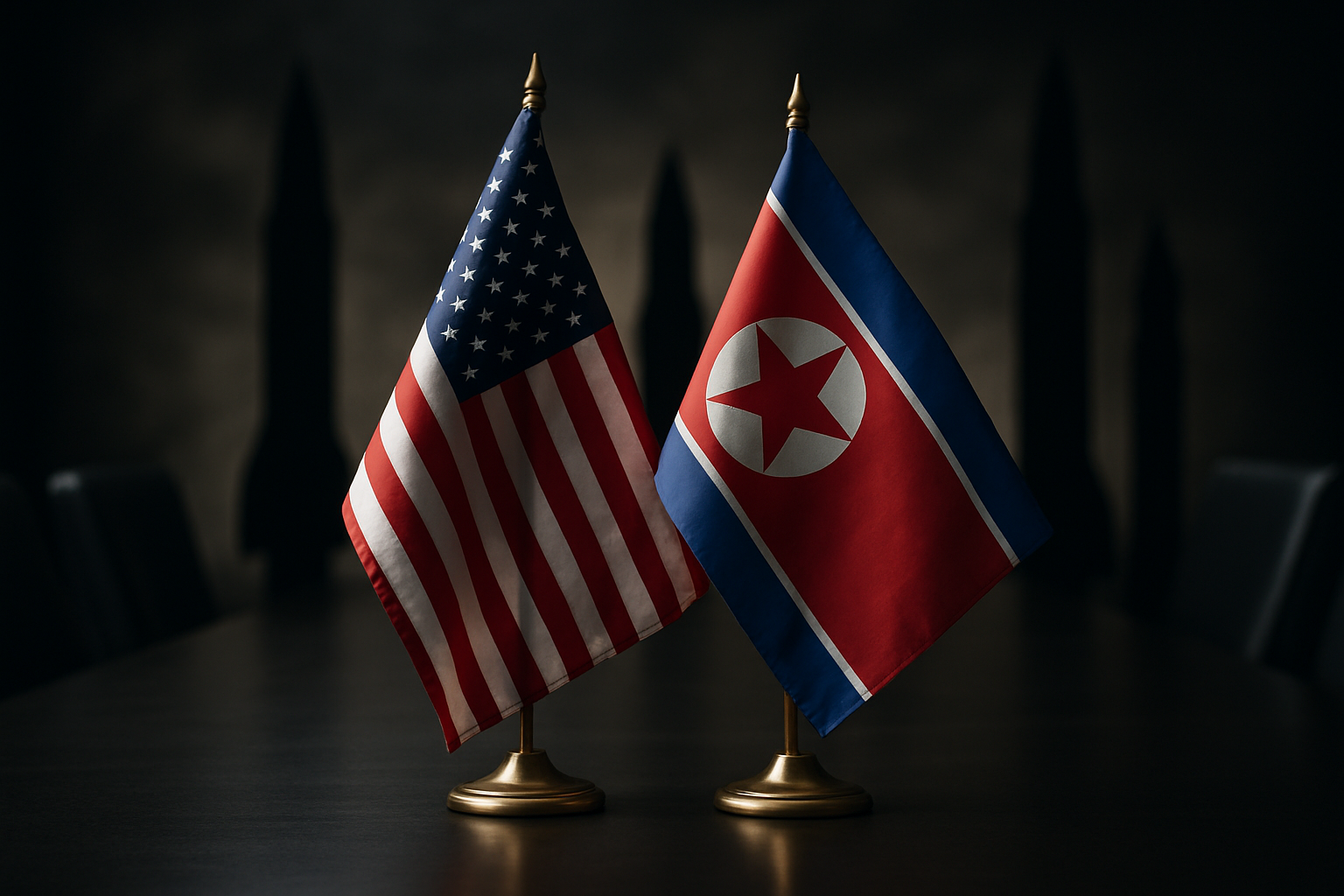
Military experts and security analysts warn that recent US-Israeli strikes against Iran could significantly strengthen North Korea's determination to maintain and expand its nuclear weapons program, as Pyongyang draws lessons about the vulnerability of non-nuclear states in confrontations with major powers.
The warning comes as Kim Jong Un's daughter, Kim Ju Ae, was photographed firing a pistol in new military training images released Thursday, marking another unprecedented step in her systematic preparation as the regime's first female successor. The images follow previous photographs showing her firing rifles, as North Korea continues its careful succession planning amid mounting international tensions.
Nuclear Deterrence as Survival Strategy
According to security analysts, Kim Jong Un's lesson from the Iran strikes will be straightforward: "Autocrats without nuclear weapons are sitting ducks, while states who develop them have protection." This assessment reflects a broader concern among nonproliferation experts that military actions against non-nuclear states may inadvertently strengthen arguments for nuclear weapons development.
The timing of these developments is particularly significant, occurring during an unprecedented global nuclear governance crisis. The New START treaty between the United States and Russia expired in February 2026, marking the first time in over 50 years without bilateral nuclear constraints between the superpowers. This has created what UN Secretary-General António Guterres called "the highest nuclear risks in decades."
North Korea's Military Modernization Accelerates
Recent intelligence assessments reveal North Korea has significantly accelerated its military development programs despite international sanctions. In February 2026, the regime unveiled massive 600mm nuclear-capable multiple rocket launcher systems described as "unique in the world" and "suitable for special attack missions." These tactical nuclear weapons represent a shift from intercontinental deterrence to regional conflict capabilities.
"Kim's lesson from the Iran strikes will be simple: Autocrats without nuclear weapons are sitting ducks, while states who develop them have protection."
— The Japan Times Analysis
The regime's dual development strategy has been particularly notable. While advancing weapons capabilities, North Korea completed a 50,000-unit Hwasong Area housing project in Pyongyang, demonstrating resource allocation toward both military deterrence and domestic legitimacy during the succession transition.
Succession Planning and Nuclear Strategy
The release of images showing Kim Ju Ae's military training represents unprecedented preparation for female leadership in the 78-year Kim dynasty history. South Korean intelligence confirmed in February 2026 that North Korea has "entered the stage of designating the leader's daughter Ju-ae as successor," marking a systematic elevation that includes policy input beyond ceremonial appearances.
This succession planning coincides with North Korea's naval nuclear expansion. In March 2026, Kim Jong Un personally supervised strategic cruise missile tests from the newly commissioned Choe Hyon destroyer, marking significant advancement in maritime nuclear capabilities that complicate regional defensive planning.
Regional Security Implications
The combination of succession planning, continued weapons development, and lessons from Iran creates new challenges for regional security. Military activity from North Korea increased 23% in 2025, indicating an acceleration of weapons development programs that demonstrates sophisticated survival strategies despite international sanctions.
China's role has become increasingly significant, with the resumption of passenger rail service between Beijing and Pyongyang in March 2026 marking the first such connection in six years. This development coincides with Kim Ju Ae's September 2025 Beijing visit, her first international travel, which prepared diplomatic foundations for potential future leadership.
Global Nuclear Governance Crisis
The broader context of nuclear governance collapse amplifies concerns about North Korean nuclear resolve. With the New START treaty expired and no new framework in place, the international community faces challenges addressing nuclear proliferation without traditional arms control mechanisms.
Iran's nuclear program, which reached 60% uranium enrichment with over 400 kilograms of weapons-grade material, combined with the recent military confrontations, provides North Korea with a clear example of how nuclear capabilities can affect international calculations.
False Claims and Information Warfare
Amid this tension, disinformation has complicated regional dynamics. A fact-check by Rappler confirmed that viral claims about Kim Jong Un threatening to join Middle Eastern conflicts if North Koreans were harmed are false. While Pyongyang called recent US-Israeli attacks on Iran an "illegal act of aggression," leader Kim Jong Un has made no such statements about direct involvement.
This highlights how information warfare can further complicate already tense geopolitical situations, with false claims spreading rapidly through social media and requiring careful verification by regional observers.
Strategic Implications for Deterrence
Spanish media analysis suggests that Trump's approach to Iran may reinforce North Korea's commitment to nuclear weapons, viewing them as essential for survival rather than negotiating tools. This perspective challenges traditional nonproliferation approaches that rely on diplomatic engagement and economic incentives.
The systematic preparation of Kim Ju Ae as successor, combined with continued military modernization, suggests long-term strategic planning that prioritizes nuclear capabilities as foundational to regime survival. Her exposure to weapons demonstrations and military exercises reflects the regime's understanding that credibility within the defense-oriented political system requires demonstrated military competence.
Future Diplomatic Challenges
The current trajectory presents significant challenges for international diplomacy. North Korea's assessment that nuclear weapons provide protection against external threats may make future denuclearization negotiations more difficult, particularly as global nuclear governance mechanisms weaken.
Regional allies including South Korea, Japan, and the United States face renewed challenges in developing effective diplomatic strategies that address North Korea's perceived security needs while preventing further nuclear proliferation. The success or failure of these approaches could serve as a template for addressing similar challenges with other nuclear-aspirant states.
As the international community grapples with multiple simultaneous crises, the North Korean case demonstrates how events in one region can significantly impact nuclear calculations elsewhere, highlighting the interconnected nature of 21st-century security challenges and the urgent need for innovative approaches to nuclear governance and conflict prevention.