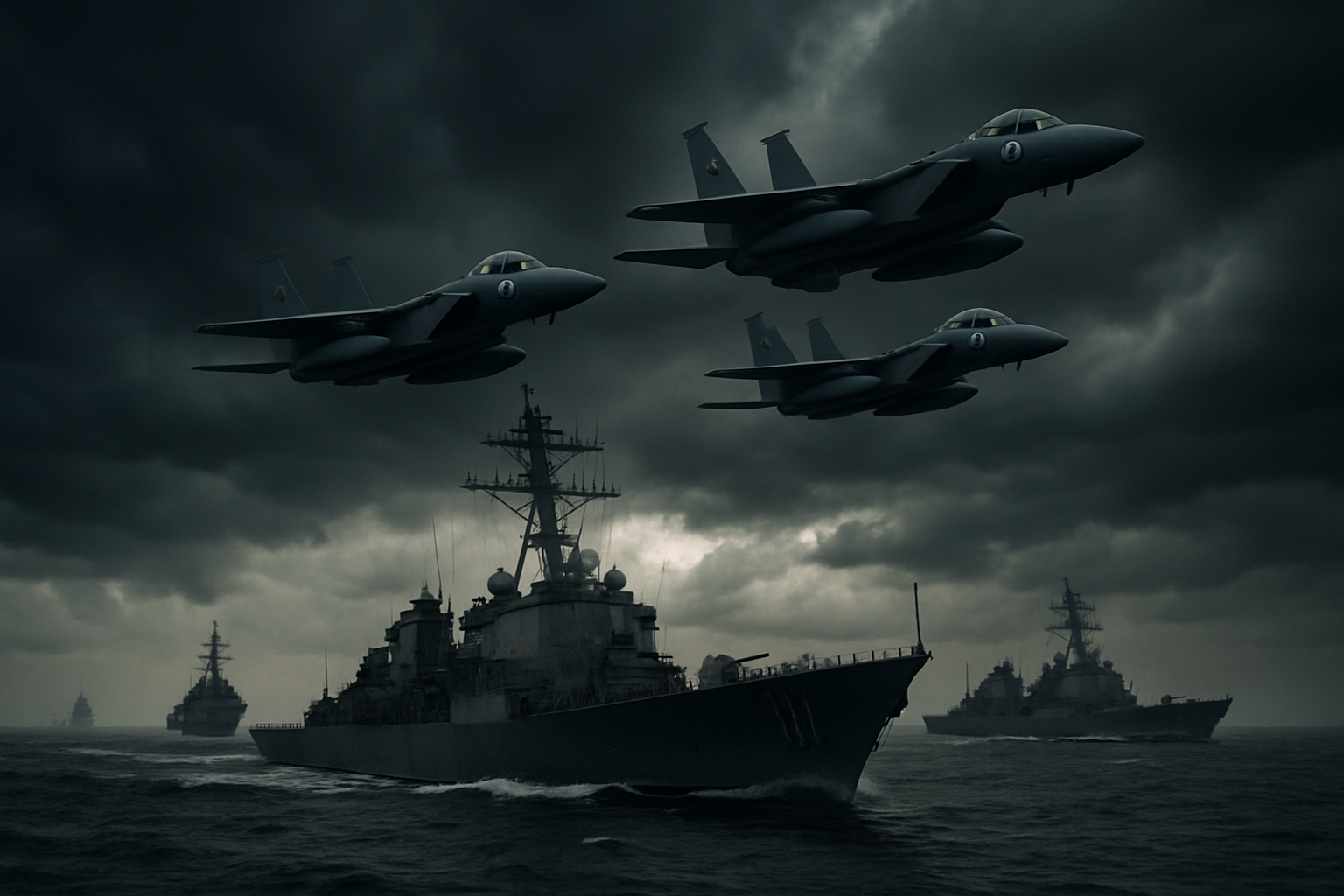
Israeli forces have launched strikes on Iranian nuclear facilities while US Secretary of State Marco Rubio announced that American military operations against Iran will conclude "within the next two weeks," escalating what experts are calling the most dangerous international crisis since the Cold War.
The developments come on the 28th day of the Middle East conflict that began with the confirmed death of Iranian Supreme Leader Ali Khamenei on March 1, 2026, in coordinated US-Israeli strikes known as "Operation Epic Fury." The crisis has now evolved into a complex multi-front war threatening global energy security and nuclear non-proliferation efforts.
Nuclear Facilities Under Attack
Iranian authorities confirmed that Israeli forces targeted nuclear installations in what represents the most significant escalation since the conflict began. The strikes focused on uranium processing facilities in central Iran, with the Iranian Atomic Energy Organization reporting attacks on the "yellow cake" production facility in Ardakan, Yazd province.
Initial investigations by Iranian officials indicate no radioactive material leaked from the targeted facilities, though the full extent of damage remains unclear. The attacks also reportedly targeted the Khondab heavy water nuclear reactor in Arak, marking the first direct assault on Iran's nuclear infrastructure during the current conflict.
"We have objectives and we are very confident that we are on the verge of achieving all our objectives without the need for ground troops," Rubio said following G7 foreign ministers meetings in France.
— Marco Rubio, US Secretary of State
The Israeli military confirmed the strikes were part of coordinated efforts to "eliminate threats against the State of Israel," though specific details of the operations remain classified for security reasons.
Rubio's Two-Week Timeline
Speaking to reporters after the G7 foreign ministers meeting near Paris, Secretary of State Marco Rubio provided the most definitive timeline yet for concluding US military operations in Iran. His announcement that operations would end "within two weeks" represents a significant shift from earlier projections that suggested the conflict could last months.
Rubio emphasized that the United States believes it can achieve all strategic objectives without deploying ground forces, relying instead on naval and air power. The US currently maintains an unprecedented military presence in the region with dual-carrier groups USS Gerald R. Ford and USS Abraham Lincoln positioned in the Arabian Sea.
However, Rubio's optimistic timeline contrasts sharply with other US officials who have suggested operations could continue through September. Pentagon sources indicate that while air superiority has been largely achieved, the complexity of Iran's missile and proxy network requires sustained pressure to ensure long-term objectives are met.
Iran's Defiant Response
Iranian leadership has shown no signs of backing down despite mounting military pressure. The Islamic Revolutionary Guard Corps (IRGC) continues to launch retaliatory strikes across the region under "Operation True Promise 4," maintaining their position that "no red lines remain" in targeting US and Israeli assets.
Following the nuclear facility attacks, Iranian Foreign Minister Abbas Araghchi warned that Tehran would impose a "heavy price for Israeli crimes," signaling that Iran intends to continue its resistance despite the escalating military campaign against its infrastructure.
The succession crisis following Khamenei's death has been resolved with his son Mojtaba Khamenei taking power in the first hereditary succession in the Islamic Republic's 47-year history, consolidating hardline Revolutionary Guards control over the government.
Global Implications and Energy Crisis
The conflict has created unprecedented disruptions to global systems, with over 18,000 flights cancelled worldwide—the most extensive aviation crisis since COVID-19. Eight Middle Eastern countries have simultaneously closed their airspace, effectively severing critical Europe-Asia trade corridors.
Oil prices have surged past $100 per barrel as Iran maintains its closure of the Strait of Hormuz through naval mining operations, blocking 40% of global seaborne oil transit. The International Energy Agency has implemented its largest strategic reserve release in 50 years, releasing 400 million barrels to stabilize markets.
Natural gas prices have increased by 24% in Europe and 78% in the United States, creating severe energy security challenges for importing nations. Qatar's liquefied natural gas production, representing approximately 20% of global exports, remains halted due to Iranian infrastructure strikes.
Congressional Scrutiny Intensifies
Despite Rubio's confident projections, bipartisan lawmakers in Congress are demanding detailed answers about strategy, costs, and the potential for ground troop deployment. The conflict's unpopularity—with only 25% American support according to recent polling—has prompted increased oversight of the administration's approach.
Senator Richard Blumenthal expressed concerns about mission creep, stating he was "more concerned than ever" about the possibility of boots on the ground despite official denials. The Pentagon has allocated operations through September, far beyond Rubio's two-week timeline, raising questions about the consistency of administration messaging.
Financial markets have emerged as a potential constraint on prolonged operations, with Pakistan's KSE-100 experiencing its largest single-day decline in history and global supply chains severely disrupted by the Persian Gulf trade hub's compromise.
Regional Coalition Under Strain
The unprecedented consensus among Arab nations—including Saudi Arabia, UAE, Qatar, and Egypt—that initially supported diplomatic solutions has come under severe strain as Iranian retaliation has directly targeted their territories. Egyptian President Abdel Fattah el-Sisi condemned attacks on "sisterly countries," warning of "comprehensive chaos" spreading throughout the region.
The conflict has also marked the first attack on European territory since World War II, with Iranian drones striking RAF Akrotiri in Cyprus, prompting an unprecedented naval coalition response from European allies including the UK, Spain, Italy, France, Netherlands, and Greece.
Nuclear Diplomacy's Complete Collapse
The current military escalation followed the complete breakdown of what had been the most promising US-Iran diplomatic engagement in years. Geneva talks in February had achieved a "broad agreement on guiding principles"—the most significant progress since the 2018 JCPOA collapse—but fundamental disagreements over scope proved insurmountable.
Iran had insisted on nuclear-only discussions while excluding ballistic missiles and regional proxy activities as "red lines," while the US demanded comprehensive agreements addressing missiles, armed groups, and human rights concerns. This structural disagreement, unchanged from decade-old diplomatic challenges, ultimately led to the current military confrontation.
Iran continues uranium enrichment at 60% purity with over 400kg of enriched material, bringing it closer to weapons-grade capability and complicating any future diplomatic resolution.
Historical Significance and Future Implications
Military experts and international relations scholars describe the current crisis as a template-setting moment for 21st-century conflict resolution. The rapid transition from diplomatic breakthrough to military escalation demonstrates the fragility of crisis management in the multipolar era.
UN Secretary-General António Guterres has called it "the greatest test of multilateral cooperation and crisis management in the modern era," with implications extending far beyond the Middle East. The crisis occurs against the backdrop of broader nuclear governance challenges, including the expiration of the New START treaty—the first time in over 50 years without US-Russia nuclear constraints.
Success in containing the conflict could provide a framework for future nuclear crisis resolution, while failure might encourage military solutions over diplomatic approaches globally, potentially undermining international law enforcement mechanisms and territorial sovereignty principles.
The outcome will likely influence international approaches to nuclear proliferation, energy security architecture evolution, and conflict resolution precedents for decades beyond the current administration, making it one of the most consequential international crises since the Cold War's end.