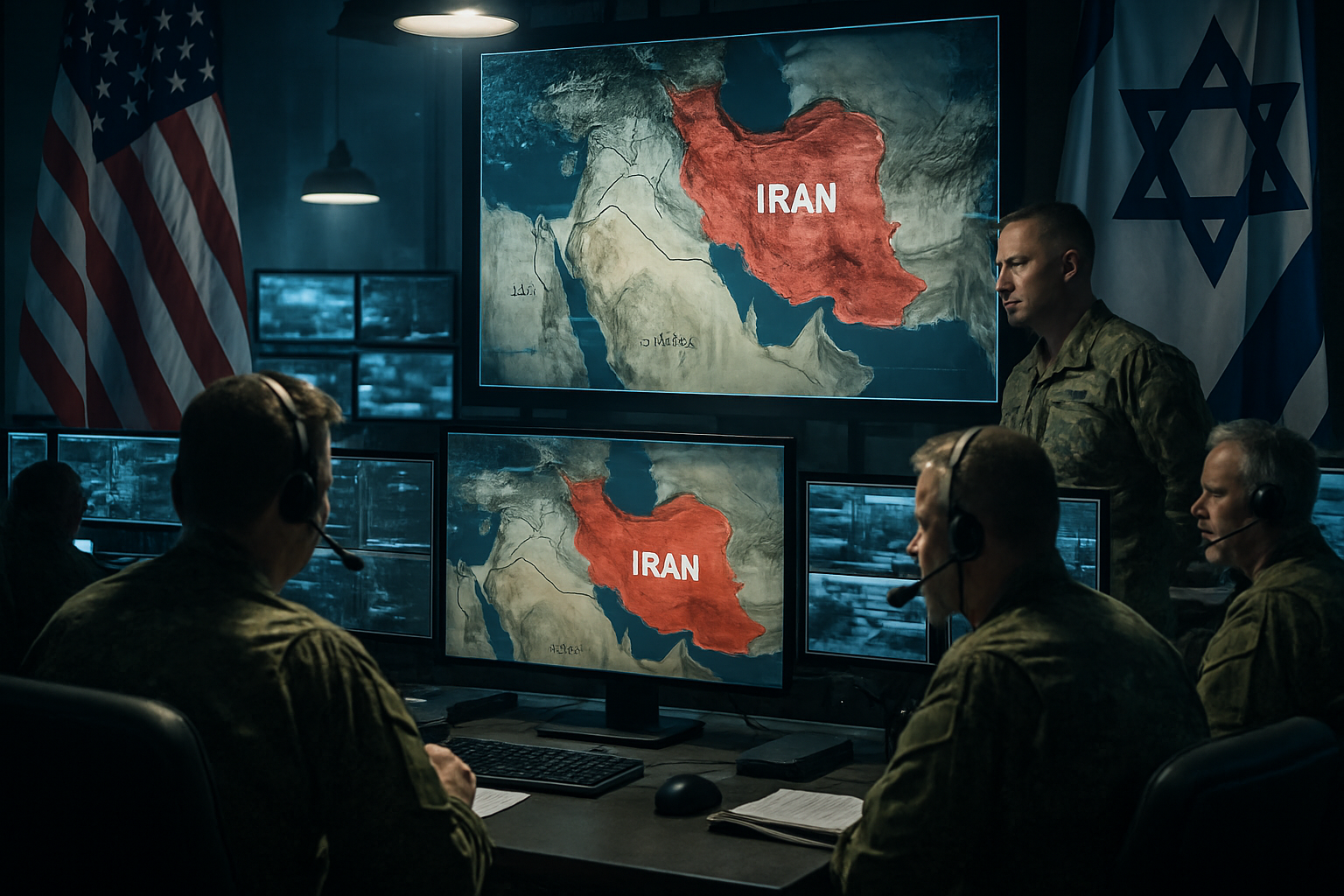
The United States and Israel are conducting the largest coordinated military operation in the Middle East since 2003, with reports indicating at least 1,500 casualties as the campaign against Iran enters its fourth day amid unprecedented regional escalation and global economic disruption.
According to the Hengaw Organization for Human Rights, the death toll from US-Israeli strikes includes approximately 1,300 Iranian military personnel and 200 civilians, with attacks reportedly targeting military and government centers across 150 cities in 22 Iranian provinces. The operation, dubbed "Epic Fury," represents the most significant Middle Eastern conflict since the Cold War's end.
Global Aviation Crisis and Economic Impact
The conflict has triggered an unprecedented global aviation crisis, with over 18,000 flights cancelled worldwide as Iran, Iraq, Israel, UAE, Qatar, Syria, Kuwait, and Bahrain simultaneously closed their airspace. Dubai International Airport, the world's busiest, remains completely shut down after sustaining missile damage.
Energy markets are experiencing severe volatility with oil prices surging toward $80 per barrel—a 10% increase—as Iran has effectively closed the Strait of Hormuz, through which 40% of global oil transits. Major shipping companies including Maersk and MSC have suspended operations, leaving over 150 tankers anchored in the Persian Gulf worth billions of dollars.
"Europe counts the cost as Iran war disrupts energy shipments, with the continent's benchmark natural gas price rising by more than 40% at one point amid mounting reports of supply disruptions."
— South China Morning Post
Trump Administration's Extended War Timeline
President Donald Trump has indicated the military campaign could continue for "four to five weeks," telling reporters that "the big one is still to come." US officials have confirmed strikes against over 1,250 targets in the first 48 hours alone, targeting command and control centers, ballistic missile positions, naval vessels, and anti-ship missile installations.
US Secretary of State Marco Rubio stated the operation aims for the "destruction of Iran's ballistic missile capabilities," while Vice President JD Vance clarified that regime change is not the primary objective, though the administration seeks guarantees that Tehran "will never acquire nuclear weapons."
Iranian Retaliation and Regional Expansion
Iran has launched "Operation True Promise 4" in massive retaliation, with the Islamic Revolutionary Guard Corps (IRGC) declaring that "no red lines remain." Iranian forces have targeted multiple US facilities and regional allies:
- US embassy in Riyadh attacked by drones, causing minor fire and structural damage
- US Air Force base in Bahrain reportedly destroyed by Iranian Revolutionary Guard
- All 11 Iranian vessels in the Gulf of Oman claimed destroyed by US forces
- Renewed strikes on Tehran and Beirut by Israeli forces targeting strategic military objectives
The conflict has expanded beyond Iran's borders, with Israeli Defense Forces conducting simultaneous strikes in Tehran and Beirut, targeting both the Iranian government and Hezbollah positions. Lebanese casualties have been reported, with 52 people killed in Israeli strikes according to Lebanese authorities.
Historic Leadership Crisis
The crisis has been compounded by reports surrounding Iran's Supreme Leader Ayatollah Ali Khamenei. While some Israeli intelligence sources have claimed Khamenei was killed in the initial strikes—a claim that helped trigger the current escalation—Iranian officials have denied these reports, calling them "psychological warfare."
According to intelligence reports, Israeli surveillance operations had been tracking Iranian leadership for years, with "almost every traffic camera in Tehran" allegedly compromised, providing real-time intelligence on senior officials' movements and security arrangements.
Diplomatic Breakdown and Nuclear Implications
The military escalation follows the complete collapse of nuclear negotiations that had shown promise just days earlier. Despite achieving what Iranian Foreign Minister Abbas Araghchi called "broad agreement on guiding principles"—the most significant progress since the 2018 JCPOA collapse—fundamental disagreements over scope proved insurmountable.
Iran had excluded ballistic missiles and regional proxies as "red lines" from nuclear-only talks, while the US demanded comprehensive agreements covering missiles, armed groups, and human rights issues. The crisis occurs as Iran continues enriching uranium at 60% purity—approaching the 90% weapons-grade threshold—with sufficient material for multiple weapons if weaponized.
International Response and Regional Coalition Strain
The unprecedented coalition of Saudi Arabia, UAE, Qatar, and Egypt that had supported diplomatic efforts now faces severe strain as Iranian retaliation has targeted member territories. Egyptian President Abdel Fattah el-Sisi condemned attacks on "sisterly Arab countries," warning of "comprehensive chaos."
China's Foreign Minister described the situation as a "serious violation of Iran's sovereignty and security," while Russia condemned what it called "reckless actions by Washington and West Jerusalem." The UN Security Council has convened emergency sessions as Secretary-General António Guterres warned of threats to "international peace and security."
"Russia has warned that any attempt by US President Donald Trump to pursue regime change in Iran could trigger a third world war."
— Pakistan Observer, citing Russian Deputy Chairman Dmitry Medvedev
Nuclear Governance Crisis Context
The Iran crisis unfolds against a backdrop of broader nuclear governance breakdown. The New START treaty between the US and Russia expired on February 5, marking the first time in over 50 years without nuclear constraints between the superpowers. Combined with China's nuclear expansion, UN officials warn that nuclear risks are at their "highest in decades."
The situation has implications extending far beyond the Middle East, potentially setting precedents for diplomatic versus military approaches to nuclear crises in the 21st century. Multiple nations have issued evacuation orders for citizens in the region, with Sweden and Serbia ordering immediate evacuations citing "extremely uncertain" security conditions.
Sports and Cultural Impact
Even international sports have been affected, with Iran's soccer team's place in the 2026 World Cup in the US now in doubt due to the conflict. FIFA reportedly has Iraq next in line should Iran withdraw, in which case Tehran would face significant financial penalties and forfeit at least $10.5 million from the global soccer federation.
Global Implications and Stakes
The conflict represents what analysts describe as the most dangerous moment since the Cold War's end, testing regional war prevention mechanisms, global energy security, and nuclear governance credibility simultaneously. The rapid transition from diplomatic breakthrough to military confrontation demonstrates the fragility of modern crisis management in the multipolar era.
Success in containing the escalation could provide a template for future nuclear crisis resolution, while failure may accelerate military solutions over diplomatic approaches, potentially reshaping Middle Eastern geopolitics for decades and encouraging nuclear proliferation globally.
As the situation continues to evolve rapidly, the international community faces critical decisions about crisis management, energy security, and conflict resolution that will have implications extending far beyond the current Middle Eastern theatre of operations.