Iran's Revolutionary Guards confirmed shooting down multiple US military aircraft on Saturday as the Middle East war entered its most dangerous phase yet, with an American pilot missing in Iranian territory and nuclear facilities coming under direct attack for the first time in the five-week conflict.
The Islamic Revolutionary Guard Corps (IRGC) claimed responsibility for downing at least two US aircraft - a confirmed F-15E Strike Eagle over Iranian territory and an A-10 "Warthog" attack aircraft that crashed in Persian Gulf waters near the Strait of Hormuz. These represent the first confirmed American aircraft losses in the 36-day Operation Epic Fury campaign.
Search Operations Underway for Missing American Pilot
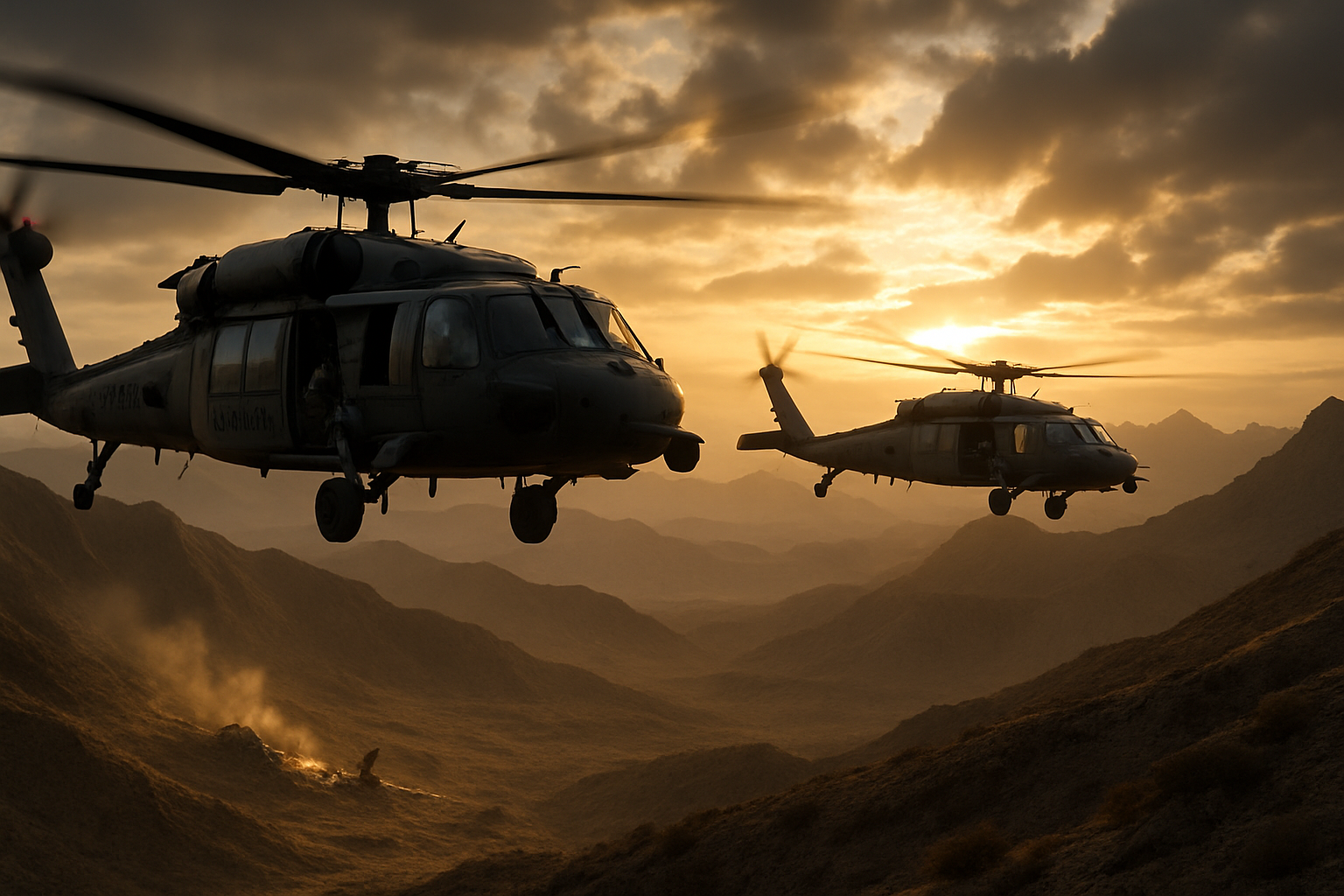
US Air Force Black Hawk helicopters conducted emergency rescue missions, successfully extracting one F-15E crew member while a second pilot remains missing with extensive search operations ongoing. Iranian forces have launched what they describe as "comprehensive field operations" to locate the missing American airman, with civilian rewards being offered for information leading to his capture.
Revolutionary Guards spokesman Ibrahim Zolfaghari claimed the F-15 was downed using a "new advanced defense system," while Iranian media released photos and videos of aircraft debris representing a major symbolic and tactical victory against American air superiority maintained throughout the conflict.
"The missing American pilot could become a crucial asset for Iran in potential negotiations or prisoner exchanges,"
— Regional Security Analyst
Nuclear Facilities Under Direct Attack
In a dramatic escalation, US-Israeli forces targeted Iran's nuclear infrastructure directly for the first time, with strikes reported near the Bushehr Nuclear Power Plant in southern Iran. According to the Iranian Atomic Energy Organization, a security guard was killed in the attack on the nuclear facility's perimeter, though the reactor itself was not damaged.
The International Atomic Energy Agency (IAEA) condemned the strikes on nuclear facilities, stating that attacks on nuclear power plants are "unacceptable" and confirmed no information about increased radiation levels following the incident.
Simultaneously, US-Israeli forces struck the Bandar Imam petrochemical complex in Khuzestan province, marking what appears to be a strategic shift from military targets toward critical energy infrastructure that could cripple Iran's economy.
Regional Civilian Casualties Mount
The conflict has taken an increasingly heavy toll on civilian populations across the region. Iran's Foreign Ministry confirmed that Afghan citizens living in Iran have been among the casualties, with spokesman Esmaeil Baghaei stating that some of Iran's "honored guests" were killed or injured during the 35-day military campaign.
Iranian media reported that five people were injured in attacks on petrochemical facilities in Mahshahr and Bandar Imam, as US-Israeli strikes expanded to target civilian infrastructure including bridges, steel plants, and health-related facilities essential for the population.
Global Crisis Reaches Peak Levels
The aircraft downings occurred as the international crisis reached unprecedented levels, with over 18,000 flights cancelled worldwide - the most severe aviation disruption since the COVID-19 pandemic. Eight Middle Eastern countries maintain simultaneous airspace closures, effectively severing key Europe-Asia air corridors.
Oil prices have surged past $100 per barrel for the first time since 2022, driven by Iran's mining of the Strait of Hormuz, which handles 40% of global seaborne oil transit. The International Energy Agency has released a record 400 million barrels from strategic petroleum reserves - the largest intervention in the agency's 50-year history.
Diplomatic Efforts Collapse
Iran categorically rejected a US proposal for a 48-hour ceasefire submitted through a third-party mediator on Wednesday, according to the semi-official Fars News Agency. The proposal was dismissed as inadequate amid reports that Iran is strengthening defenses around its largest oil facilities and threatening expanded Persian Gulf attacks.
The diplomatic breakdown follows the complete collapse of nuclear negotiations despite achieving what was described as "broad agreement on guiding principles" in Geneva talks - the most progress since the 2018 JCPOA collapse. Iran continues uranium enrichment at 60% purity with over 400kg of weapons-grade material.
Congressional Pressure Mounts
The aircraft losses have intensified Congressional scrutiny of the military campaign, with Senator Richard Blumenthal stating he is "more concerned than ever" about potential ground troop deployment. The conflict faces historically low public support at just 25% among Americans, while Operation Epic Fury costs have exceeded $11.3 billion in the first week alone.
Pentagon officials confirm operations are planned through September, far beyond the initial 4-6 week timeline, as the military campaign has expanded well beyond its original scope of targeting nuclear facilities to include comprehensive regime change objectives.
European Territory Attacked for First Time Since WWII
Iranian drones struck RAF Akrotiri in Cyprus, marking the first attack on European territory since World War II and prompting an unprecedented naval coalition response. HMS Dragon leads Spanish, Italian, French, Dutch, and Greek vessels in the largest Eastern Mediterranean mobilization in decades.
The European Union activated its ESTIA evacuation protocol for the first time in the bloc's history, while international evacuations have reached Arab Spring-scale levels with over 115,000 Australians trapped in the region and 30,000 German citizens requiring evacuation.
Hereditary Succession Consolidates Hardline Rule
The conflict continues under Iran's new Supreme Leader Mojtaba Khamenei, who represents the first hereditary succession in the Islamic Republic's 47-year history following his father Ali Khamenei's death on March 1. The Revolutionary Guards have consolidated unprecedented military control over governance, representing a historic shift from clerical to military leadership during active warfare.
CIA assessments suggest this transition has strengthened hardline elements within Iran's power structure, making diplomatic resolution increasingly unlikely as the conflict approaches its sixth week.
Template-Setting Crisis for 21st Century
UN Secretary-General António Guterres has described the crisis as the "greatest test of multilateral cooperation in the modern era." The rapid transition from diplomatic breakthrough to military confrontation demonstrates the fragility of crisis management mechanisms in the multipolar era.
Success in containing the regional conflict could provide a framework for resolving future nuclear crises, while failure may accelerate military solutions for decades, encouraging proliferation globally and undermining diplomatic credibility worldwide.
As search operations continue for the missing American pilot, the fate of the conflict may hinge on whether this development leads to further escalation or provides an opportunity for dialogue in what has become the most dangerous international crisis since the end of the Cold War.