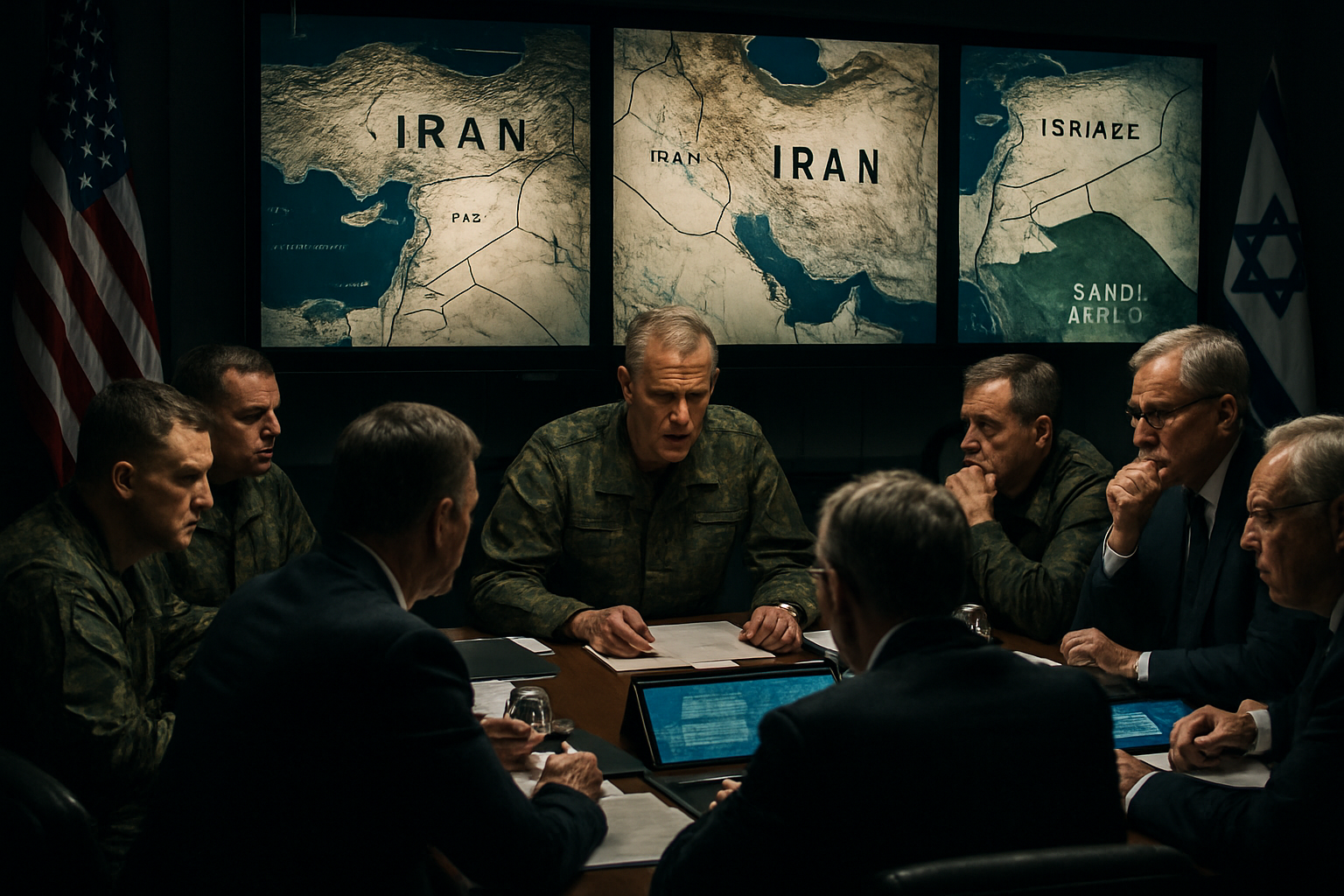
The devastating war between the United States-Israeli coalition and Iran has entered its fifth day as global markets reel from the most dangerous international crisis since the Cold War, with Iran's Revolutionary Guard claiming "complete control" of the strategic Strait of Hormuz and confirmation that Mojtaba Khamenei has been appointed as Iran's new Supreme Leader following his father's death.
The conflict, which began with coordinated US-Israeli strikes under "Operation Epic Fury" on February 28, has now officially claimed the life of Iran's Supreme Leader Ali Khamenei, with Iranian state media confirming his death after initial denials. In an unprecedented succession development, reports from multiple sources indicate that Khamenei's son, Mojtaba, has been selected by Iran's Assembly of Experts to assume leadership of the Islamic Republic under pressure from the Revolutionary Guards.
Global Aviation and Energy Crisis Unprecedented
The conflict has triggered the most extensive global disruption since COVID-19, with over 18,000 flights cancelled worldwide as eight Middle Eastern countries - Iran, Iraq, Israel, UAE, Qatar, Syria, Kuwait, and Bahrain - have simultaneously closed their airspace. Dubai International Airport, the world's busiest, remains completely shut down after sustaining missile damage during Iran's retaliatory "Operation True Promise 4."
Oil prices have surged past $80 per barrel, representing a 10% increase, as Iran's Revolutionary Guard announced "complete control" over the Strait of Hormuz, through which 40% of the world's seaborne oil passes. Mohammad Akbarzadeh, a senior naval official with Iran's Revolutionary Guard, declared that "the Strait of Hormuz is currently under the complete control of the Revolutionary Guard's naval force."
The crisis has stranded over 150 oil tankers in the Persian Gulf worth billions of dollars, with major shipping companies Maersk and MSC suspending operations. Natural gas prices have spiked 24% in Europe and 78% in the United States, creating severe energy security concerns across the globe.
Succession Crisis and New Leadership
According to multiple Iranian opposition media sources and international intelligence assessments, Mojtaba Khamenei has emerged as Iran's new Supreme Leader following an emergency selection process by the Assembly of Experts. The appointment reportedly occurred under significant pressure from Revolutionary Guard commanders, marking a historic shift toward more hardline military influence in Iran's governance.
The succession represents the end of Ali Khamenei's 37-year rule since 1989, during which he transformed Iran into a regional anti-American power with extensive proxy networks across the Middle East. His confirmed death in the US-Israeli strikes has created the most significant constitutional crisis in the Islamic Republic's history.
Military Operations Continue to Escalate
US military officials report striking nearly 2,000 targets across Iran in what represents the largest Middle Eastern military operation since the 2003 Iraq invasion. The operation involves unprecedented dual-carrier deployment of USS Gerald R. Ford and USS Abraham Lincoln, representing approximately one-third of the active US Navy fleet positioned within 800 kilometers of Iran's coast.
Iran's massive retaliation has caused casualties across the region. In Israel, residential strikes in Beit Shemesh killed 9 civilians and wounded 28 others. The UAE reported one civilian death in Abu Dhabi from missile debris, while Kuwait's international airport sustained drone strikes injuring 32 foreign nationals. Qatar successfully intercepted 65 ballistic missiles and 12 drones using Patriot systems, though fragments injured 8 people.
The conflict has also spread beyond the immediate participants, with Cyprus reporting the first attack on European territory since World War II when Iranian drones struck the British RAF Akrotiri base, causing limited runway damage but activating the island's national evacuation protocols.
Diplomatic Collapse and International Response
The military escalation followed the complete breakdown of nuclear negotiations in Geneva, despite achieving what Iranian Foreign Minister Abbas Araghchi called "broad agreement on guiding principles" - the most significant progress since the JCPOA collapse in 2018. However, fundamental disagreements over Iran's ballistic missile program and regional proxy forces proved insurmountable, with Iran maintaining these as "red lines" while the US demanded comprehensive agreements.
UN Secretary-General António Guterres has declared the situation a "serious threat to international peace and security," convening emergency Security Council sessions. Russia has condemned what it calls "reckless actions by Washington and West Jerusalem," while China has issued its strongest condemnation in years, describing the attacks as a "serious violation of Iran's sovereignty."
The European Union has activated unprecedented crisis response mechanisms, with Cyprus implementing its national ESTIA evacuation plan for the first time. Multiple countries including Sweden, Serbia, and Estonia have ordered immediate evacuations from Iran and surrounding areas, citing "extremely uncertain" security conditions.
Regional Coalition Under Severe Strain
The unprecedented coalition of Saudi Arabia, UAE, Qatar, and Egypt that had backed diplomatic efforts is now under severe strain as Iranian retaliatory strikes have directly targeted member territories. Egyptian President Abdel Fattah al-Sisi condemned the attacks on "sisterly Arab countries," warning of "comprehensive chaos" if the conflict continues to expand.
The targeting of Gulf states has particular significance given their hosting of major US military installations and their critical role in global energy markets. Kuwait has closed its US Embassy indefinitely, while multiple American diplomatic missions across the region have been placed on emergency protocols.
Nuclear Implications and Global Governance Crisis
The crisis occurs against the backdrop of broader nuclear governance breakdown, with the New START treaty between the US and Russia having expired on February 5 - the first time in over 50 years without nuclear constraints between the superpowers. Iran continues enriching uranium to 60% purity with over 400 kilograms of material, approaching weapons-grade capability that experts say could facilitate multiple weapons if weaponized.
The collapse of what appeared to be promising diplomatic engagement raises profound questions about the viability of negotiated solutions to nuclear crises in the 21st century. Intelligence assessments suggest Iran had been considering a potential three-year enrichment halt and transferring stockpiles to Russia, but hardline positions made compromise impossible.
Economic and Humanitarian Consequences
Global financial markets have crashed, with Pakistan's KSE-100 index suffering its largest single-day decline in history at 8.97%. Dow futures have fallen 400-570 points, while stock markets worldwide are experiencing significant volatility as investors flee to safe-haven assets.
The humanitarian crisis continues to expand, with over 115,000 Australian nationals trapped in the region, 30,000 German tourists stranded, and 18,000 Austrian citizens registered across affected areas. Major airlines including Emirates, Air France-KLM, Wizz Air, and Bulgaria Air have suspended operations indefinitely, affecting hundreds of thousands of passengers globally.
First Confirmed US Military Casualties
US Central Command has confirmed the first American military casualties of the operation, with three service members killed and five wounded - marking the first US deaths in a major Middle Eastern operation since 2003. The Pentagon has described current operations as "major combat operations continue and our responsive actions are ongoing," indicating the conflict may extend for weeks.
President Trump has issued his most direct regime change appeals, telling the Iranian people this represents their "single greatest chance to take back their country." The explicit advocacy for political transformation represents a significant evolution from nuclear-focused objectives to comprehensive regime change goals.
Looking Ahead: Template-Setting Crisis
Military analysts describe the current crisis as potentially template-setting for 21st-century conflict resolution, with implications extending far beyond the Middle East. The rapid breakdown from diplomatic framework to military escalation demonstrates the fragility of crisis management mechanisms in an increasingly multipolar world order.
Success in containing the current escalation could provide a diplomatic template for future nuclear crises and territorial disputes. However, failure may accelerate military solutions to international problems, potentially reshaping geopolitics for decades while encouraging proliferation elsewhere and undermining diplomatic credibility globally.
As the crisis enters its fifth day, the stakes encompass regional war prevention, global energy security, nuclear governance credibility, and the fundamental principles of international law enforcement that have governed the post-World War II order. The coming phase will determine whether this remains a contained regional confrontation or expands into a broader Middle Eastern war with worldwide implications extending decades beyond the current crisis.
The international community faces what UN Secretary-General Guterres has called "the most dangerous moment since the end of the Cold War," with decisions made in the coming days and weeks likely to reverberate through international relations for decades to come.