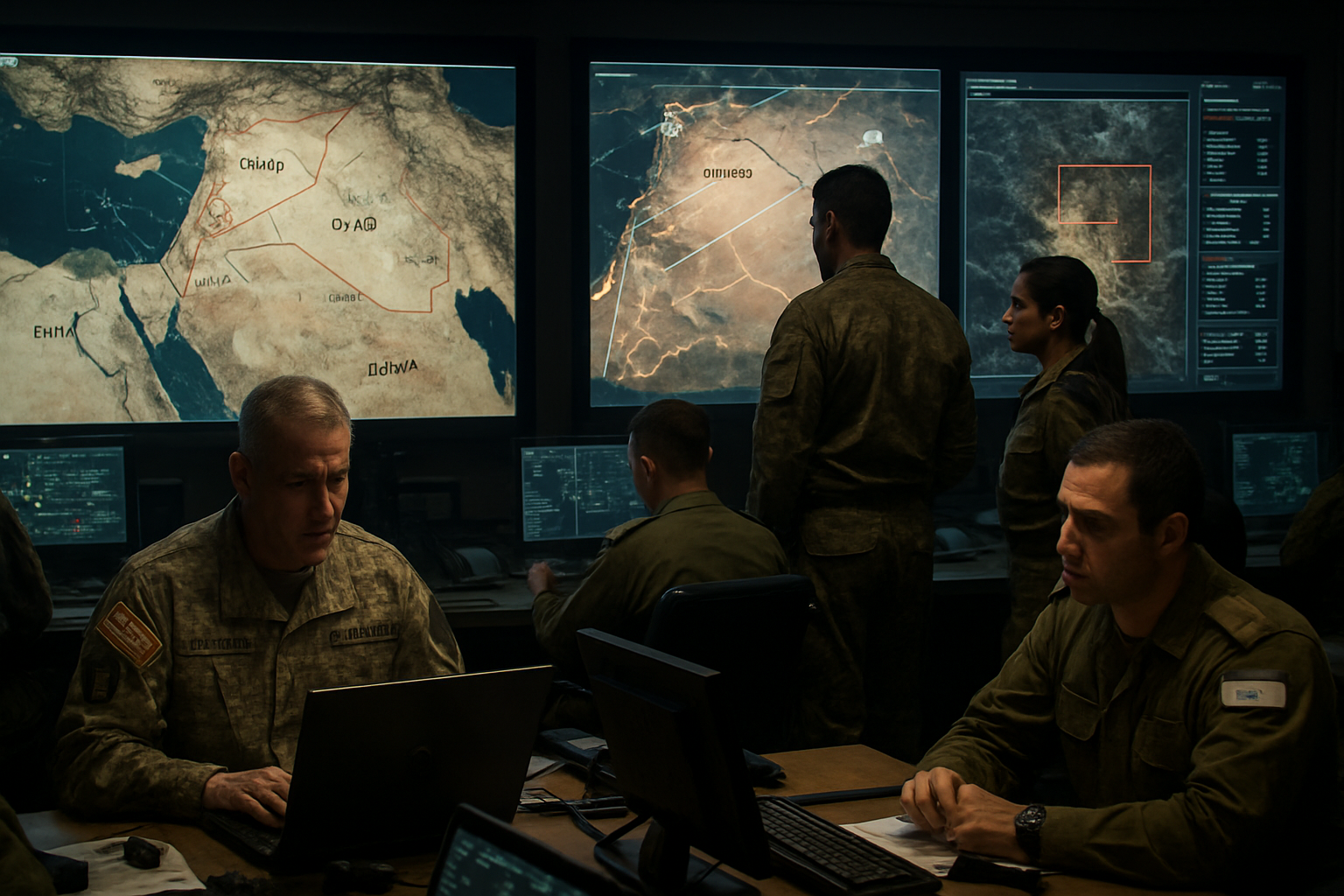
The US-Israeli conflict with Iran entered its most dangerous phase yet on Tuesday as Defense Secretary Pete Hegseth announced the "most intense day of strikes" inside Iran since Operation Epic Fury began, while toxic black rain fell across Tehran following devastating attacks on oil facilities that have choked the Iranian capital in smoke.
Speaking to reporters at the Pentagon, Hegseth declared: "Today will be yet again, our most intense day of strikes inside Iran: the most fighters, the most bombers, the most strikes, intelligence more refined and better than ever." The announcement came as the World Health Organization warned of respiratory dangers from oil-laden precipitation affecting nearly 10 million residents in Tehran.
Environmental and Health Crisis Unfolds
The WHO issued an urgent health advisory Tuesday, backing Iran's recommendation for citizens to remain indoors as "black rain" containing toxic compounds fell across Tehran following Monday's strikes on oil refineries. The UN health agency reported receiving "multiple reports of oil-laden rain this week" as massive fires at petroleum installations created apocalyptic scenes across Iran's capital.
Tehran was "choked in black smoke" according to witnesses, with Governor Keramat Veis Karami confirming that fuel distribution in the capital had been "temporarily interrupted" following the targeting of five strategic oil installations around the city. The environmental disaster represents a dramatic escalation in the conflict's scope and humanitarian impact.
"It was like hell. They were bombing everywhere, every part of Tehran. My children are afraid to sleep now."
— Tehran resident speaking anonymously
Global Aviation and Energy Crisis Deepens
The conflict has triggered the most severe global aviation crisis since COVID-19, with over 18,000 flights cancelled worldwide as eight Middle Eastern countries maintain simultaneous airspace closures. Dubai International Airport, the world's busiest with 86 million annual passengers, remains completely shut down from missile damage, creating a cascade of disruptions across global travel networks.
Oil prices have surged 10% past $80 per barrel as Iran declared the Strait of Hormuz "unsafe," effectively closing the waterway that handles 40% of global seaborne oil transit. More than 150 tankers worth billions in cargo remain stranded in the Persian Gulf, with major shipping companies Maersk and MSC suspending all operations in the region.
The energy crisis has sent natural gas prices soaring 24% in Europe and 78% in the United States, while Qatar has halted LNG production following Iranian infrastructure strikes. UK households face potential annual energy cost increases of £160 as the crisis spreads globally.
Revolutionary Guards Threaten Gulf Oil Blockade
Iran's Revolutionary Guard Corps escalated their threats Tuesday, with spokesman declaring that Iranian armed forces are "awaiting the US Navy fleet and the aircraft carrier USS Gerald Ford in the Strait of Hormuz." The IRGC maintained their position that "not a single liter of oil" would be allowed to ship through the strategic waterway.
Regional casualties from Iran's "Operation True Promise 4" continue mounting, with confirmed deaths and injuries across Gulf states. The UAE reported one civilian killed in Abu Dhabi, Kuwait documented 32 injured at its international airport from drone strikes, and Qatar reported 8 wounded despite successfully intercepting 65 missiles and 12 drones using Patriot defense systems.
First European Territory Attacked Since WWII
In a historic escalation, Iranian drones struck RAF Akrotiri in Cyprus, marking the first attack on European territory since World War II. The unprecedented assault prompted an immediate naval coalition response, with HMS Dragon, Spanish frigates, and vessels from Italy, France, the Netherlands, and Greece deploying to protect European waters.
Diplomatic Stalemate Amid Warfare
Despite devastating military escalation, diplomatic positions have hardened on both sides. President Trump has demanded Iran's "unconditional surrender" via Truth Social, claiming the right to personally choose Iran's next Supreme Leader while rejecting Mojtaba Khamenei as "lightweight" – the most direct assertion of American control over Iranian affairs since 1979.
Iranian President Masoud Pezeshkian offered a rare apology to neighboring countries for missile attacks but firmly rejected surrender demands as "dreams they should take to their grave." The mixed signals reflect the complex dynamics of a leadership still managing succession following Supreme Leader Ali Khamenei's confirmed death on March 1.
"Iran will never surrender to the United States and Israel. We must work with neighboring countries with the aim of ensuring and securing security and peace."
— Iranian President Masoud Pezeshkian
Military Operations Reach Historic Scale
Operation Epic Fury has become the largest US-Israeli coordinated military campaign since the 2003 Iraq invasion, with costs reaching $3.7 billion in the first week alone – approximately $891.4 million per day. The operation employs a dual-carrier deployment of USS Gerald Ford and USS Abraham Lincoln, representing approximately one-third of the active US Navy fleet.
The conflict expanded globally when US submarine USS Charlotte sank Iranian frigate IRIS Dena off Sri Lanka, killing over 80 crew members in the first enemy vessel sunk by an American submarine since World War II. Defense Secretary Hegseth called it a "quiet death" demonstrating America's "global military reach."
First US casualties have been confirmed, with 3 American service members killed and 5 wounded – the first deaths in the largest Middle East operation since 2003. CENTCOM reported that "major combat operations continue and our responsive actions are ongoing," indicating the conflict's prolonged trajectory.
Congressional Scrutiny Intensifies
Bipartisan congressional opposition to the conflict is mounting, with lawmakers demanding comprehensive briefings on strategy, costs, and potential ground troop deployment. Senator Richard Blumenthal expressed being "more concerned than ever" about the prospect of "boots on the ground."
The conflict's unpopularity is "almost unprecedented" according to polling experts, with only 25% of Americans supporting the strikes. Financial markets are emerging as the "ultimate constraint" on further escalation, with Pakistan's stock market suffering its largest single-day decline in history at -8.97%.
Humanitarian Crisis Mounts
The Iranian Red Crescent reports over 787 civilian casualties from US-Israeli strikes, while the controversial attack on a girls' school in Minab that killed 53-85 students and staff has drawn international condemnation and calls for Geneva Conventions investigations. Images of children's backpacks and schoolbooks in rubble have become powerful symbols of the conflict's human cost.
The crisis has triggered the largest international evacuation since the Arab Spring in 2011, with Australia reporting 115,000 nationals trapped and Germany struggling to repatriate 30,000 stranded tourists. The European Union activated its ESTIA evacuation protocol for Cyprus for the first time in history.
Nuclear Diplomacy in Ruins
The military escalation followed the complete collapse of nuclear negotiations despite achieving the "broad agreement on guiding principles" breakthrough – the most progress since the JCPOA collapse in 2018. The fundamental disagreement over scope proved insurmountable, with Iran demanding nuclear-only talks while the US insisted on comprehensive agreements including ballistic missiles, proxy groups, and human rights.
Iran continues enriching uranium to 60% purity with over 400 kilograms of weapons-grade material, sufficient for multiple weapons if weaponized. The crisis occurs amid broader nuclear governance breakdown following the New START treaty's expiration on February 5 – the first time in over 50 years without US-Russia nuclear constraints.
Succession Crisis in Wartime
Iran operates under an unprecedented wartime succession process, with a three-member transitional council managing the country following Khamenei's death. The Assembly of Experts is selecting a permanent successor under active warfare conditions, with CIA assessments suggesting a Revolutionary Guards member is likely – representing a historic shift from clerical to military governance in the Islamic Republic's 47-year history.
Global Implications and Template-Setting Moment
UN Secretary-General António Guterres has called the crisis the "greatest test of multilateral cooperation and crisis management in the modern era." The rapid transition from diplomatic breakthrough to military confrontation demonstrates the fragility of crisis management mechanisms in the multipolar era.
The stakes extend far beyond the Middle East, testing regional war prevention, global energy security, nuclear governance credibility, and international law enforcement of post-WWII order principles simultaneously. Success in containing the crisis could provide a framework for future nuclear disputes, while failure may accelerate military solutions and encourage proliferation globally.
Manufacturing supply chains dependent on Gulf networks are severely disrupted, affecting automotive, electronics, and textiles industries worldwide. The Persian Gulf's role as a critical Asia-Europe trade hub has been completely compromised, exposing fundamental vulnerabilities in global systems to geopolitical shocks.
Looking Ahead: Critical Decisions
As the conflict enters its second week, the international community faces watershed decisions that will reverberate through international relations for decades. The template-setting nature of this crisis will determine whether diplomatic or military solutions become the preferred approach for future territorial and nuclear disputes worldwide.
With Trump's explicit regime change demands eliminating diplomatic solution possibilities and Iran's new hardline military leadership likely, the trajectory points toward prolonged conflict. The coming days will determine whether this remains a contained regional confrontation or expands into a broader Middle Eastern war with global implications extending far beyond current boundaries.
March 10, 2026 may be remembered as the day the post-Cold War international order faced its most severe test, with energy architecture evolution, aviation networks, nuclear proliferation mechanisms, and diplomatic precedents all hanging in the balance of decisions made in war rooms from Washington to Tehran.