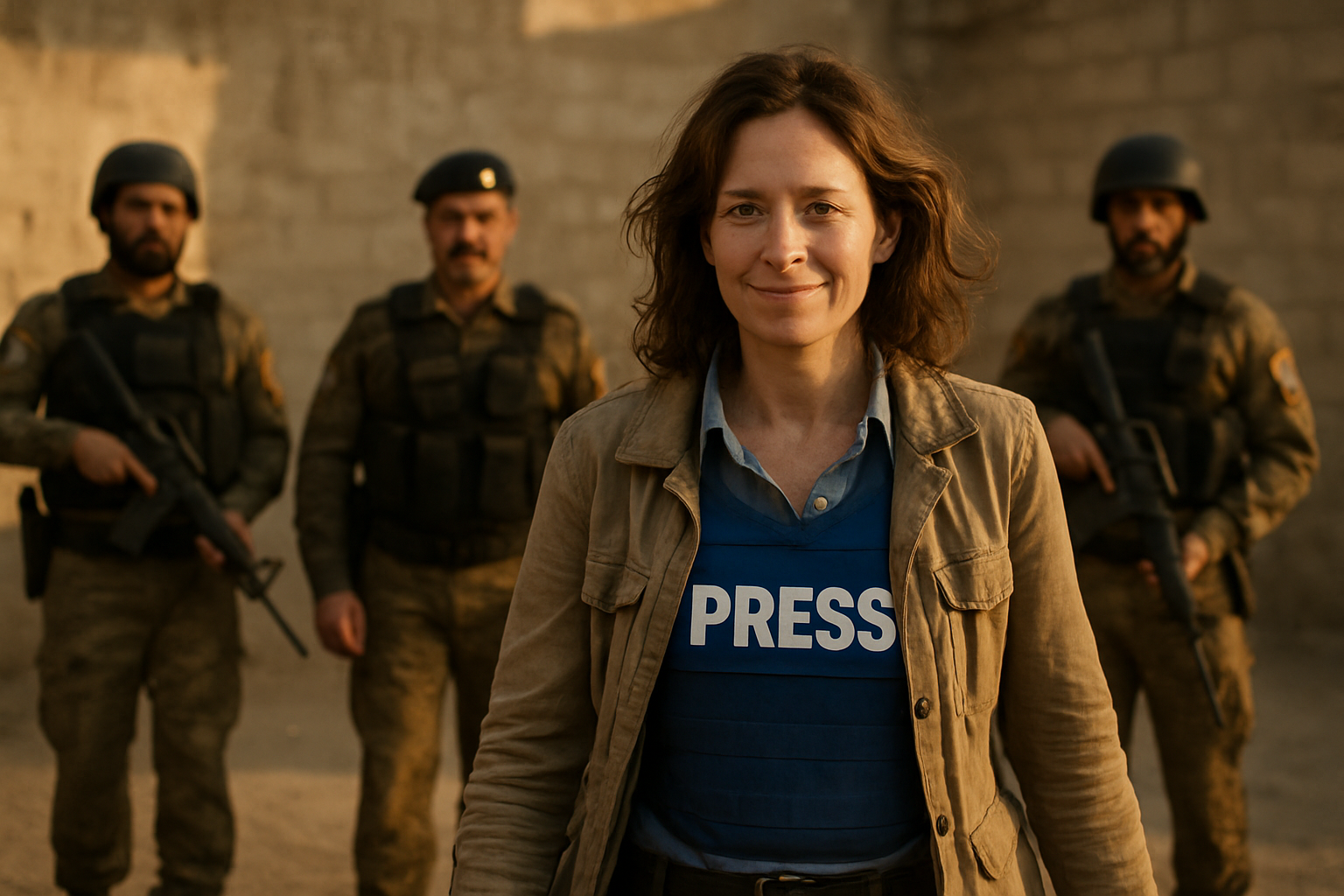
American freelance journalist Shelly Kittleson has been released by the Iranian-backed militia Kataib Hezbollah after one week in captivity, with sources confirming she was ordered to "leave Iraq immediately" following her freedom.
The Iraq-based correspondent, who was abducted on March 31 in Baghdad's Karrada district, was freed on Tuesday after the Shiite militant group announced her release. Al-Monitor, a Middle East news outlet where Kittleson has contributed articles, confirmed her status as a US freelance journalist based in Rome who has extensively covered regional conflicts.
Details of the Release
According to multiple sources, Kataib Hezbollah, which maintains close ties to Iran's Revolutionary Guard Corps, announced through official channels that they would release the abducted American journalist. However, the release came with a stern condition: Kittleson must depart Iraq immediately.
The 49-year-old journalist had been seized in broad daylight near the Palestine Hotel in central Baghdad, an area that holds particular significance as the site where Spanish cameraman José Couso was killed during the 2003 US invasion. CCTV footage captured the abduction, showing armed men forcing Kittleson into a vehicle.
"She was held in Baghdad and has been ordered to leave the country immediately after being released,"
— Security source familiar with the situation
Background to the Kidnapping
Kittleson's abduction occurred during a period of heightened tensions in the Middle East, coinciding with the ongoing US-Iran crisis that has seen Operation Epic Fury, the largest coordinated US-Israeli military campaign since 2003. The kidnapping represented the first American journalist taken captive since the regional crisis escalated in March 2026.
Sources close to the investigation believed from the outset that Kata'ib Hezbollah was responsible for the abduction. The group, part of the broader Islamic Resistance in Iraq umbrella organization, has been increasingly active against Western targets as regional tensions have intensified.
US officials had reportedly warned Kittleson about specific threats against her before the kidnapping occurred, fulfilling what the State Department described as their "duty to warn" obligation. Despite these warnings, the experienced war correspondent continued her reporting work in Iraq, demonstrating the professional commitment that has characterized her extensive Middle East coverage.
Regional Context and Implications
The release comes against the backdrop of the most dangerous international crisis since the Cold War, with Iran and its proxy groups systematically targeting US assets throughout the region. Iran's Revolutionary Guard has declared that "no red lines remain" in their confrontation with American and Israeli forces, leading to attacks across multiple countries.
Iraq has become a particularly volatile theater, with Iranian-backed militias increasingly assertive in their operations. The country hosts approximately 2,500 US troops as part of the international coalition against ISIS, making American personnel and civilians potential targets for proxy groups.
The timing of Kittleson's release is significant, occurring as the broader Middle East crisis has reached unprecedented levels. Oil prices have surged past $100 per barrel, over 18,000 flights have been cancelled globally, and the Strait of Hormuz - through which 40% of global oil transit passes - has been effectively closed by Iranian naval mines.
Press Freedom Under Siege
Kittleson's ordeal highlights the extreme dangers faced by journalists working in conflict zones, particularly in Iraq, which remains one of the world's most perilous countries for media workers. According to international monitoring organizations, 129 journalists were killed globally in 2025, marking it as the deadliest year on record for media professionals.
The veteran correspondent's experience underscores the particular risks faced by American journalists in regions where Iranian-backed groups operate. Her expertise in covering Middle Eastern conflicts, while valuable for informing global audiences, also made her a high-profile target during this period of intense US-Iran confrontation.
Diplomatic Efforts and Resolution
While specific details of the diplomatic efforts that led to Kittleson's release remain classified to protect ongoing operations, sources indicate that multiple channels were utilized to secure her freedom. The Iraqi Interior Ministry had launched a large-scale security operation using what they described as "precise intelligence data" to locate the journalist.
The State Department has been coordinating with FBI personnel for release efforts, though officials have not provided detailed information about the negotiation process. Such restraint is typical in kidnapping cases where revealing operational details could jeopardize future rescue operations or diplomatic initiatives.
Immediate Aftermath and Departure
Following her release, Kittleson was reportedly in stable condition, though specific details about her physical and mental state have not been disclosed. The immediate priority for both US and Iraqi officials has been ensuring her safe departure from the country in accordance with the militia's demands.
The requirement for immediate departure reflects the continued volatility of the security situation in Iraq and the ongoing threat posed by Iranian-backed groups to American nationals. The regional crisis shows no signs of abating, with Operation Epic Fury continuing to target Iranian facilities while Tehran retaliates across multiple fronts.
Broader Security Implications
The incident serves as a stark reminder of the human costs associated with the broader Middle East conflict. As the US-Iran crisis continues to escalate, civilian journalists, diplomats, and aid workers face increasing risks in the region.
International security experts note that kidnappings of Western journalists often serve multiple purposes for militant groups: they generate international attention, can be used as bargaining chips in broader negotiations, and serve to intimidate other media professionals from covering sensitive regions.
The successful resolution of Kittleson's case, while welcome news, does not diminish the broader security challenges facing the international community in Iraq and the wider Middle East. With the regional crisis showing no signs of resolution and Iranian proxy groups becoming increasingly assertive, the threat to civilian personnel remains elevated.
As Shelly Kittleson prepares to depart Iraq after her traumatic week in captivity, her experience serves as both a testament to the risks faced by journalists committed to reporting from the world's most dangerous regions and a reminder of the broader human costs of international conflicts that continue to reshape the Middle Eastern landscape.