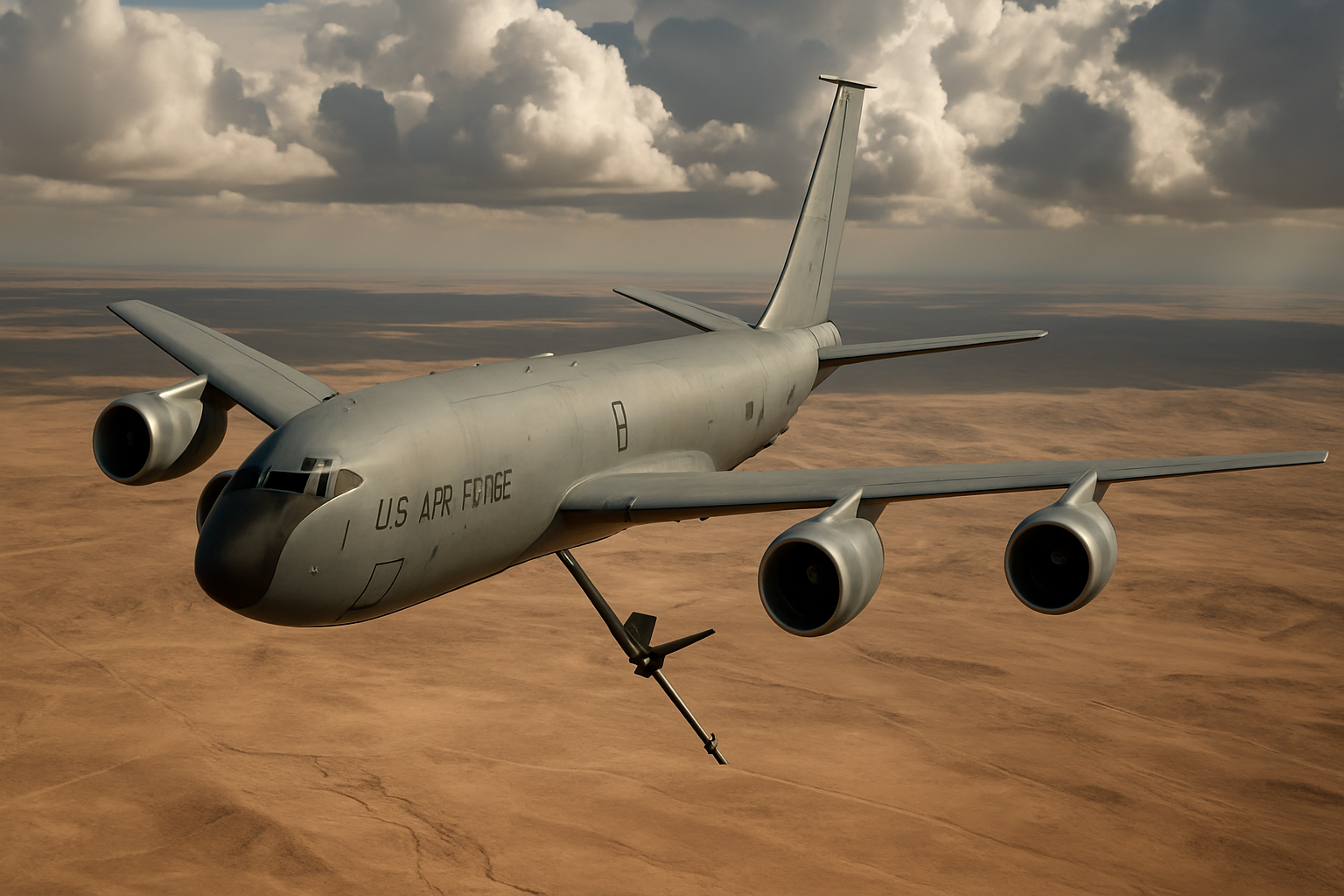
Four US service members were confirmed dead after a KC-135 Stratotanker aerial refueling aircraft crashed in western Iraq during military operations on Thursday, marking the latest aviation incident amid ongoing tensions in the Middle East region.
US Central Command (CENTCOM) announced Friday that four of the six crew members aboard the military refueling aircraft have been confirmed killed, while rescue and recovery operations continue for the remaining two personnel. The incident involved two aircraft, with one KC-135 going down in western Iraq while a second aircraft landed safely.
"The circumstances of the incident are under investigation. However, the loss of the aircraft was not due to hostile fire or friendly fire," CENTCOM stated in an official release, emphasizing that the crash occurred in friendly airspace during routine operations.
Details of the Incident
The KC-135 Stratotanker, a critical component of US aerial refueling capabilities, crashed during what military officials described as a routine refueling operation in western Iraq. The aircraft serves as the backbone of American extended-range operations, enabling fighter jets and bombers to conduct missions far from their home bases.
According to multiple international sources, the incident occurred during "Operation Epic Fury," the ongoing US military operations in the region. The specific crash location has not been disclosed for operational security reasons, but rescue teams were immediately dispatched to the site.
Norwegian military sources confirmed that the incident involved two aircraft, with the second plane successfully landing after the crash. This detail suggests the aircraft may have been conducting aerial refueling operations at the time of the accident.
The KC-135 Stratotanker Legacy
The KC-135 Stratotanker has been the cornerstone of US aerial refueling capabilities for over six decades. These aircraft are essential enablers for sustained military campaigns, allowing operations across vast distances without the need for forward-deployed bases. The aging fleet, however, presents ongoing maintenance challenges as many aircraft average over 60 years of operational service.
Serbian defense analysts noted that the KC-135 has been "the backbone of US Air Force aerial refueling capabilities for more than six decades," highlighting the critical role these aircraft play in modern military operations, particularly in the challenging Middle Eastern theater.
Regional Context and Ongoing Operations
The crash occurs amid heightened military activity in the region, with US forces maintaining significant presence across multiple Middle Eastern countries. The incident adds to growing concerns about operational risks in the volatile region, where military assets face complex security challenges.
International media coverage has drawn widespread attention to the persistent volatility in the region, where multiple powers compete for influence and proxy conflicts threaten stability. The loss of a KC-135 represents both a tactical setback and a significant security concern for ongoing US operations.
The challenging terrain and security conditions in western Iraq have complicated rescue efforts, according to military sources. The region's strategic importance in US Middle East operations makes any loss of military assets particularly significant for operational planning.
Investigation and Military Response
CENTCOM has initiated a full military investigation to determine the exact cause of the crash. With hostile and friendly fire already ruled out, investigators will focus on mechanical failure, weather conditions, and other operational factors that may have contributed to the incident.
The second aircraft's crew will likely provide crucial witness testimony as part of the investigation. Search and rescue teams continue operations despite the challenging operational environment in western Iraq.
Military officials have not disclosed the identities of the crew members pending family notification, following standard protocol for such incidents. The names of the fallen service members will be released after families have been properly informed.
Impact on US Operations
The loss of a KC-135 Stratotanker could significantly impact US aerial refueling capabilities in the region, affecting the operational range and effectiveness of American air operations. These aircraft are critical enablers for sustained military campaigns, and their loss represents a notable tactical setback.
The incident marks the latest in a series of military aviation challenges facing US forces operating in the Middle East. Aging aircraft fleets and complex operational environments continue to present risks for military personnel conducting essential missions far from home bases.
US military leaders will likely conduct a comprehensive review of aerial refueling operations to prevent similar incidents. The investigation's findings may influence future operational procedures and safety protocols for KC-135 operations in challenging environments.
International Response
The incident has drawn international attention across European, Asian, and Middle Eastern media outlets, highlighting the ongoing risks faced by military personnel in volatile regions. Multiple countries have expressed condolences for the fallen service members and their families.
Military allies have offered support for the investigation and recovery operations, demonstrating continued international cooperation despite regional tensions. The incident underscores the shared risks faced by coalition forces operating in challenging environments.
Looking Forward
As rescue operations continue for the two remaining crew members, military officials face questions about aircraft safety protocols and the operational environment in western Iraq. The investigation's findings will be crucial for preventing future incidents and ensuring the safety of military personnel.
The loss of four service members serves as a sobering reminder of the ongoing risks faced by US military personnel conducting operations around the world. Their sacrifice in service to their country will not be forgotten as the military community mourns their loss and supports their families during this difficult time.
The incident reinforces the importance of comprehensive safety protocols and continuous evaluation of operational risks in challenging environments. As military operations continue in the region, the lessons learned from this tragedy will inform future mission planning and aircraft safety procedures.