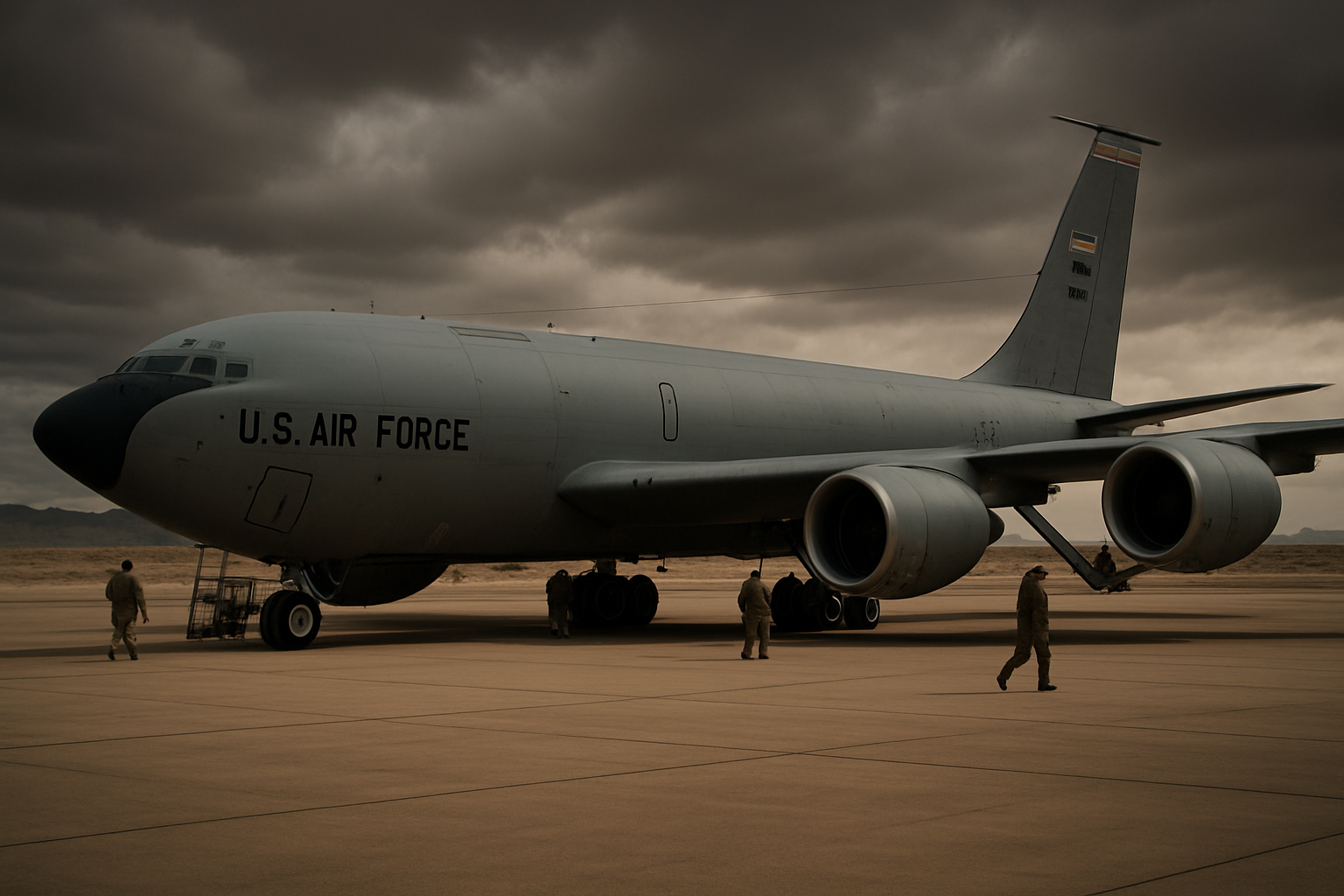
A United States KC-135 Stratotanker aerial refueling aircraft crashed in western Iraq on Thursday during ongoing military operations, with US Central Command confirming that rescue efforts are currently underway. The incident involved a second aircraft which landed safely.
US Central Command (CENTCOM) issued a statement confirming the loss of the KC-135 refueling aircraft in what officials described as "friendly airspace" in western Iraq. Crucially, the military emphasized that the crash was not the result of hostile fire or friendly fire incidents.
"One of the aircraft went down in western Iraq, and the second landed safely. This was not due to hostile fire or friendly fire," CENTCOM said in an official statement released Thursday evening.
Aircraft Specifications and Crew Details
The KC-135 Stratotanker, which has been in operational service for more than 60 years, typically carries a crew of three: a pilot, co-pilot, and boom operator who manages the refueling equipment used to transfer fuel to other aircraft in flight. However, depending on mission requirements, some KC-135 operations may include a navigator, and the aircraft can accommodate up to 37 passengers according to US Air Force specifications.
Greek media reports indicate that the aircraft carried five crew members, though US officials have not yet confirmed the exact number of personnel aboard the crashed aircraft. The fate of the crew remains unclear as search and rescue operations continue.
Incident Details and Response
The crash occurred during what sources describe as routine military refueling operations in western Iraq. A second tanker that was involved in the same operation successfully made an emergency landing at Ben Gurion Airport in Israel after sending out an international emergency distress signal.
According to Portuguese media reports, six crew members were aboard the aircraft when it went down. The incident has prompted a comprehensive search and rescue operation in the region, with military assets being deployed to locate and assist any survivors.
This represents at least the fourth US military aircraft lost during current Middle East operations, following the previous loss of three F-15 fighter jets that were reportedly shot down by friendly fire over Kuwait in earlier incidents.
Historical Context and Regional Operations
The KC-135 crash occurs against the backdrop of heightened military operations in the Middle East, where US forces have been conducting various missions as part of ongoing regional security commitments. The aerial refueling mission is a critical component of modern air operations, allowing fighter jets and other aircraft to extend their operational range and maintain sustained operations over vast distances.
Early in the current phase of operations, which began on February 28, 2026, Kuwaiti forces have been involved in various support roles, highlighting the multinational nature of current Middle Eastern military cooperation efforts.
The loss of the KC-135 underscores the inherent risks associated with military aviation operations, even during routine missions in supposedly secure airspace. These aircraft, while reliable workhorses of the US Air Force fleet, face particular operational challenges when conducting complex refueling missions in demanding environments.
Investigation and Recovery Efforts
Military officials have initiated a full investigation into the circumstances surrounding the crash. The fact that CENTCOM specifically ruled out hostile or friendly fire suggests that mechanical failure, weather conditions, or other operational factors may have contributed to the incident.
Search and rescue teams are working to locate the crash site and any survivors. The remote nature of western Iraq's terrain and current security conditions in the region may complicate recovery operations, though military commanders have committed significant resources to the effort.
The successful emergency landing of the second aircraft involved in the incident at Ben Gurion Airport provides investigators with a potential source of information about the circumstances leading up to the crash, as the crew of the surviving aircraft would have been in communication with the downed KC-135 during the mission.
Implications for Military Operations
The loss of a KC-135 refueling aircraft has immediate operational implications for US military capabilities in the region. These aircraft are essential for maintaining the extended range operations that characterize modern air campaigns, particularly in the vast expanses of the Middle East where distances between bases and operational areas can be substantial.
Military aviation experts note that while the KC-135 fleet has maintained a strong safety record throughout its decades of service, the aging aircraft faces increasing maintenance challenges. The average age of KC-135 aircraft in the US Air Force fleet exceeds 60 years, raising questions about the long-term sustainability of these critical assets.
This incident adds to a concerning pattern of aircraft losses during current operations, with the previous downing of three F-15s highlighting the complex and dangerous nature of current military operations in the region, even when friendly fire rather than enemy action is the cause.
International Response and Support
The incident has drawn attention from international allies and regional partners, many of whom rely on US aerial refueling capabilities for their own air operations. The loss of such a critical asset affects not only American military capabilities but also the broader coalition efforts in the region.
Israel's accommodation of the emergency landing at Ben Gurion Airport demonstrates the level of coordination and mutual support that exists between allies in the region, particularly during crisis situations that require immediate assistance.
Regional media coverage has been extensive, with outlets across Europe, Asia, and the Middle East reporting on the incident and its implications for ongoing military operations.
Looking Forward
As rescue operations continue and investigators work to determine the cause of the crash, military planners will need to assess the impact on ongoing operations and adjust their refueling capabilities accordingly. The US Air Force maintains a global network of KC-135 and newer KC-46 Pegasus refueling aircraft, but each loss represents a significant reduction in operational capacity.
The investigation into this crash will likely examine all aspects of the mission, from pre-flight maintenance and weather conditions to crew training and operational procedures. The findings will be crucial not only for preventing similar incidents but also for informing decisions about the future of the aging KC-135 fleet.
Military families and communities are awaiting news of the crew members involved, while defense officials work to balance operational security requirements with the need to provide accurate information about this developing situation.