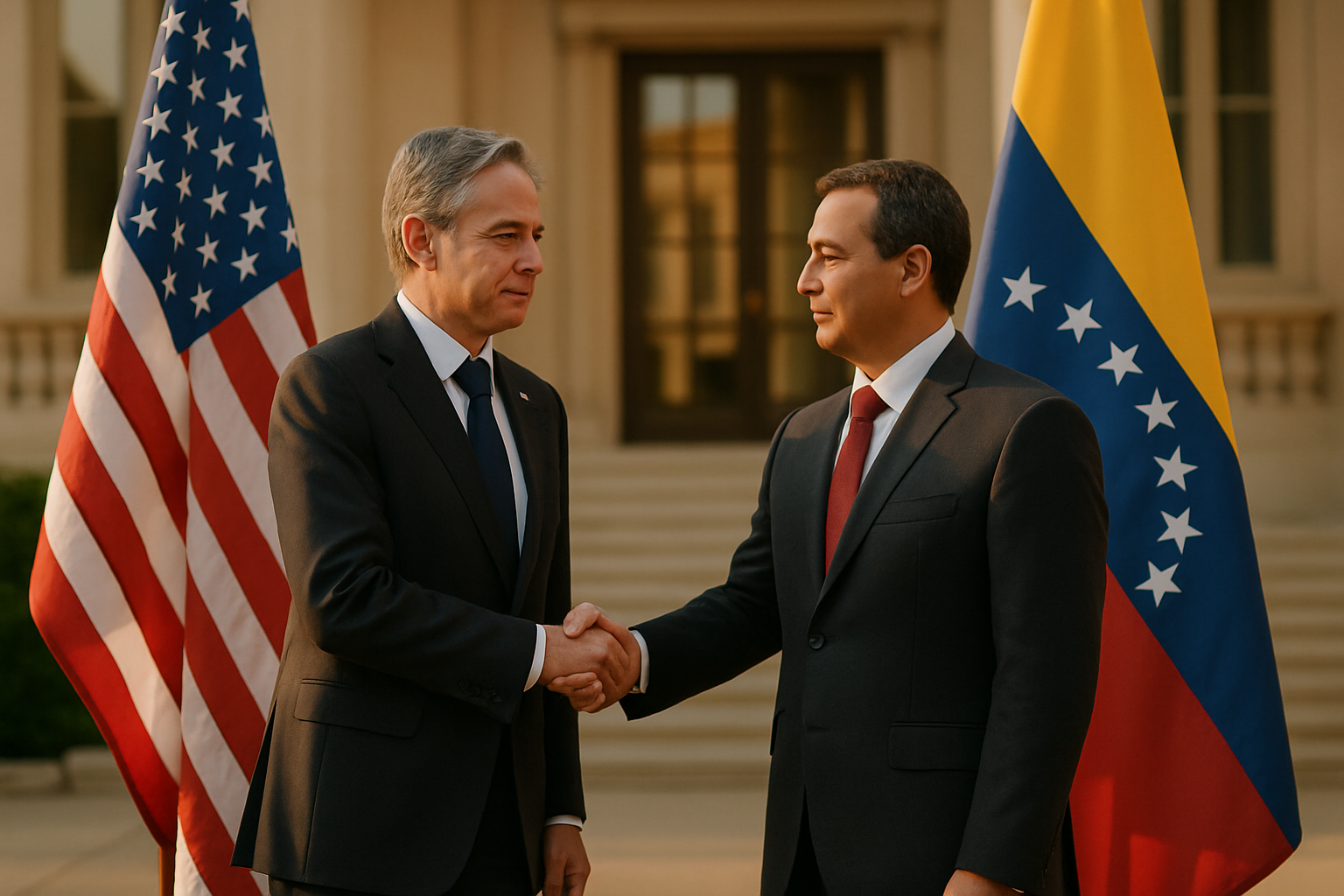
The United States announced Wednesday the formal removal of sanctions against Venezuela's interim president Delcy Rodríguez, eliminating her name from the "Specially Designated Nationals List" in a significant diplomatic gesture that underscores the unprecedented transformation of US-Venezuelan relations since Nicolás Maduro's capture in January 2026.
The move, confirmed by multiple international sources including Greek, Italian, Peruvian, and Venezuelan media outlets, represents another critical step toward complete normalization of bilateral ties that were severed for seven years during the Trump administration's "maximum pressure" campaign against the Maduro regime.
Strategic Partnership Replaces Maximum Pressure
The sanctions removal comes as Venezuela's interim government under Rodríguez has demonstrated sustained commitment to democratic reforms and international cooperation. Since assuming power following Maduro's January 3, 2026 capture by US forces, Rodríguez has overseen the release of over 750 political prisoners under the most comprehensive amnesty program in recent Latin American history, covering political offenses from 1999-2026.
Oil exports have surged 60% to 800,000 barrels daily, with the United States displacing China as Venezuela's top customer following the lifting of economic sanctions. This dramatic economic reorientation reflects the success of what Secretary of State Marco Rubio has termed "bilateral energy diplomacy" - a template for countering Chinese influence through strategic partnerships.
"This represents a fundamental shift from confrontation to cooperation based on shared democratic values and economic opportunities."
— US State Department Official (speaking on condition of anonymity)
Comprehensive Democratic Transformation
The sanctions relief follows a remarkable series of democratic achievements by the Rodríguez administration. The Venezuelan National Assembly unanimously passed historic amnesty legislation covering 27 years of political conflict, resulting in the immediate release of 379 political prisoners within hours of implementation in February 2026.
High-level diplomatic engagement has been unprecedented, with Energy Secretary Chris Wright conducting a historic visit to Caracas in February, becoming the highest-ranking US official to visit Venezuela since the democratic transition began. Wright signed comprehensive energy cooperation agreements at Miraflores Palace, formally ending the 2019 oil embargo.
US Embassy operations resumed in March 2026 after a seven-year break, with Chargé d'Affaires Laura Dogu overseeing the restoration of full diplomatic relations. The American flag was raised over the embassy for the first time since 2019, symbolizing the complete diplomatic transformation.
Economic Recovery and International Investment
The economic partnership has yielded immediate results beyond oil exports. Interior Secretary Doug Burgum's March visit focused on mining code reforms, opening "unlimited opportunities" for American companies to access Venezuela's critical mineral resources. This addresses US supply chain security concerns and reduces dependence on Chinese-controlled strategic materials production.
Major international oil companies including Chevron, BP, Shell, Eni, and Repsol have been authorized for expanded operations under Treasury Department permissions. American Airlines has requested authorization to resume direct flights between Miami and Caracas for the first time since 2019, demonstrating growing confidence in Venezuela's stability.
Three major investment advisory groups are organizing Venezuela trips according to Reuters, indicating international investor interest in the post-Maduro political and economic climate.
Regional Implications and International Support
The transformation has garnered significant regional support. The Dominican Republic reopened full diplomatic and commercial relations with Venezuela, while Brazil and the European Union maintain cautious but supportive engagement with the interim government.
Former Spanish Prime Minister José Luis Rodríguez Zapatero continues mediation efforts in Caracas, while Cardinal Baltazar Porras organizes nationwide prayer vigils supporting the reconciliation process. This international legitimacy contrasts sharply with the previous regime's isolation.
"Venezuela's peaceful transition provides a template for resolving international crises through combined diplomatic engagement and economic incentives."
— Regional Diplomatic Observer
Remaining Challenges and Democratic Tests
Despite remarkable progress, significant challenges remain. Approximately 600 political prisoners are still detained according to human rights organization Foro Penal, with some releases involving restrictive conditions including house arrest and electronic monitoring. The case of Juan Pablo Guanipa, a close ally of Nobel Peace Prize laureate María Corina Machado, illustrates these complexities - he was released but subsequently placed under house arrest.
Venezuela's economic recovery faces structural challenges. Oil production remains at 700,000 barrels daily versus the historical peak of 3 million barrels, requiring sustained international investment and technical assistance. The country recorded 475% inflation in 2025 - the world's highest according to the Central Bank - while power outages and infrastructure decay persist.
The appointment of General Gustavo González López as Defense Minister in March raised human rights concerns, as he faces US and EU sanctions for alleged violations. Human rights organization Provea criticized the appointment as "recycling of impunity," highlighting ongoing tensions between democratic reform and institutional continuity.
Democratic Timeline and Electoral Prospects
Secretary Rubio has indicated that "just and democratic" elections represent the next phase of Venezuela's transition, following the successful completion of stabilization efforts and ongoing economic recovery. A March 2026 survey found 64% of Venezuelans demand presidential elections this year, demonstrating strong public appetite for democratic electoral processes.
María Corina Machado's announced return "within weeks" serves as a crucial test of the government's democratic commitments. The 2025 Nobel Peace Prize laureate held her second White House meeting with senior administration officials in March, signaling escalating opposition integration into the democratic process.
Historical Significance and Global Template
The sanctions removal represents the culmination of the most significant hemispheric realignment since the end of the Cold War. The rapid transformation from "maximum pressure" to strategic partnership demonstrates innovative approaches to international crisis resolution in the era of great power competition.
This Venezuelan model creates a template for "bilateral energy diplomacy" potentially applicable globally for addressing territorial disputes, democratic transitions, and strategic partnership development. The success combines military pressure, economic incentives, and selective engagement to achieve diplomatic breakthroughs previously considered impossible.
President Trump has announced intentions to visit Venezuela, which would make him the first US president to do so since 1997, potentially cementing the historic transformation of hemispheric relations.
Congressional Response and Future Sustainability
The rapid policy reversal has generated mixed Congressional responses. Republicans generally support the approach as an effective counter-strategy against Chinese influence in Latin America. However, Democrats have introduced legislation demanding transparency on Venezuelan oil sales, reflecting concerns about the pace of sanctions reversal without adequate oversight mechanisms.
The previous House vote of 219-211 requiring Venezuelan oil deal oversight reflects bipartisan concerns about rapid policy changes without sufficient monitoring, suggesting potential future political challenges to the partnership's sustainability.
Looking Forward
The sanctions removal against Delcy Rodríguez represents more than a bilateral diplomatic gesture - it symbolizes the possibility of rapid, peaceful transformation of international relationships through innovative diplomatic approaches. The Venezuelan case will likely influence American foreign policy approaches globally, particularly in addressing authoritarian transitions and strategic competition with China.
Coming months will be decisive in determining whether this transformation represents lasting democratic change or a temporary arrangement serving competing interests. The success or failure of Venezuela's democratic consolidation will have implications far beyond the Western Hemisphere, providing lessons for international crisis resolution in the 21st century.
With over 750 political prisoners released, oil exports restored, and diplomatic relations normalized, Venezuela under Delcy Rodríguez has achieved remarkable progress. However, the ultimate test lies in conducting free and fair elections that demonstrate genuine democratic commitment beyond immediate economic and diplomatic benefits.