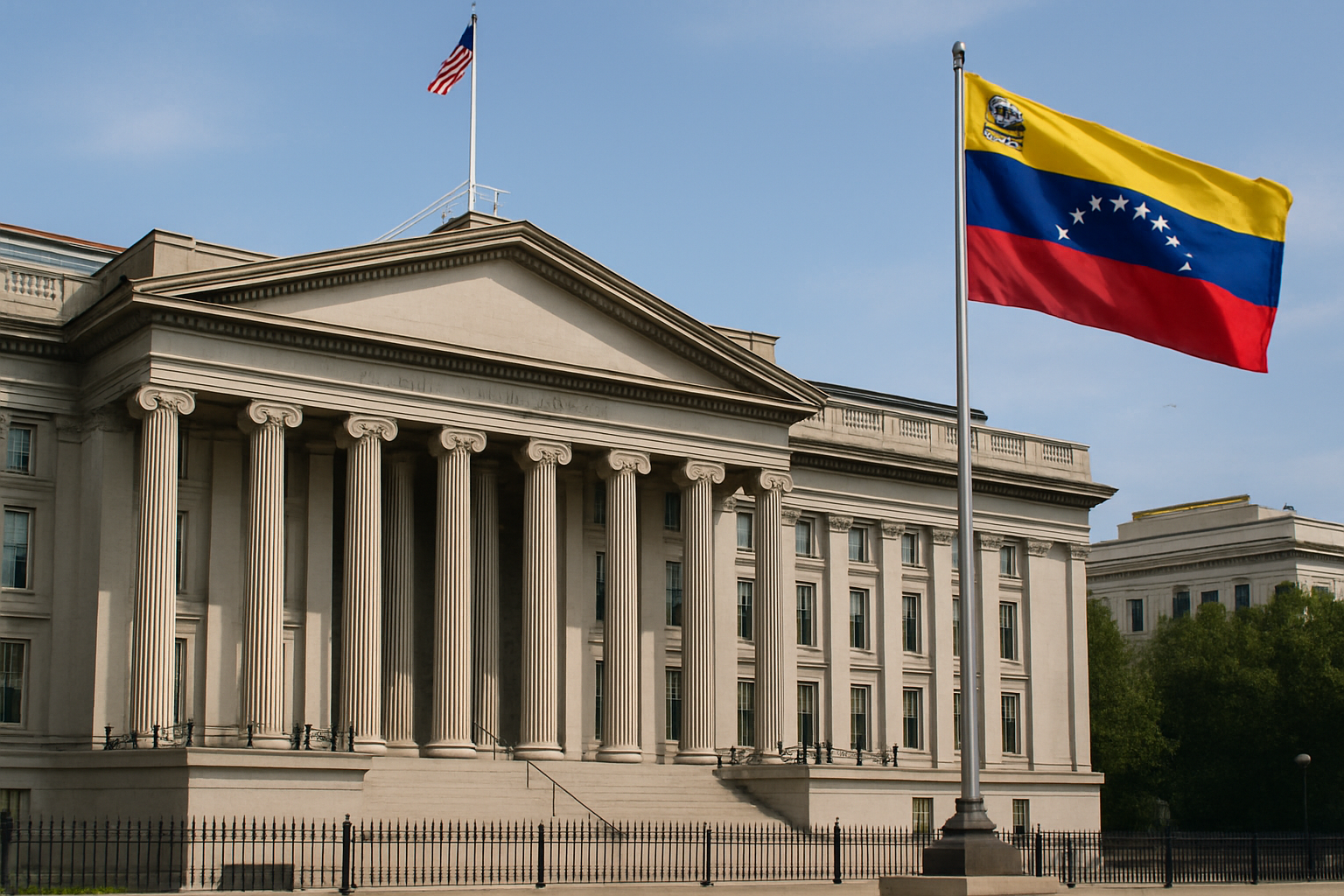
The United States officially removed Venezuelan Acting President Delcy Rodríguez from the Treasury Department's Specially Designated Nationals List on Wednesday, culminating three months of unprecedented diplomatic transformation since the capture of former President Nicolás Maduro in January 2026.
The sanctions removal, announced through the Office of Foreign Assets Control (OFAC), eliminates restrictions that had been imposed on Rodríguez since 2018 during the first Trump administration. The decision represents the complete reversal of the "maximum pressure" campaign and establishes a new framework for US-Venezuelan cooperation based on energy partnerships and democratic transition.
Historic Diplomatic Breakthrough
The announcement comes exactly three months after US forces captured Maduro on January 3, 2026, ending nearly three decades of Chávez-Maduro authoritarian rule. Since assuming the interim presidency, Rodríguez has implemented sweeping political and economic reforms that have transformed Venezuela's international standing.
"This decision is a step in the direction of normalization and strengthening of relations," Rodríguez stated in response to the sanctions removal, characterizing the move as recognition of her administration's democratic progress and commitment to regional stability.
The lifting of sanctions represents the culmination of Secretary of State Marco Rubio's three-phase reconstruction plan for Venezuela: stabilization through the removal of Maduro, economic recovery through sanctions relief and international investment, and democratic transition toward free elections.
Energy Partnership Success
Central to the dramatic improvement in US-Venezuela relations has been the success of bilateral energy cooperation. Venezuelan oil exports have surged 60% to 800,000 barrels daily since January, with the United States displacing China as Venezuela's top customer following the lifting of oil sanctions.
Energy Secretary Chris Wright's historic February visit to Caracas resulted in comprehensive cooperation agreements signed at the Miraflores Palace, officially ending the 2019 oil embargo. The Treasury Department has authorized five major oil companies—Chevron, BP, Shell, Eni, and Repsol—to expand operations in Venezuela.
"The transformation of US-Venezuelan energy cooperation demonstrates the power of bilateral partnerships in addressing both nations' strategic interests while supporting democratic transition."
— Marco Rubio, Secretary of State
Interior Secretary Doug Burgum's March visit focused on mining code reforms, providing what officials described as "unlimited opportunities" for American companies to access Venezuela's critical minerals. This addresses US supply chain security concerns and counters Chinese dominance in strategic materials production.
Political Reconciliation Achievements
The Rodríguez administration has overseen the most comprehensive political prisoner amnesty in recent Latin American history. Over 750 political prisoners have been released since January 2026 under a historic amnesty program covering offenses from 1999-2026, spanning the entire Chávez-Maduro era.
The National Assembly unanimously approved the 13-article amnesty legislation, with Rodríguez calling for "maximum speed" in implementation while emphasizing the need for national healing: "One must know how to ask for forgiveness and one must also know how to receive forgiveness."
International mediators, including former Spanish Prime Minister José Luis Rodríguez Zapatero and Cardinal Baltazar Porras, have provided crucial support for the reconciliation process through diplomatic mediation and spiritual guidance.
Regional Diplomatic Realignment
The transformation of US-Venezuela relations has catalyzed broader regional diplomatic changes. The Dominican Republic has reopened full diplomatic and commercial relations with Venezuela, while Brazil and the European Union have expressed cautious support for the democratic transition.
The restoration of formal US-Venezuelan diplomatic relations in March 2026, ending a seven-year break since 2019, included the ceremonial raising of the American flag over the US Embassy in Caracas. Chargé d'Affaires Laura Dogu has conducted high-level meetings with Venezuelan officials, representing the highest US diplomatic contact since the previous Trump administration.
American Airlines has requested authorization for Miami-Caracas flights for the first time since 2019, symbolizing the normalization of civilian and commercial ties between the nations.
Ongoing Challenges and Concerns
Despite significant progress, substantial challenges remain for Venezuela's democratic consolidation. Human rights organizations report that approximately 600 political prisoners remain detained, with some releases involving restrictive conditions such as house arrest and electronic monitoring.
The case of Juan Pablo Guanipa, a close ally of Nobel Peace Prize laureate María Corina Machado, illustrates the complexities of the transition. While released under the amnesty program, Guanipa remains under house arrest with electronic monitoring, raising questions about the completeness of democratic reforms.
Economic challenges persist despite oil revenue improvements. Venezuela's inflation rate reached 475% in 2025—the world's highest—while oil production remains at 700,000 barrels daily compared to the historical peak of 3 million barrels. Infrastructure decay, power outages, and fuel shortages continue to affect millions of Venezuelans.
Congressional Response and Oversight
The dramatic shift in Venezuela policy has generated mixed reactions in Congress. Republican legislators support the approach as an effective counter-strategy to Chinese influence in Latin America, while Democratic members have demanded greater transparency regarding Venezuelan oil sales and the pace of policy reversal.
The House of Representatives previously passed legislation by a 219-211 margin requiring oversight of Venezuelan oil operations, reflecting bipartisan concerns about the rapid transformation from maximum pressure to strategic partnership without adequate monitoring mechanisms.
International Template for Crisis Resolution
Foreign policy analysts view the Venezuela case as potentially establishing a template for "bilateral energy diplomacy" that combines military pressure, economic incentives, and selective engagement to resolve international crises. This approach represents a 21st-century update to the Monroe Doctrine, termed the "Trump Corollary" by regional experts.
The success of rapid diplomatic transformation through economic partnerships is being closely monitored by the international community as a potential model for addressing similar challenges globally, particularly in the context of great power competition with China and Russia.
Looking Forward: Democratic Transition Test
The ultimate test of Venezuela's democratic transformation will be the return of María Corina Machado, who announced her intention to return to Venezuela "within weeks." Her second White House meeting with senior Trump administration officials, including Secretary Rubio and Chief of Staff Susie Wiles, signals escalating opposition integration in the democratic process.
President Trump has announced his intention to visit Venezuela, which would make him the first US president to visit the country since 1997, potentially capping the most dramatic foreign policy transformation in recent hemispheric history.
Recent polling shows that 64% of Venezuelans demand presidential elections in 2026, demonstrating strong public appetite for democratic electoral processes during the political transition.
The success or failure of Venezuela's democratic consolidation will likely influence approaches to similar challenges throughout Latin America and globally, providing precedents for international crisis resolution in the multipolar era. The coming months will be decisive in determining whether the rapid diplomatic changes translate into sustainable democratic institutions or represent temporary arrangements serving competing strategic interests.