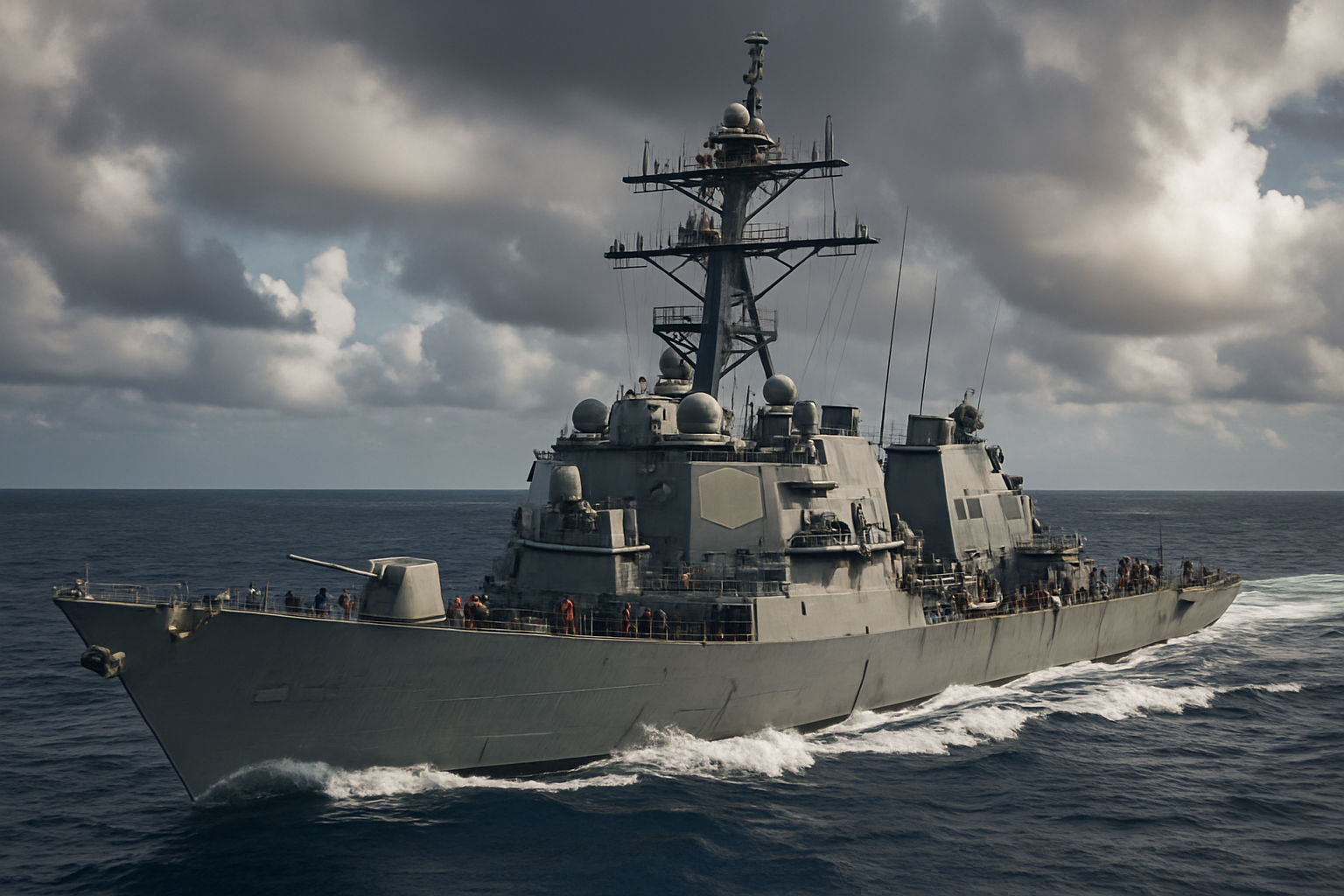
US military forces conducted a lethal strike against a suspected drug trafficking vessel in the Eastern Pacific Ocean on Friday, killing three people in the latest escalation of the Trump administration's militarized counter-narcotics campaign known as Operation Southern Spear.
US Southern Command (SOUTHCOM) confirmed the operation through social media posts, stating that the targeted vessel "was transiting along known narco-trafficking routes in the Eastern Pacific and was engaged in narco-trafficking operations." Video footage released by SOUTHCOM showed the boat floating in open water before erupting in flames after the military strike.
The Friday attack represents a continuation of an unprecedented shift in US counter-narcotics policy from traditional law enforcement interdiction to direct military targeting of civilian vessels in international waters. The operation brings the total death toll from Operation Southern Spear to approximately 150 people across more than 40 attacks since the campaign began in September 2025.
Escalating Military Campaign
The strike occurred as part of the Trump administration's broader "Corolario Trump" strategy—a 21st-century update to the Monroe Doctrine that combines military deployment, economic coercion, and selective diplomatic engagement across the Caribbean and Eastern Pacific regions. Under this framework, the US has systematically transformed these maritime areas into active military zones.
Operation Southern Spear operates under terrorist organization designations that provide legal justification for kinetic military operations against suspected trafficking vessels without traditional law enforcement protocols. This authority allows US forces to conduct lethal strikes based on suspected rather than confirmed criminal activity, representing a fundamental departure from arrest-and-prosecution models.
"The boat was transiting along known narco-trafficking routes in the Eastern Pacific and was engaged in narco-trafficking operations."
— US Southern Command Statement
The military campaign has drawn criticism from maritime law experts who question the precedent of conducting lethal strikes against civilian vessels in international waters. Reuters reported that the news agency "could not immediately verify the information through an independent source," highlighting ongoing transparency concerns surrounding the operations.
Regional Impact and Concerns
The militarized approach has created significant anxiety among Caribbean and Pacific fishing communities, where legitimate maritime operations increasingly overlap with military enforcement zones. Recent incidents have reportedly resulted in the deaths of three Saint Lucian fishermen in Saint Vincent and the Grenadines waters, raising serious concerns about civilian casualties.
Royal SVG Police have issued guidance encouraging fishermen to maintain normal operations while staying in communication with authorities, acknowledging the risks posed by military operations in traditional fishing waters. The incidents demonstrate the challenges of distinguishing between legitimate commercial vessels and suspected trafficking operations in shared maritime spaces.
The February 13 strike that killed three people in a separate incident led to what Saint Vincent authorities described as "large-scale drug proliferation" when cocaine washed ashore on the main island. While this resulted in the largest cocaine seizure in the nation's history—valued at approximately $500 million—it also highlighted the unintended consequences of maritime military operations.
Legal and Diplomatic Framework
The Trump administration has justified these operations through existing military authorizations and terrorist organization designations, avoiding the need for new Congressional approval. The legal framework allows US forces to target vessels "operated by designated terrorist organizations" with lethal force in international waters, a significant expansion of traditional maritime law enforcement authorities.
General Francis L. Donovan, head of US Southern Command, has overseen the systematic campaign that represents the most aggressive counter-narcotics military approach in decades. The operations occur alongside diplomatic initiatives, including the recent Trump-Petro White House meeting that established counter-narcotics cooperation frameworks with Colombia.
International media coverage across European, Latin American, and Middle Eastern outlets has highlighted humanitarian concerns and raised questions about the legal framework governing these military strikes. The approach contrasts sharply with traditional international law enforcement cooperation that emphasizes arrests, judicial proceedings, and due process protections.
Strategic Context and Implications
Operation Southern Spear operates within the broader context of the Trump administration's Caribbean strategy, which includes the deployment of the world's largest aircraft carrier to Venezuelan waters and extensive diplomatic engagement across the region. This dual-track approach combines military pressure with economic incentives and selective cooperation agreements.
The campaign has achieved some tactical successes, including disrupting trafficking routes and seizing significant quantities of narcotics. However, its long-term effectiveness remains debated among policy experts who question whether military strikes provide sustainable solutions to transnational criminal challenges that traditionally require judicial and institutional responses.
The operations have also complicated regional diplomatic relationships. While some partners support enhanced counter-narcotics cooperation, others have expressed concerns about sovereignty implications and civilian protection protocols in international waters.
Operational Challenges and Future Outlook
Despite the military campaign's aggressive approach, drug trafficking organizations continue to demonstrate sophisticated adaptation capabilities. Criminal networks have evolved encrypted communications, compartmentalized operational structures, and diversified transportation methods that challenge traditional interdiction approaches.
The effectiveness of converting suspected criminal activity into military targets without independent verification processes raises fundamental questions about accountability and proportionality in counter-narcotics operations. Unlike traditional law enforcement that produces arrests and judicial outcomes, military strikes generate primarily classified operational reports with limited public oversight.
Congressional Democrats have demanded greater transparency regarding rules of engagement and effectiveness metrics, while Republican lawmakers generally support the approach as necessary for addressing sophisticated trafficking networks. The debate reflects broader tensions over executive authority in conducting military operations without explicit Congressional authorization.
International Implications
The precedent established by Operation Southern Spear extends far beyond Western Hemisphere counter-narcotics policy. The systematic use of military force against civilian vessels based on suspected criminal activity represents a significant evolution in international maritime law enforcement that could influence approaches to organized crime globally.
Success or failure of the militarized approach will likely determine whether similar frameworks are adopted elsewhere, affecting how nations address transnational criminal challenges in the 21st century. The operations serve as a test case for applying military solutions to civilian criminal problems in an era of increasingly sophisticated international organized crime.
As Operation Southern Spear continues with no announced scale-back plans, the international community continues to monitor both its immediate tactical results and longer-term implications for maritime law, civilian protection, and the balance between security imperatives and due process protections in combating transnational crime.