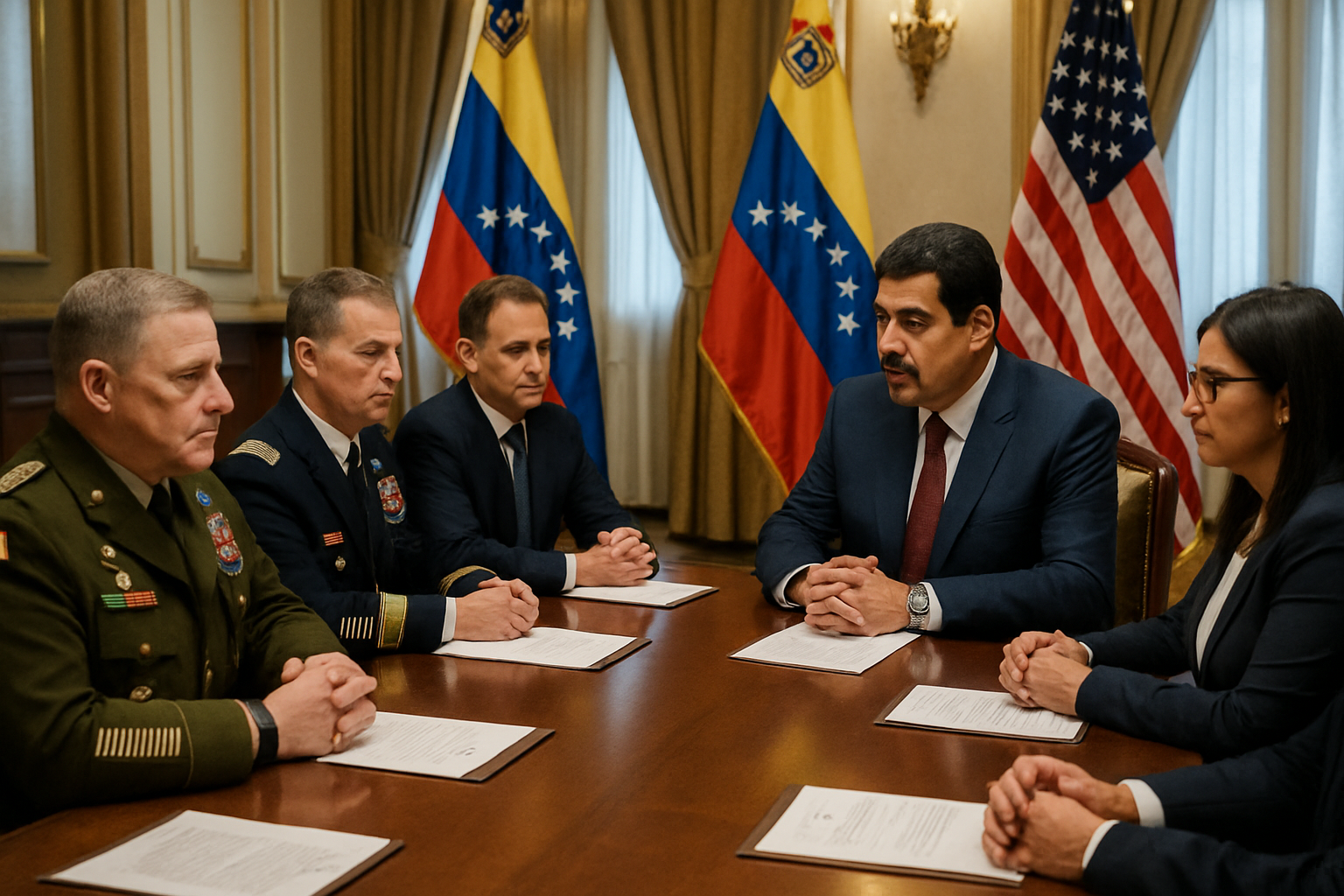
The top US military commander for Latin America, General Francis L. Donovan, made a surprise visit to Venezuela on Wednesday for high-level security talks with interim government officials, marking the first US military delegation trip to the country since former President Nicolás Maduro was captured by US forces last month.
General Donovan, head of US Southern Command (SOUTHCOM), was accompanied by senior Pentagon official Joseph Humire and US Ambassador Laura Dogu for meetings with Acting President Delcy Rodríguez, Defense Minister Vladimir Padrino López, and Interior Minister Diosdado Cabello at government facilities in Caracas.
The unannounced visit represents a dramatic escalation in US-Venezuela diplomatic engagement following Maduro's January 3, 2026 capture in a US military operation. Sources indicate the discussions focused on regional security cooperation, implementation of democratic transition plans, and coordination on the comprehensive three-phase reconstruction framework developed by Secretary of State Marco Rubio.
Security Cooperation Framework
According to official statements from both governments, the talks centered on "security environment assessments" and implementation steps for Venezuela's democratic reconstruction. The discussions included evaluation of the country's security infrastructure needed to support the ongoing political transition and economic recovery programs.
The Venezuelan government confirmed that General Donovan's delegation conducted comprehensive assessments of current security conditions as part of broader efforts to stabilize the country following the dramatic political changes of January 2026. The meetings included detailed discussions of cooperation mechanisms and shared security objectives in the region.
"General Francis L. Donovan conducted a visit to Caracas where he met with President Delcy Rodríguez, Defense Minister Vladimir Padrino López, and Interior and Justice Minister Diosdado Cabello."
— Venezuelan Presidential Office Statement
Historic Diplomatic Context
The military delegation's visit occurs against the backdrop of unprecedented US-Venezuela cooperation that has emerged since Maduro's removal. Energy Secretary Chris Wright conducted a groundbreaking visit to Venezuela on February 12-13, becoming the highest-ranking US civilian official to visit the country in nearly three decades and signing a comprehensive energy cooperation agreement.
Venezuelan oil exports have surged 60% from 498,000 to 800,000 barrels daily since January, with the United States displacing China as Venezuela's top oil customer. Chevron has more than doubled its Venezuelan shipments, while the US has released 40 million barrels from strategic reserves to support the partnership.
The diplomatic breakthrough follows Secretary Rubio's three-phase reconstruction plan: stabilization of the security situation, economic recovery through sanctions relief and investment, and democratic transition with free elections. General Donovan's visit appears focused primarily on the stabilization phase, ensuring adequate security frameworks exist to support the broader reconstruction efforts.
Regional Security Implications
The timing of the military visit carries significant regional implications, occurring amid ongoing US maritime operations in Caribbean waters under "Operation Southern Spear" and broader hemispheric security initiatives. The delegation's presence in Caracas suggests efforts to coordinate regional security approaches and ensure Venezuelan cooperation with broader US strategic objectives in Latin America.
Military sources indicate the discussions included assessments of drug trafficking routes, border security measures with Colombia and Brazil, and coordination mechanisms for addressing transnational criminal organizations operating in the region. The visit represents a shift from confrontation to cooperation in addressing shared security challenges.
The meetings also reportedly addressed Venezuela's role in regional stability efforts, particularly given the country's strategic location and the ongoing humanitarian and political crises affecting neighboring countries including Cuba and Nicaragua.
Political Prisoner Amnesty Progress
The military delegation's visit coincides with ongoing efforts to resolve Venezuela's political prisoner crisis through comprehensive amnesty legislation. Over 400 political prisoners have been released since January 2026 under Acting President Rodríguez's amnesty program, though an estimated 600 remain detained according to human rights organizations.
The comprehensive amnesty law covering political offenses from 1999-2026 has faced delays in the National Assembly over provisions requiring prisoners to "present themselves to justice." Opposition groups argue this criminalizes victims of political persecution, while government supporters maintain it provides necessary legal frameworks for reconciliation.
Former Spanish Prime Minister José Luis Rodríguez Zapatero has been mediating in Caracas since February 6, while Cardinal Baltazar Porras has organized nationwide prayer vigils supporting the amnesty process. The international engagement adds legitimacy to the reconciliation efforts and demonstrates growing confidence in Venezuela's democratic transition.
Economic Transformation Continues
General Donovan's visit occurs during Venezuela's rapid economic reorientation toward the United States following decades of maximum pressure sanctions. The Treasury Department has authorized five major oil companies - Chevron, BP, Shell, Eni, and Repsol - to resume expanded operations in Venezuela under the new cooperation framework.
American Airlines has requested authorization for Miami-Caracas and Maracaibo flights, while over 6 tons of US medical supplies have arrived through diplomatic channels for Venezuela's healthcare system. The expanding cooperation demonstrates the comprehensive nature of the bilateral engagement extending well beyond energy sector partnerships.
However, significant challenges remain for Venezuela's economic recovery. Oil production stands at only 700,000 barrels daily compared to the historical peak of 3 million barrels. Infrastructure decay, hyperinflation, and power outages continue to affect daily life, requiring sustained international investment and technical assistance.
International Reactions
The Dominican Republic has reopened diplomatic and commercial relations with Venezuela, while Brazil and the European Union have expressed cautious support for the democratic transition. China faces reduced influence as Venezuela reorients toward US markets, though Venezuelan officials have sought to reassure Beijing about protecting existing Chinese investments.
Regional observers view the military visit as evidence of the Trump administration's "Corolario Trump" strategy - a 21st-century update to the Monroe Doctrine combining military pressure with economic incentives and selective diplomatic engagement. The approach represents a template for countering Chinese influence throughout Latin America.
European media outlets have characterized the rapid US-Venezuela rapprochement as "historic" and potentially providing a model for similar diplomatic reversals elsewhere. However, questions remain about the sustainability of the changes and whether they represent genuine democratic reform or temporary political adjustments.
Looking Ahead
President Trump has announced his intention to visit Venezuela, which would make him the first US president to do so since 1997. The visit lacks a specific date but would represent the culmination of the most dramatic US foreign policy transformation in recent history, from maximum pressure to strategic partnership.
The success of General Donovan's security consultations will likely influence the timeline for broader diplomatic initiatives, including potential high-level visits and expanded cooperation agreements. Military sources suggest the discussions will inform future security cooperation frameworks and regional stability initiatives.
The visit represents a critical test of whether the rapid diplomatic changes can translate into sustainable long-term partnerships. Success could provide a template for resolving similar international crises through combined military pressure and economic incentives, while failure might undermine the credibility of such approaches globally.
Coming weeks will be decisive in determining whether General Donovan's historic visit marks the beginning of sustained US-Venezuela security cooperation or represents another chapter in the complex diplomatic relationship between the two countries.