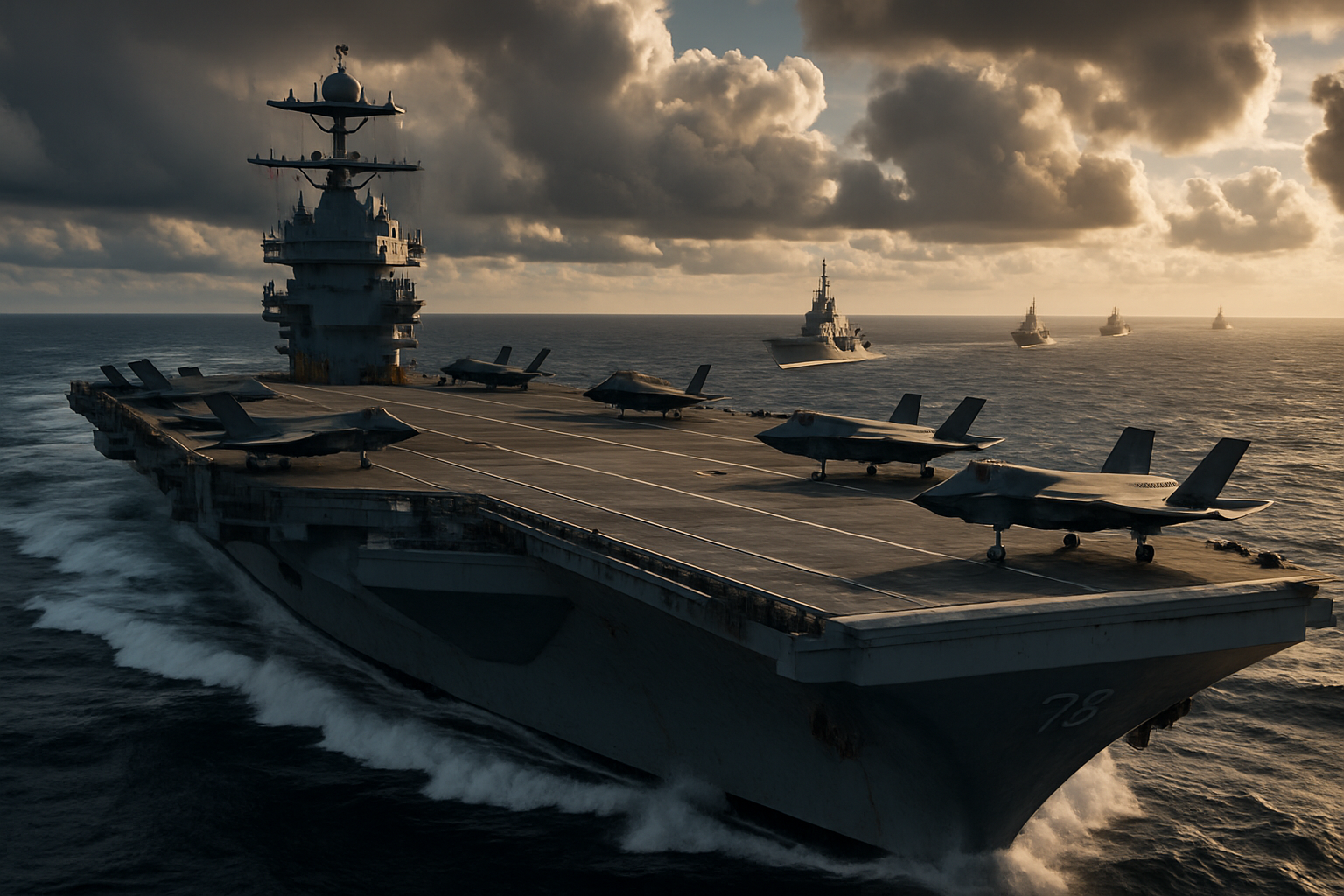
The United States military is preparing for potentially weeks-long operations against Iran as tensions in the Middle East reach a critical juncture, with American officials confirming the deployment of a second aircraft carrier strike group to complement existing naval forces positioned approximately 800 kilometers from Iran's coast.
According to sources familiar with the military planning, the USS Gerald R. Ford—the world's largest aircraft carrier—has been ordered from Caribbean operations to join the USS Abraham Lincoln already stationed in the Arabian Sea, creating an unprecedented dual-carrier strike force in the region. The deployment represents the largest US naval buildup in the Middle East in years and signals Washington's readiness for sustained military action should diplomatic efforts fail.
Strategic Military Positioning
The dual-carrier deployment provides the Pentagon with multiple strike capabilities and enhanced defensive coverage for regional allies. Military planners have reportedly prepared scenarios ranging from targeted strikes on Iranian nuclear facilities to broader campaigns against Revolutionary Guard infrastructure, according to American officials who spoke on condition of anonymity.
President Trump confirmed the second carrier deployment during remarks aboard Air Force One, explaining: "In case we don't make a deal, we'll need it... if we need it, we'll have it ready." The USS Gerald R. Ford requires approximately one week transit time from its current Caribbean operations to reach the Middle East theater.
"American officials say strikes could target Iranian state and security facilities, not just nuclear sites; the US fully expects Iran to retaliate, leading to back-and-forth attacks."
— Senior Administration Official
Escalating Military Tensions
Recent military incidents have heightened tensions between the two nations. An F-35C fighter jet from the USS Abraham Lincoln shot down an Iranian Shahed-139 drone that aggressively approached the carrier in the Arabian Sea. The incident occurred during ongoing diplomatic negotiations, demonstrating how military and diplomatic tracks continue in parallel.
Iranian Revolutionary Guard Corps (IRGC) vessels have also increased harassment of US-flagged tankers in the strategically vital Strait of Hormuz, which handles approximately 40% of global oil transit. Oil prices have risen over $1 per barrel in response to the escalating tensions, reflecting market concerns about potential supply disruptions.
Nuclear Crisis Context
The military preparations occur against the backdrop of Iran's continued uranium enrichment at 60% purity—significantly above the 3.67% limit established in the 2015 Joint Comprehensive Plan of Action (JCPOA) and approaching the 90% weapons-grade threshold. Intelligence assessments suggest Iran possesses sufficient enriched uranium for multiple nuclear weapons if weaponized.
Despite ongoing nuclear negotiations in Oman mediated by Sultan Haitham bin Tariq, fundamental disagreements persist. Iran maintains that ballistic missiles and regional proxy activities are "red lines" excluded from nuclear-only talks, while US Secretary of State Marco Rubio insists any comprehensive agreement must address missiles, armed groups, and human rights violations.
Iranian Foreign Minister Abbas Araghchi has declared that Iran will "never abandon uranium enrichment even if war is imposed," representing a significant hardening of Tehran's position despite what both sides have characterized as a "positive atmosphere" in recent negotiations.
Regional Coalition Support
An unprecedented coalition of Middle Eastern powers—including Saudi Arabia, the UAE, Qatar, and Egypt—has backed the diplomatic process, representing a remarkable consensus among traditionally opposing regional actors. This support reflects shared concerns about the economic and security implications of a broader military confrontation.
Oman's neutral mediation has proved crucial, leveraging its historical role in the 2015 JCPOA negotiations and maintaining diplomatic channels between Washington and Tehran. The sultanate's position as a trusted intermediary has enabled structured dialogue despite deep mistrust between the primary parties.
Domestic Pressures on Both Sides
Iran faces severe domestic pressure with over 42,000 protest arrests since 2022 and economic sanctions creating what analysts describe as a regime survival imperative. However, Iranian leadership appears to prioritize maintaining nuclear capabilities over economic relief through sanctions removal.
The Trump administration faces its own political calculations, balancing Republican congressional pressure from hawks who view diplomatic engagement as appeasement against the need for a foreign policy victory. Israeli Prime Minister Benjamin Netanyahu has coordinated closely with Trump, emphasizing that any agreement must include comprehensive limitations on Iran's ballistic missile program and support for regional proxies.
International Stakes
The crisis unfolds amid broader nuclear governance challenges, including the February 5 expiration of the New START treaty between the US and Russia—the first time in over 50 years without nuclear arms control constraints between superpowers. UN Secretary-General António Guterres has warned that nuclear risks are "higher than they have been in decades."
European allies have expressed cautious support for renewed dialogue while emphasizing the need for robust verification mechanisms. However, concerns persist about the precedent of territorial sovereignty enforcement and the credibility of international law if military solutions become the primary response to nuclear proliferation challenges.
Military Readiness vs Diplomatic Engagement
The dual-carrier deployment reflects Trump's stated "dual-track approach" of maintaining maximum military pressure while pursuing diplomatic engagement. This strategy includes new economic sanctions targeting countries that trade with Iran, implemented even as nuclear talks continue in Oman.
Admiral Brad Cooper, Commander of US Central Command, recently visited the USS Abraham Lincoln alongside diplomatic officials, demonstrating the coordination between military and diplomatic tracks. The presence of senior military leadership in the region underscores the seriousness of preparations for potential sustained operations.
Technical and Operational Challenges
Military analysts note that any sustained campaign against Iran would require unprecedented coordination given the country's geographic size, dispersed nuclear infrastructure, and sophisticated air defense systems. Iran has sealed entrances to key facilities like the Isfahan nuclear complex with earth and concrete, mirroring defensive preparations observed before previous military actions.
The technical complexity of Iran's nuclear program has advanced significantly since the 2018 JCPOA collapse, with sophisticated centrifuge technology and expanded infrastructure requiring verification mechanisms that exceed the original agreement's scope.
Economic and Energy Market Implications
Global energy markets are closely monitoring developments, with natural gas prices up 24% in Europe and 78% in the United States amid winter demand and geopolitical tensions. The strategic importance of the Strait of Hormuz cannot be overstated, as any closure would affect nearly half of global oil transit and create massive supply chain disruptions.
Regional allies have invested heavily in preventing military confrontation, recognizing that armed conflict could destabilize the Persian Gulf with implications far beyond the immediate participants. The unprecedented regional consensus supporting diplomatic engagement reflects this economic calculus.
Coming Weeks Decisive
Both diplomatic and military preparations are entering a critical phase. Nuclear negotiations are scheduled to continue "early next week" according to official statements, while military planners complete preparations for various contingency scenarios.
The success or failure of current diplomatic efforts could establish important precedents for 21st-century nuclear crisis resolution. Success might provide a template for preventing regional wars through innovative diplomatic solutions, while failure could accelerate the trend toward military solutions that reshape Middle Eastern geopolitics for decades.
Intelligence sources suggest that Iran may be considering significant concessions, including a three-year uranium enrichment halt and transfer of existing stockpiles to Russia. However, hardline statements from Iranian officials cast doubt on whether such compromises remain viable given the escalating military tensions.
The coming weeks will test whether sustained diplomatic engagement can bridge fundamental disagreements that have persisted for over a decade, or whether the region is heading toward a military confrontation that could transform the strategic landscape of the Middle East and set precedents for international conflict resolution in an era of great power competition.