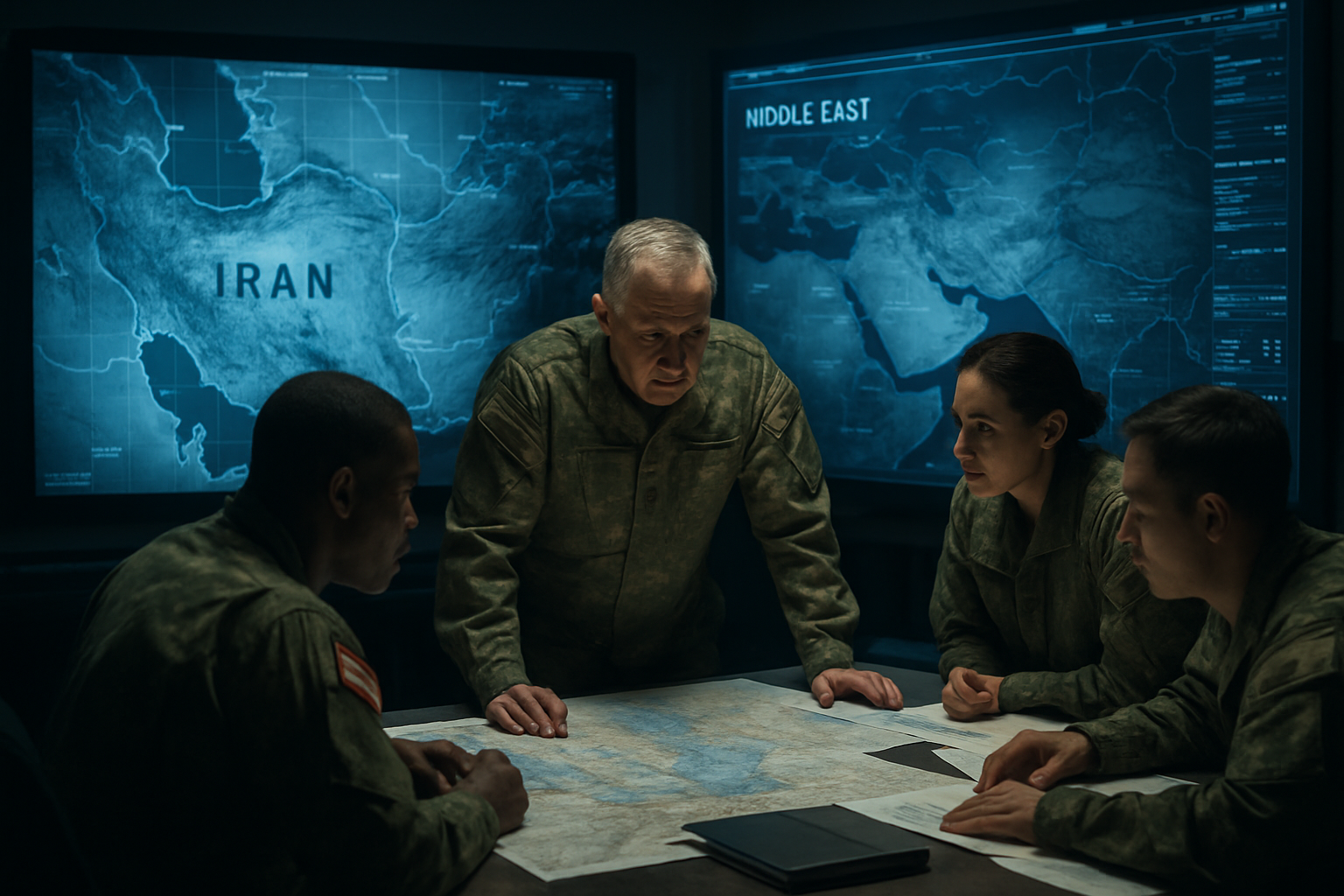
US military forces are reportedly prepared to carry out potential strikes against Iran as early as this weekend, according to multiple international sources, while President Donald Trump has yet to make a final decision on military action amid escalating tensions in the Middle East.
International media outlets, including CNN, CBS News, and multiple European sources, reported Thursday that the US military has briefed the White House that forces could be ready for action by the weekend following a significant buildup of air and naval assets in the Middle East over recent days.
Unprecedented Military Buildup
The Pentagon has deployed an unprecedented dual-carrier strike force in the region, with the USS Gerald R. Ford joining the USS Abraham Lincoln in the Arabian Sea, creating the largest US Middle East naval presence in years. Both carriers are positioned approximately 800 kilometers from Iran's coast, providing multiple strike capabilities and enhanced defensive coverage.
According to military sources, approximately one-third of the active US Navy fleet is currently assembled or en route to the Middle East, representing a massive show of force that has sent oil prices climbing by more than $1 per barrel.
The military preparations include scenarios ranging from targeted strikes on Iranian nuclear facilities to broader campaigns against Revolutionary Guard infrastructure. Pentagon officials have briefed the administration on "potentially weeks-long operations against Iran" with expectations of Iranian retaliation creating a "back-and-forth attacks" cycle.
Trump's Stark Warnings
President Trump has issued increasingly explicit threats in recent days, telling reporters aboard Air Force One: "I don't think they want the consequences of not making a deal." This represents his starkest warning yet regarding the potential failure of nuclear negotiations.
The President confirmed he would be "indirectly" involved in ongoing diplomatic talks while simultaneously authorizing the massive military buildup. Trump has also made his most direct regime change comments to date, declaring that Iranian government overthrow would be "the best thing that could happen" - representing a significant policy evolution from nuclear-focused negotiations to broader political transformation objectives.
Diplomatic Efforts Continue
Despite the military preparations, diplomatic efforts are ongoing through Swiss-Omani mediation. Iranian Foreign Minister Abbas Araghchi announced "broad agreement on a set of guiding principles" during recent Geneva talks, marking the most significant diplomatic development since the JCPOA collapse in 2018.
However, fundamental disagreements persist. Iran maintains uranium enrichment at 60% purity - approaching the 90% weapons-grade threshold - and excludes ballistic missiles and regional proxy activities as "red lines" from nuclear-only talks. US Secretary Marco Rubio demands a comprehensive agreement addressing missiles, armed groups, and human rights issues.
Iranian officials have declared they will "never abandon enrichment even if war is imposed," while intelligence reports suggest Iran possesses sufficient enriched uranium for multiple weapons if weaponized.
Regional and International Response
An unprecedented regional coalition including Saudi Arabia, UAE, Qatar, and Egypt is backing the diplomatic process, representing remarkable Middle Eastern consensus aimed at preventing military confrontation. The Persian Gulf handles 40% of global oil transit, creating significant energy security stakes for the international community.
Israeli Prime Minister Benjamin Netanyahu has coordinated extensively with Trump, emphasizing Israeli red lines that any agreement must include "limiting ballistic missiles and ending Iranian axis support." Nuclear-only frameworks are viewed as insufficient for Israel's existential security concerns.
The crisis unfolds against the backdrop of broader nuclear governance challenges, including the expiration of the New START treaty on February 5 - the first time in over 50 years without US-Russia nuclear constraints - and China's nuclear expansion program.
Domestic Pressures on Both Sides
Iran faces severe domestic pressure with over 42,000 protest arrests since 2022 and continuing economic sanctions. Despite this pressure, the regime has prioritized nuclear capabilities over economic relief, recently sentencing Nobel Peace Prize laureate Narges Mohammadi to an additional 7.5 years in prison during the talks.
The Trump administration must balance Republican hawk pressure against the potential risks of military action while seeking a foreign policy victory. Recent military incidents, including a US F-35C shooting down an Iranian Shahed-139 drone near the USS Abraham Lincoln and IRGC harassment of US tankers in the Strait of Hormuz, have heightened tensions.
Critical Weekend Ahead
White House sources indicate active discussions are continuing regarding potential military action, with officials weighing the risks of escalation as well as political and military consequences. The coming weekend represents a critical decision point that could determine whether diplomatic efforts continue or military action commences.
The stakes could not be higher. Success in diplomatic efforts could prevent a regional war that would destabilize global energy markets and provide a template for 21st-century nuclear crisis resolution. Failure could accelerate military solutions that reshape Middle Eastern geopolitics for decades, encourage nuclear proliferation elsewhere, and undermine diplomatic credibility worldwide.
Iran's advanced nuclear infrastructure, sophisticated centrifuge technology, and dispersed facilities would require unprecedented verification mechanisms that exceed the complexity of the original JCPOA, creating substantial technical challenges even if political agreements are reached.
Global Implications
The crisis represents a template-setting moment for diplomacy versus military confrontation in the multipolar era. International law enforcement mechanisms, territorial sovereignty principles, and global nuclear governance frameworks all hang in the balance.
Oil market volatility continues as traders monitor the situation, with natural gas prices rising 24% in Europe and 78% in the US amid geopolitical pressures. A regional conflict could disrupt supply chains far beyond the Middle East, affecting global economic stability.
As the world watches this weekend's developments, the decision facing President Trump will likely influence international approaches to nuclear crises and territorial disputes well beyond his current administration, potentially establishing precedents for 21st-century conflict resolution or military intervention.