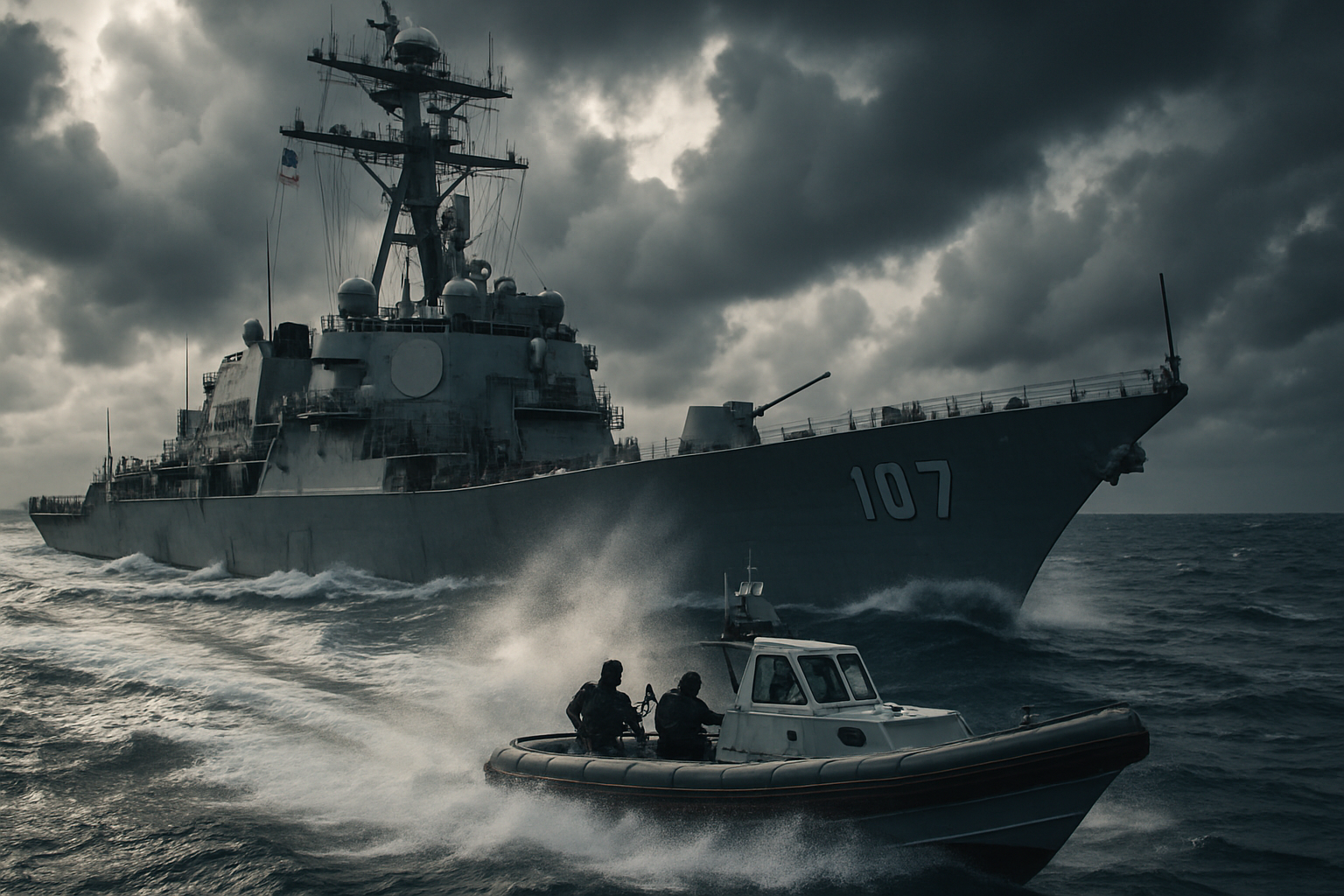
United States Southern Command (SOUTHCOM) conducted a lethal kinetic strike against a vessel operated by designated terrorist organizations in Pacific Ocean waters near Colombia on February 5, 2026, resulting in the deaths of two crew members during what officials described as an anti-narcotics operation.
The operation, conducted under the broader "Operation Southern Spear" mission framework, represents a significant escalation in US military engagement against drug trafficking networks in Latin American waters. According to SOUTHCOM's official statement, the strike was authorized by Commander General Francis L. Donovan after intelligence confirmed the vessel was transiting along known narcotics trafficking routes.
Operation Southern Spear Intensifies
The February 5 incident marks the latest in an expanding series of US military actions against maritime drug trafficking operations in the Eastern Pacific. Norwegian media reports indicate that at least 119 people have now been killed across multiple operations under this campaign, highlighting the scale and intensity of current counter-narcotics efforts.
Joint Task Force Southern Spear, operating under SOUTHCOM's command structure, has been conducting systematic interdiction operations targeting vessels suspected of transporting narcotics from South American production centers to North American markets. The task force combines intelligence gathering, surveillance capabilities, and kinetic strike options to disrupt trafficking networks.
"Intelligence confirmed the vessel was transiting along known narco-trafficking routes operated by Designated Terrorist Organizations."
— US Southern Command Official Statement
The operation occurred in international waters of the Pacific Ocean near Colombian territorial boundaries, an area that has become increasingly contested as drug trafficking organizations adapt their maritime routes to avoid traditional interdiction zones. The vessel's operators were classified as members of designated terrorist organizations, providing legal justification for the lethal force authorization.
Regional Counter-Narcotics Context
This latest strike occurs against a backdrop of evolving US-Latin American cooperation on counter-narcotics efforts. Recent high-level diplomatic engagement, including the February 3, 2026 White House meeting between President Trump and Colombian President Gustavo Petro, had established new frameworks for counter-narcotics collaboration after a period of strained relations.
The Trump-Petro meeting had focused specifically on enhanced counter-narcotics cooperation, with both leaders agreeing that traditional sanctions approaches were ineffective and emphasizing the need for "real cooperation" against drug trafficking networks. However, the lethal nature of recent maritime operations suggests a more aggressive military approach than previously discussed in diplomatic channels.
Sources familiar with the operation indicate that the targeted vessel was part of a broader network of maritime trafficking routes that have increasingly challenged traditional interdiction methods. Drug trafficking organizations have evolved sophisticated logistics capabilities, utilizing smaller, faster vessels and coordinated fleet operations to evade detection and interdiction.
International Maritime Law Implications
The use of lethal force against civilian vessels in international waters raises complex questions about maritime law enforcement and the legal frameworks governing counter-narcotics operations. While the US maintains broad authority to interdict suspected drug trafficking vessels under international agreements, the escalation to kinetic strikes represents a significant policy shift.
Legal experts note that the classification of vessel operators as members of "designated terrorist organizations" provides additional legal justification for lethal force under US national security authorities. However, the practice of conducting such operations in international waters near allied nations' territory requires careful coordination to avoid diplomatic complications.
The operation's timing, occurring shortly after diplomatic breakthroughs with Colombia, suggests that military and diplomatic tracks are proceeding simultaneously rather than as alternative approaches. This dual-track strategy reflects the complexity of addressing transnational criminal networks that operate across multiple jurisdictions.
Operational Details and Intelligence
According to multiple international media reports, the strike was conducted with precision targeting based on extensive intelligence gathering and surveillance operations. The two fatalities occurred during the kinetic engagement, though specific details about the vessel's cargo, crew composition, and operational objectives remain classified.
The incident represents part of a systematic campaign by US forces to disrupt maritime trafficking networks that have adapted to increased enforcement pressure in traditional smuggling corridors. Drug trafficking organizations have increasingly utilized the Eastern Pacific routes to transport narcotics from Colombian production centers toward North American markets.
Intelligence sources suggest that the targeted vessel was part of a coordinated trafficking operation involving multiple vessels and sophisticated communication networks. The ability to identify and track such vessels requires extensive surveillance capabilities and real-time intelligence sharing among US agencies and partner nations.
Regional Security Implications
The escalation in maritime enforcement operations occurs amid broader regional security challenges, including the ongoing situation in Venezuela following regime change and continued concerns about Chinese influence in Latin American ports and maritime infrastructure. US naval presence in the Eastern Pacific serves multiple strategic objectives beyond counter-narcotics operations.
Regional allies have generally supported enhanced counter-narcotics cooperation, though the use of lethal force raises questions about operational limits and civilian casualties. The classification of trafficking organization members as "designated terrorists" reflects the US assessment that these networks pose threats beyond traditional criminal activity.
The operation's success in terms of disrupting trafficking networks will likely be measured by its impact on cocaine flow rates and market prices in North American cities, though such effects may take weeks or months to become apparent in intelligence assessments.
Future Operations and Policy Direction
The February 5 strike appears to signal a more aggressive phase of US counter-narcotics operations in the region, with SOUTHCOM demonstrating willingness to use lethal force against high-value targets when diplomatic and traditional law enforcement approaches prove insufficient.
Military analysts suggest that Operation Southern Spear represents a systematic campaign rather than isolated incidents, with Joint Task Force Southern Spear likely maintaining persistent surveillance and strike capabilities across Eastern Pacific trafficking routes. The operation's effectiveness will be measured by its impact on overall trafficking volumes and organizational disruption.
The coordination between diplomatic engagement and military operations suggests a comprehensive strategy that combines negotiated cooperation with deterrent effects from kinetic strikes. However, the sustainability of such an approach will depend on maintaining allied support and avoiding civilian casualties that could undermine regional cooperation.
As maritime trafficking organizations adapt their tactics to increased military pressure, US forces may need to continuously evolve their operational approaches while balancing effectiveness against diplomatic and legal constraints in international waters.