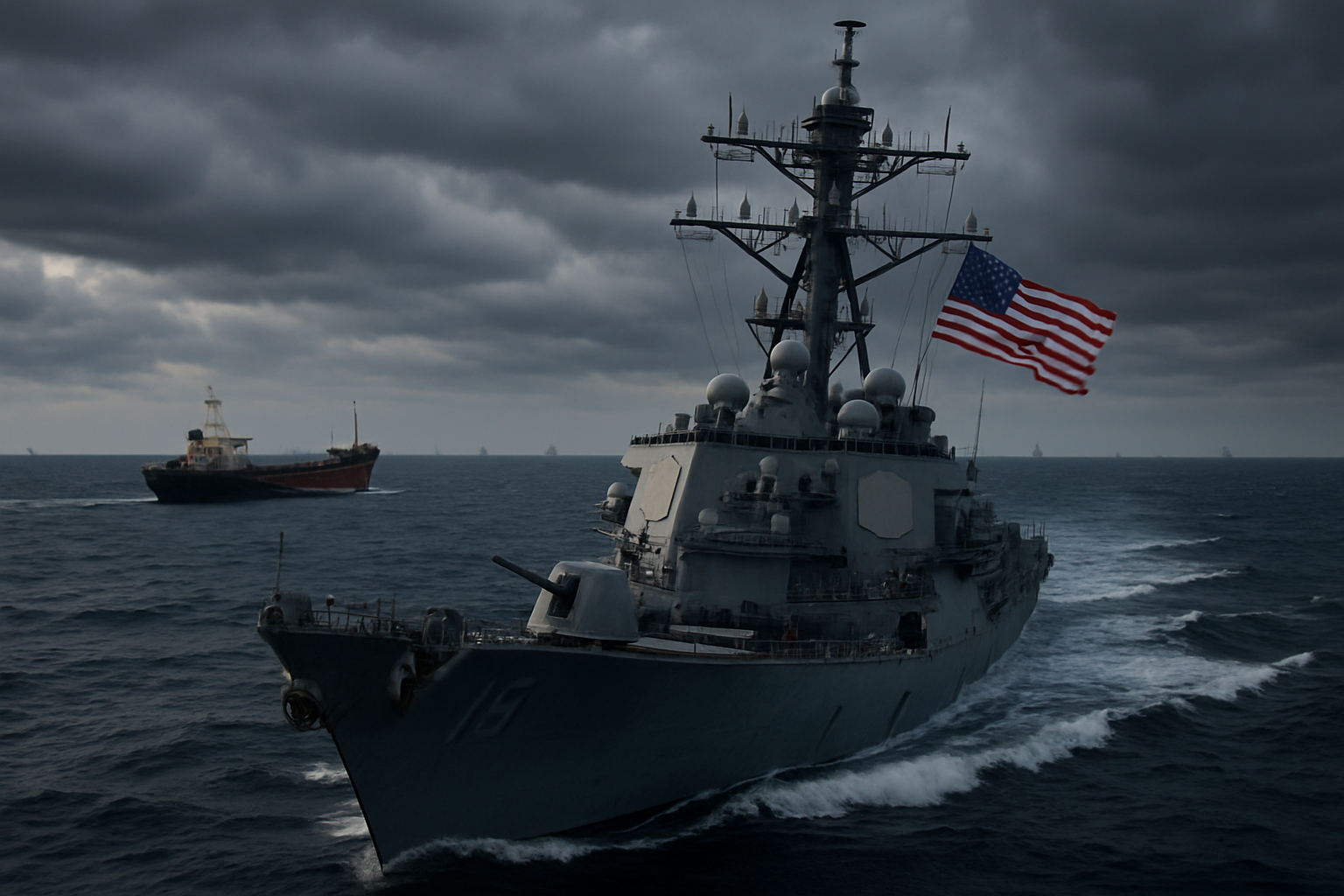
A fragile ceasefire between the United States and Iran faces collapse after US naval forces seized an Iranian cargo ship near the Strait of Hormuz, prompting Tehran to cancel scheduled peace talks and threaten swift retaliation against what it called "armed piracy."
The incident occurred Sunday when the US guided-missile destroyer USS Spruance intercepted the Iranian-flagged vessel M/V Touska in the Gulf of Oman. According to President Trump's Truth Social posts, American forces fired on the ship's engine room after the crew refused to stop for inspection, taking "full custody" of the vessel attempting to breach the ongoing US naval blockade of Iranian ports.
Iran Rejects Peace Negotiations
In response to the seizure, Iran announced Monday it would not participate in the second round of US-Iran talks that had been scheduled to begin in Islamabad this week. Iranian state media IRNA cited "Washington's excessive demands, unrealistic expectations" and the "ongoing naval blockade" as reasons for rejecting renewed negotiations.
"There will be no discussion as long as the American naval blockade remains in force."
— Iranian Foreign Ministry Statement
The Iranian Revolutionary Guard Corps issued stark warnings that it maintains "complete control" over the Strait of Hormuz and would respond to what it characterized as US "piracy" under international law. IRGC officials threatened that American vessels challenging Iranian sovereignty would face a "deadly whirlpool."
Pakistan's Mediation Under Strain
The escalation threatens to derail Pakistan's unprecedented diplomatic achievement in mediating between the world's most bitter adversaries. Prime Minister Shehbaz Sharif and Field Marshal Asim Munir had successfully brokered the "Islamabad Accord" ceasefire framework in April, preventing global catastrophe just 88 minutes before Trump's "whole civilization will die tonight" deadline.
Pakistan's innovative "message relay system" had crashed oil prices 20% from $119.50 to below $100 per barrel and ended the aviation crisis that had cancelled over 18,000 flights worldwide. The breakthrough had been hailed by UN Secretary-General Guterres as "the greatest test of multilateral cooperation in the modern era."
Despite the setback, Pakistani officials indicated they remain committed to facilitating dialogue between the adversaries. However, the fundamental disagreements that collapsed previous 21-hour marathon negotiations persist, particularly over Iran's nuclear program and regional activities.
Nuclear Sticking Points Remain Unresolved
The core obstacle to lasting peace remains Iran's nuclear program. The United States demands that Tehran suspend uranium enrichment at 60% purity and abandon its stockpile of over 400 kilograms of weapons-grade material. Iran has categorically refused, with Foreign Minister Abbas Araghchi declaring Iran "will never abandon enrichment even if war is imposed."
This crisis occurs amid the broader collapse of nuclear governance frameworks, with the New START treaty having expired in February 2026 - marking the first time in over 50 years without US-Russia nuclear constraints. Nuclear proliferation experts warn that Iran possesses sufficient enriched uranium for multiple weapons if weaponized.
Global Economic Implications
The renewed tensions immediately impacted global energy markets, with Brent crude surging over 7% to above $106 per barrel - the second time oil has crossed $100 in 2026. The Strait of Hormuz, through which 40% of the world's seaborne oil shipments pass, remains effectively under Iranian control through naval mining operations.
Major shipping companies Maersk and MSC have suspended Persian Gulf operations, with over 150 tankers carrying billions of dollars in cargo stranded in the region. The International Energy Agency maintains its record 400 million barrel strategic reserve release - the largest in 50 years.
Consumer impacts are already being felt globally, with Bangladesh maintaining fuel rationing for 170 million people, Pakistan implementing wartime austerity measures, and European households facing surging heating costs.
Regional Coalition Under Pressure
The crisis has strained the unprecedented regional coalition that had backed diplomatic solutions. Saudi Arabia, the UAE, Qatar, and Egypt had maintained extraordinary consensus despite Iranian attacks on their territories during the earlier conflict phase, including casualties in Abu Dhabi, Kuwait airports, and Qatar.
Egyptian President Sisi's earlier warnings about "comprehensive chaos among sisterly countries" are proving prophetic as diplomatic failures mount. The regional powers face the difficult choice between supporting US military action or preserving their own security arrangements with Iran.
International Community Divided
The international response highlights growing divisions over military versus diplomatic approaches. UK Prime Minister Starmer has explicitly stated Britain "will not be dragged into an Iran war," while France and Germany continue to emphasize diplomatic solutions. Australia and Japan have declined US requests for naval support - marking the most significant rejection of American military leadership since the 2003 Iraq War.
Only Israel has offered "full support and close coordination" with US operations, with Prime Minister Netanyahu backing the naval blockade despite opposition from most traditional allies.
Congressional Opposition Mounts
Domestic US support for military action has plummeted to unprecedented lows, with just 25% of Americans backing Operation Epic Fury. Senator Chris Blumenthal has expressed being "more concerned than ever" about potential ground troop deployment, while the operation's costs have already exceeded $11.3 billion in its first week.
The Pentagon projects operations could continue through September, far beyond initial 4-6 week timelines, with financial markets serving as what officials call the "ultimate constraint" on prolonged military confrontation.
Lebanon Crisis Complicates Framework
A critical "Lebanon loophole" continues to threaten any comprehensive peace framework. Israeli Prime Minister Netanyahu's explicit exclusion of Lebanon from previous ceasefire arrangements led to Israeli strikes that killed over 254 people in a single day during earlier negotiations, creating what VP JD Vance acknowledged was an Iranian "legitimate misunderstanding."
Over 1.2 million Lebanese remain displaced - representing 25% of the population - with systematic attacks on medical personnel killing 26 paramedics since the conflict began.
Template-Setting Moment for 21st Century
The current crisis represents what analysts call a "template-setting moment" for 21st-century international relations. The success or failure of diplomatic innovation versus military confrontation will establish precedents affecting territorial sovereignty enforcement, energy security architecture, and nuclear governance credibility for decades to come.
The stakes extend far beyond the bilateral US-Iran dispute, affecting global approaches to conflict resolution in an increasingly multipolar world. Pakistan's middle-power mediation had demonstrated that innovative diplomatic solutions were possible even in the "darkest hours" of international crisis.
As Trump administration officials suggested talks could resume "within the next two days" despite the naval blockade, the world watches to see whether diplomatic innovation can ultimately triumph or whether military confrontation will reshape international relations for generations to come.
The seizure of the Iranian vessel represents a critical juncture in the most dangerous international crisis since the end of the Cold War, with implications extending decades beyond current events and affecting post-World War II international order sustainability worldwide.