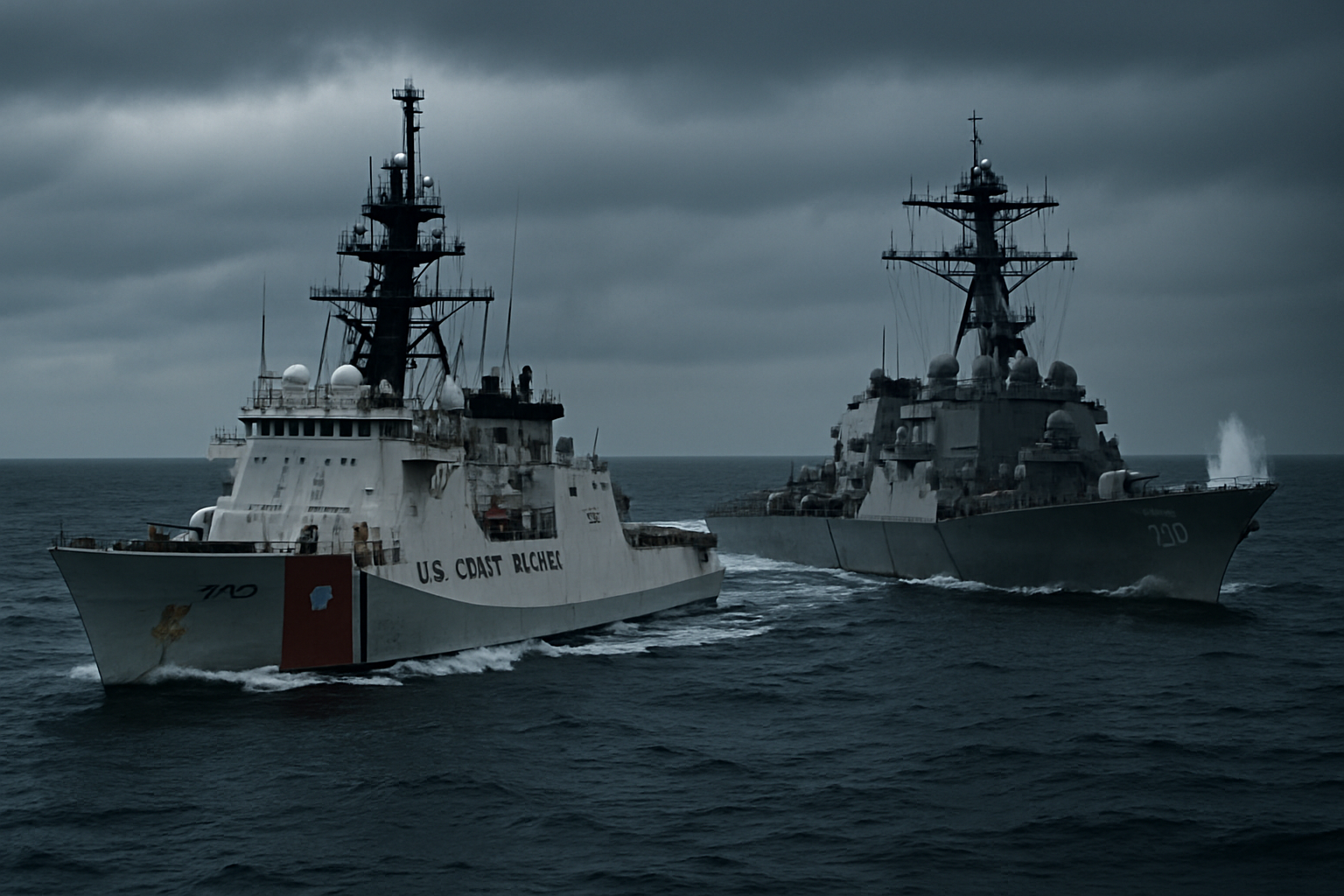
US military forces conducted a lethal strike against a suspected drug trafficking vessel in the Eastern Pacific Ocean on Monday, killing two people and leaving one survivor, according to US Southern Command officials, marking the latest escalation in the Trump administration's aggressive maritime interdiction campaign that has resulted in over 130 fatalities.
The strike, confirmed by multiple international sources including German, Bulgarian, and Lithuanian media outlets, represents a continuation of what has become the most militarized anti-drug operation in decades. US military officials reported that one person survived the attack and that the Coast Guard has been notified to conduct recovery operations.
The operation comes just days after the US military intercepted the oil tanker Aquila II in the Indian Ocean, marking the eighth vessel seized since President Trump ordered an intensified "blockade" of sanctioned petroleum ships in December. According to Argentina's Perfil, the Aquila II was captured for alleged connections to Venezuelan oil smuggling networks.
Escalating Maritime Operations
The latest strike continues a pattern of increasingly lethal US military operations against suspected drug trafficking vessels that began intensifying under Trump's second administration. According to German media reports, nearly 130 people have died in such attacks over recent months, representing a dramatic escalation from traditional law enforcement interdictions to kinetic military strikes in international waters.
US Southern Command has characterized these operations as part of "Operation Southern Spear," a comprehensive counter-narcotics mission targeting what officials describe as vessels operated by designated terrorist organizations along known trafficking routes. The legal justification for lethal force stems from the terrorist organization designation, providing military commanders with authorities typically reserved for combat operations.
"These operations represent a more aggressive phase of US counter-narcotics policy with demonstrated willingness to use lethal force against high-value trafficking targets."
— Defense Analysis, Regional Security Report
Dual-Track Strategy
The maritime strikes occur alongside diplomatic efforts to enhance regional cooperation. Following a February 3 White House meeting between Trump and Colombian President Gustavo Petro, both leaders established frameworks for counter-narcotics cooperation while agreeing that traditional sanctions approaches have proven ineffective.
The diplomatic reset with Colombia represents a pragmatic shift after months of public tensions, with both leaders now focused on "real cooperation" against drug trafficking networks. The meeting included discussions of Colombian mediation in Venezuela border security and potential cooperation against the ELN guerrilla group.
However, the continued military strikes demonstrate that diplomatic engagement runs parallel to, rather than replacing, kinetic operations against suspected trafficking vessels. This dual-track approach reflects the administration's commitment to using all available tools against what officials characterize as a national security threat.
Regional and International Reactions
The escalating maritime campaign has drawn mixed reactions from regional partners and international observers. While some Latin American governments have privately supported increased pressure on drug trafficking networks, others have raised concerns about the legal framework for lethal military operations in international waters.
European media coverage has been particularly extensive, with Portuguese outlets describing the operations as part of a "systematic campaign" affecting maritime security throughout the Eastern Pacific. The operations have also attracted attention in Middle Eastern media, with Qatar-based outlets reporting on the humanitarian implications of the strikes.
The timing of the latest strike, amid broader Caribbean geopolitical tensions and ongoing diplomatic initiatives with Iran and Ukraine-Russia negotiations, highlights the administration's multi-front approach to international challenges. Critics argue that the maritime operations risk complicating broader diplomatic efforts, while supporters contend they demonstrate resolve against transnational criminal organizations.
Legal and Strategic Implications
The shift from traditional law enforcement interdiction to military strikes represents a fundamental change in US counter-narcotics policy. Previous administrations typically relied on Coast Guard and DEA operations focused on seizures and arrests, reserving military force for exceptional circumstances.
The current approach treats drug trafficking vessels as legitimate military targets when operated by designated terrorist organizations, providing legal cover for lethal force under existing military authorities. This classification allows commanders to engage suspected vessels with deadly force without the constraints typically governing law enforcement operations.
Regional security experts note that the Eastern Pacific has become a testing ground for what some analysts call the "Trump Doctrine" - a willingness to use military force unilaterally to address threats that previous administrations handled through multilateral law enforcement cooperation.
Broader Strategic Context
The maritime strikes occur within the broader context of what analysts describe as a comprehensive Caribbean strategy designed to reassert US hemispheric dominance. The deployment of naval forces, including the world's largest aircraft carrier to Venezuelan waters, represents unprecedented militarization of the region.
This approach combines energy security objectives, migration control measures, and efforts to counter Chinese influence throughout the Western Hemisphere. The Caribbean has effectively become a laboratory for testing reimagined American power projection in an era of great power competition.
The success or failure of this approach will likely influence US foreign policy far beyond the Western Hemisphere, as other strategic regions monitor whether military solutions can effectively address complex transnational challenges while maintaining international support.
Looking Forward
As the maritime interdiction campaign continues, questions remain about its long-term effectiveness and sustainability. While the operations have demonstrated US military capabilities and resolve, their impact on actual drug trafficking flows remains difficult to assess.
The high casualty toll - now exceeding 130 fatalities - raises humanitarian concerns even as supporters argue that decisive action is necessary against criminal organizations that have operated with relative impunity. The balance between effective counter-narcotics operations and adherence to international law continues to generate debate among allies and regional partners.
With the administration showing no signs of scaling back the maritime campaign, further incidents appear likely as US forces maintain their aggressive posture throughout the Eastern Pacific. The integration of military operations with diplomatic initiatives will remain a key test of the administration's ability to achieve strategic objectives while maintaining broader international cooperation on regional security challenges.