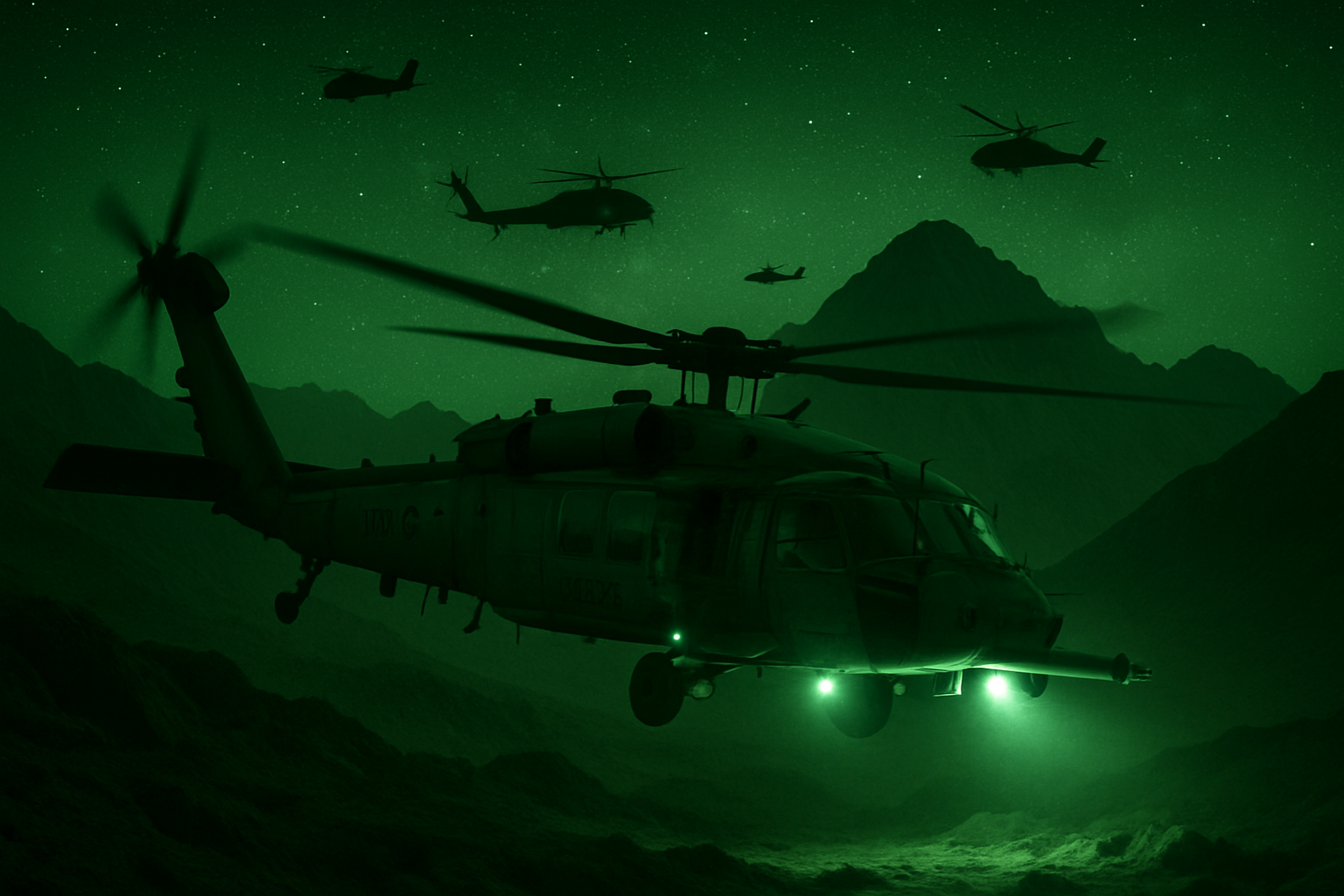
US forces successfully rescued the second crew member from a downed F-15E Strike Eagle fighter jet deep inside Iranian territory on Sunday, President Donald Trump announced, describing the operation as "one of the most daring Search and Rescue Operations in US history."
The dramatic rescue concludes a tense 72-hour search that captivated global attention as US and Iranian forces raced against time to locate the missing weapons systems officer, identified as a colonel, who had been trapped behind enemy lines in Iran's mountainous terrain while being pursued by hostile forces.
Trump celebrated the successful mission on Truth Social, declaring "WE GOT HIM! I am thrilled to let you know [he] is now SAFE and SOUND." The president emphasized that "we will never leave an American warrior behind," marking the end of the most high-stakes rescue operation since the beginning of Operation Epic Fury.
High-Risk Extraction Under Fire
According to multiple sources, the rescue operation involved "dozens of aircraft armed with the most lethal weapons in the world" conducting a complex extraction mission while under fire from Iranian Revolutionary Guards. The Wall Street Journal reported that specialized commando forces successfully extracted the crew member with the help of extensive air cover.
The rescued officer, who holds the rank of colonel, suffered injuries during his time in hostile territory but "will be just fine," according to Trump's statement. The airman had spent approximately 24 hours in Iranian territory with little more than a pistol for protection before the successful extraction.
"At my direction, the US Military sent dozens of aircraft, armed with the most lethal weapons in the World, to retrieve him. This is the first time in military memory that two U.S. Pilots have been rescued from behind enemy lines," Trump stated.
— President Donald Trump, Truth Social
Iranian media reported that the Revolutionary Guards had offered substantial rewards—up to 57,000 euros according to some sources—for information leading to the pilot's capture, while conducting what they described as "comprehensive field operations" across the region.
Context: F-15E Strike Eagle Downed Friday
The rescue operation followed the downing of the US F-15E Strike Eagle over southwestern Iran on Friday, marking the first confirmed American aircraft loss during the six-week Operation Epic Fury campaign. Iran's Revolutionary Guard claimed responsibility for shooting down the fighter jet using what they described as a "new advanced defense system."
The first crew member had been rescued earlier, but details of that operation were withheld to avoid compromising the search for the second airman. Trump revealed that the mission followed "the separate rescue of another US pilot on Friday, which was not announced earlier to avoid jeopardizing the second operation."
European intelligence sources suggested that Iran had deliberately released footage of the aircraft's ejection seat in an attempt to disrupt US rescue coordination efforts, highlighting the psychological warfare component of the operation.
Heavy Firefight During Rescue
US officials confirmed that the rescue teams encountered heavy resistance during the extraction. Al Jazeera reported that the airman was located following a "heavy firefight," with sources indicating that Black Hawk helicopters conducting the rescue operations came under fire from Iranian forces.
At least one US helicopter was damaged during the rescue attempt, with crew members wounded, according to multiple international news sources. The challenging terrain, which included mountains and desert areas controlled by various armed groups, significantly complicated the search and rescue efforts.
Chinese state media reported that the crew member had been "recovered" but was "not safe yet" as rescue teams still needed to exfiltrate from Iranian territory, underscoring the ongoing dangers faced by US forces during the operation.
Global Crisis Context
The successful rescue comes amid the most dangerous international crisis since the Cold War, with Operation Epic Fury having cost over $11.3 billion in its first week alone. The broader Iran conflict has resulted in unprecedented global disruption, including the cancellation of over 18,000 flights worldwide and oil prices surging past $100 per barrel as Iran has effectively closed the Strait of Hormuz, which handles 40% of global oil transit.
The aircraft downing represented a major symbolic and tactical victory for Iran against American air superiority, occurring during what military analysts describe as the largest US-Israeli coordinated campaign since the 2003 Iraq invasion.
Iran's "Operation True Promise 4" has systematically targeted US and allied interests across the region, with the Revolutionary Guard declaring that "no red lines remain." The conflict has already resulted in the first US casualties, with 3 service members killed and over 150 wounded during the ongoing operations.
Diplomatic Implications
The successful rescue operation provides a rare positive development amid the complete collapse of nuclear diplomacy between Washington and Tehran. Earlier diplomatic efforts in Geneva had achieved a "broad agreement on guiding principles"—the most progress since the JCPOA collapse in 2018—but fundamental scope disagreements proved insurmountable.
Iran has maintained that ballistic missiles and regional proxies are "red lines" excluded from nuclear-only talks, while the US has demanded a comprehensive agreement including missiles, armed groups, and human rights issues.
The rescue comes as Congress faces mounting pressure over the conflict, with only 25% of Americans supporting the military operations—described by Senator Blumenthal as "almost unprecedented" unpopularity for early-stage operations. The senator expressed being "more concerned than ever" about potential ground troop deployment.
International Response
The crisis has strained traditional alliances, with European allies delivering a historic rejection of Trump's requests for naval coalition support in the Strait of Hormuz. German Defense Minister Boris Pistorius led the resistance, asking "What does Donald Trump expect a handful of European frigates to do that the powerful US Navy cannot?"
However, when Iranian forces struck RAF Akrotiri in Cyprus—the first attack on European territory since World War II—an unprecedented naval coalition including HMS Dragon and Spanish, Italian, French, Dutch, and Greek vessels was rapidly deployed to protect Europe.
The European Union activated its ESTIA crisis evacuation mechanism for Cyprus for the first time in the bloc's history, demonstrating the conflict's expansion beyond the traditional Middle East theater.
Regional Coalition Under Strain
The Saudi-UAE-Qatar-Egypt diplomatic consensus that had initially backed diplomatic solutions has come under severe pressure as Iranian retaliation has directly targeted member territories. The UAE has suffered 1 civilian killed in Abu Dhabi, Kuwait has seen 32 injured from airport strikes, and Qatar has had 8 wounded despite successfully intercepting dozens of missiles and drones with Patriot systems.
Egyptian President Sisi has condemned the attacks on "sisterly Arab countries," warning of "comprehensive chaos" spreading throughout the region if the conflict continues to escalate.
Nuclear Governance Crisis
The rescue operation occurs against the backdrop of a broader nuclear governance crisis, with the New START treaty having expired in February 2026—the first time in over 50 years without US-Russia nuclear constraints. Iran continues enriching uranium at 60% purity, possessing over 400 kilograms of weapons-grade material sufficient for multiple weapons if weaponized.
UN Secretary-General António Guterres has described the current situation as "the greatest test of multilateral cooperation in the modern era," emphasizing the template-setting nature of the crisis for 21st-century international relations.
Historical Significance
Military historians note that this marks the first time in military memory that two US pilots have been rescued from behind enemy lines in such circumstances. The successful operation demonstrates American capability to conduct complex rescue missions even in hostile territory, while also highlighting the evolving nature of modern warfare in an era of great power competition.
The rescue concludes what Trump characterized as a period of unprecedented military pressure, with the US having struck over 9,000 Iranian targets and deployed approximately one-third of the active Navy fleet to the region through the dual-carrier deployment of the USS Gerald R. Ford and USS Abraham Lincoln.
As the crisis enters its sixth week, the successful rescue provides a moment of relief amid growing concerns about the potential for expanded regional conflict. However, with Iran showing no signs of backing down from its systematic campaign and the US maintaining its demand for "unconditional surrender," the broader diplomatic challenges remain unresolved.
The operation stands as a testament to American military capabilities and commitment to its service members, while also underscoring the complex challenges facing policymakers as they navigate the most dangerous international crisis since the end of the Cold War.