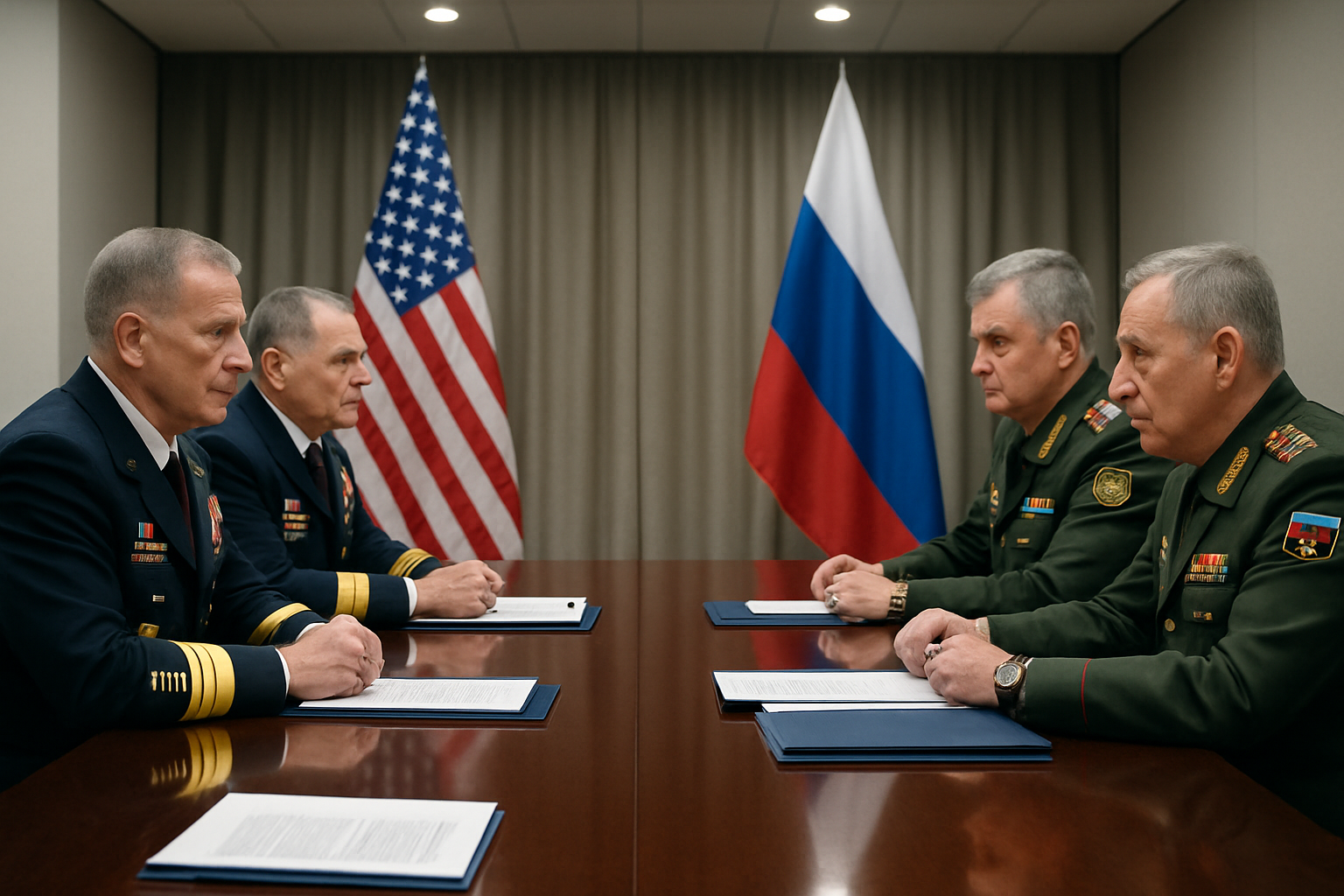
The United States and Russia have agreed to re-establish high-level military-to-military dialogue for the first time in more than four years, the Pentagon announced Thursday, representing another sign of warming relations between the two nuclear superpowers since President Donald Trump's second-term inauguration.
The historic agreement was reached during trilateral negotiations in Abu Dhabi involving Ukrainian Defense Minister Rustem Umerov, US Special Envoy Steve Witkoff, and Russian military intelligence director Igor Kostyukov. The military communication channel had been suspended in autumn 2021, just months before Russia's full-scale invasion of Ukraine began in February 2022.
"Maintaining dialogue between militaries is an important factor in stability and global peace, which can only be achieved through strength, and provides a means to increase transparency and reduce escalation," stated the US European Command in an official announcement.
Breakthrough Amid Diplomatic Progress
The agreement comes as a direct result of the second round of Ukraine-Russia-US peace talks that concluded successfully Thursday in Abu Dhabi. These negotiations, hosted by the United Arab Emirates in its neutral capacity, have evolved from technical discussions to substantive political engagement with full US participation under the Trump administration.
According to multiple sources familiar with the talks, the restoration of military dialogue represents one of several confidence-building measures agreed upon during the Abu Dhabi sessions. The parties also finalized arrangements for the first prisoner exchange between Russia and Ukraine in five months, with 314 prisoners of war—157 from each side plus three Russian civilians from the Kursk region—transferred immediately following the announcement.
German sources confirmed that delegations from both countries reached the military dialogue agreement after intensive working group sessions followed by joint position synchronization meetings. The structured approach, which has proven effective in producing concrete results, involved separate topical discussions before bringing all parties together for comprehensive agreements.
Strategic Timing and Context
The announcement comes at a critical juncture in US-Russia relations and global security. Thursday also marked the expiration of the New START nuclear arms control treaty, ending over 50 years of bilateral nuclear weapons limitations between the world's two largest nuclear powers. This makes the restoration of military dialogue channels even more strategically significant.
The agreement follows what Russian state media described as a calculated decision by military leadership on both sides to prioritize stability and prevent miscalculation during a period of heightened tensions. Russian delegation head General Alexus Grynkewich, commander of US European Command, negotiated directly with his Russian counterparts in the UAE capital.
The timing coincides with major Russian military operations that have complicated diplomatic efforts. Russia launched what Ukraine's DTEK energy company called the "most powerful blow" of 2026 against Ukrainian energy infrastructure just days before the talks, leaving over 1,170 buildings in Kyiv without heating amid minus-30°C temperatures.
Historical Significance and Challenges
The last period of regular US-Russia military-to-military communication existed from the Cold War era through 2021, providing crucial channels for crisis management and reducing the risk of military miscalculation between nuclear powers. These communications typically included advance notification of major military exercises, discussions of air and naval incidents, and coordination on global security issues.
The suspension in autumn 2021 occurred as Russia began massive military buildups along Ukraine's borders, ultimately leading to the February 2022 invasion. Since then, the two militaries have operated with minimal direct contact, relying instead on diplomatic channels and third-party intermediaries for essential communications.
European reactions have been mixed, reflecting broader divisions over engagement with Russia. Germany has maintained opposition to direct high-level talks while France and Italy have supported diplomatic channels. NATO Secretary-General Mark Rutte made a surprise visit to Kyiv earlier this week, addressing the Ukrainian Parliament and calling recent Russian attacks a "bad signal" before negotiations.
Operational Framework and Implementation
While specific details of the military dialogue framework remain classified, sources familiar with the agreement indicate it will initially focus on deconfliction measures and incident prevention rather than broader strategic issues. The communications are expected to operate through existing European Command channels and Russian General Staff counterparts.
The dialogue structure will reportedly include regular contact protocols, advance notification procedures for military activities in sensitive areas, and mechanisms for addressing aerial and naval incidents. These measures are designed to prevent unintended escalation while both sides continue their respective military operations.
Kuwait's official news agency reported that the agreement includes provisions for "maintaining international stability and peace" through enhanced military transparency and direct communication channels. The framework acknowledges that sustained dialogue serves as a critical component of international security architecture.
Broader Diplomatic Implications
The military dialogue restoration occurs within a broader context of diplomatic engagement between Washington and Moscow. President Trump has indicated his administration's willingness to pursue direct negotiations with Russian leadership, representing a significant shift from previous US policy approaches.
This development also follows successful prisoner exchanges and agreements on humanitarian issues, suggesting a potential pathway toward broader conflict resolution. Ukrainian officials have expressed cautious optimism about diplomatic progress while maintaining their positions on territorial integrity and sovereignty.
The UAE's role as neutral host has proven crucial in facilitating these breakthrough agreements. The Emirates' diplomatic capabilities and trusted relationships with all parties have created conditions for substantive negotiations that produce concrete results.
Regional and Global Security Impact
Military analysts note that restored US-Russia military communications could have significant implications for global security beyond the Ukraine conflict. The channels may prove vital for managing tensions in other theaters where American and Russian forces operate in proximity, including Syria, the Arctic, and various African regions.
The agreement also comes as China's military expansion continues to reshape global power dynamics. Some experts suggest that restored US-Russia military dialogue could provide a foundation for broader multilateral security discussions, potentially including Chinese participation in future arms control frameworks.
NATO allies are closely monitoring how the resumed dialogue will affect alliance coordination and collective defense planning. The restoration of communications may require adjustments to NATO's current military posture and operational planning in Eastern Europe.
The breakthrough represents what diplomatic observers describe as the most significant military-to-military agreement between the US and Russia since the beginning of the Ukraine conflict. Whether it leads to broader strategic dialogue and conflict resolution remains to be seen, but it marks a crucial first step toward reducing the risk of miscalculation between nuclear powers in an increasingly complex global security environment.