The United States and Russia have restored high-level military communications and completed a major prisoner exchange involving 314 individuals, marking the most significant diplomatic breakthrough in their relationship since the Ukraine war began, as both nations navigate the expiration of their nuclear arms control treaty and explore new frameworks for global security.
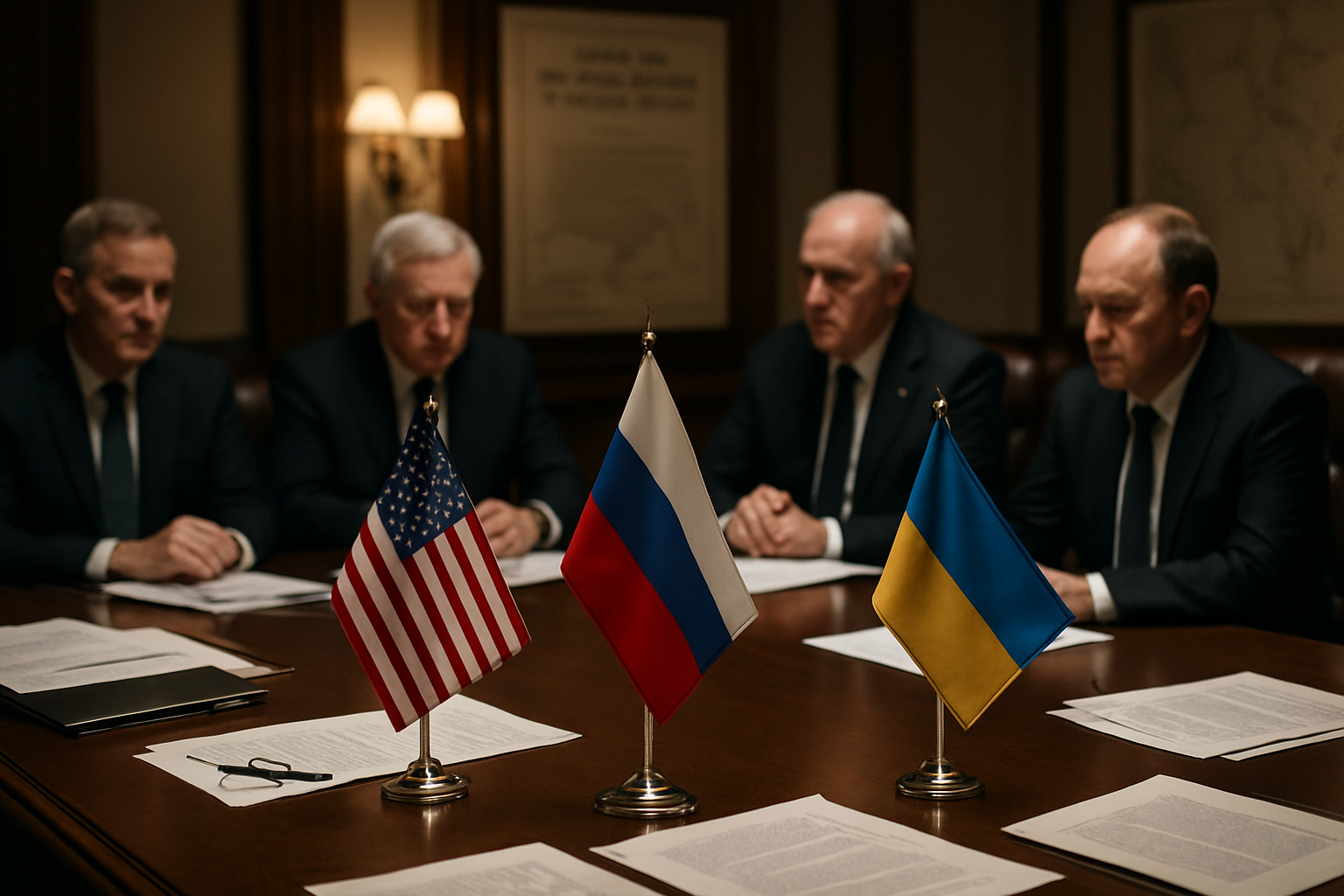
Following productive trilateral talks in Abu Dhabi involving Ukrainian Defense Minister Rustem Umerov, US Special Envoy Steve Witkoff, and Russian military intelligence director Igor Kostyukov, the two nuclear superpowers agreed to resume military-to-military dialogue after a four-year suspension that began in autumn 2021.
Military Dialogue Restoration and Prisoner Exchange
The Pentagon officially announced the restoration of high-level military communications, describing the dialogue as an "important factor in stability and global peace" that provides "means to increase transparency and reduce escalation." The agreement was negotiated directly between General Alexus Grynkewich of US European Command and his Russian counterparts.
Simultaneously, Russia and Ukraine conducted their largest prisoner exchange in five months, with 157 military personnel from each side plus three Russian civilians from the Kursk region returned from Ukrainian custody. This marked the 71st prisoner exchange since Russia's full-scale invasion began in February 2022.
"The talks have been substantial and productive. We have made concrete progress on humanitarian issues that matter to both sides."
— Rustem Umerov, Ukrainian Defense Minister
New START Treaty Expiration and Trump's Nuclear Vision
The diplomatic developments occur against the backdrop of the New Strategic Arms Reduction Treaty (New START) officially expiring on February 5, 2026, marking the first time in over 50 years that no binding nuclear arms control agreement exists between the world's two largest nuclear powers. The treaty had previously limited both nations to 1,550 deployed strategic warheads each and included crucial verification mechanisms.
President Trump rejected Russia's proposal for a 12-month extension of the treaty's main provisions, instead calling for a "new, improved, and modernized agreement" that would include China's expanding nuclear arsenal. Trump dismissed the previous agreement as "badly negotiated" and "flagrantly violated."
The treaty's expiration eliminates limits on deployed strategic warheads, strategic delivery systems, biannual data exchanges, on-site inspections, and advance notification protocols for ICBM launches. Both nations now face no bilateral constraints on expanding their nuclear arsenals, which combined control over 80% of the world's nuclear weapons.
Complex Negotiation Dynamics
The Abu Dhabi talks took place despite a massive Russian energy infrastructure attack that DTEK described as the "most powerful blow" of 2026, leaving over 1,170 buildings in Kyiv without heating during minus-30°C temperatures. The attack broke an informal Trump-Putin agreement to avoid targeting energy infrastructure before negotiations.
NATO Secretary-General Mark Rutte made a surprise visit to Kyiv, addressing the Ukrainian Parliament and condemning the attacks as a "bad signal" before the diplomatic talks. Despite the escalation, all parties maintained their commitment to the negotiation process.
Strategic Context and Global Implications
The military dialogue restoration represents a crucial confidence-building measure amid ongoing conflict. The framework initially focuses on deconfliction measures, incident prevention, and advance notification protocols for military activities, designed to prevent unintended escalation while military operations continue.
The agreement could have global security implications beyond Ukraine, affecting regions where US and Russian forces operate in proximity, including Syria, the Arctic, and parts of Africa. NATO allies are monitoring the impact on alliance coordination and collective defense planning.
Broader Diplomatic Initiatives
The developments coincide with other major diplomatic initiatives, including confirmed nuclear talks between the US and Iran scheduled for February 7 in Oman, and President Xi Jinping's strategic phone call with Trump addressing Taiwan, trade relations, and bilateral cooperation.
European divisions persist regarding engagement with Russia, with Germany opposing direct talks with Putin while France and Italy support diplomatic engagement. The UAE's neutral hosting role has proved crucial for facilitating substantive negotiations.
Future Framework and Challenges
The restored military communications will operate through European Command channels and Russian General Staff counterparts, with regular contact protocols and mechanisms for addressing incidents involving aerial and naval encounters. While classified details remain limited, the framework focuses on transparency and military deconfliction rather than broader strategic issues initially.
Any future nuclear agreement must address modern challenges including hypersonic weapons, emerging military technologies, verification mechanisms for a trilateral framework including China, and regional nuclear programs. The White House suggests a "modernized treaty" could "last long into the future."
Stakes and International Response
UN Secretary-General António Guterres called the New START expiration a "grave moment" for international security, emphasizing that nuclear weapon use risks are "higher than at any time in decades." Pope Leo XIV warned of a potential "new arms race," while Japanese atomic bomb survivors expressed fears about escalation.
The loss of verification mechanisms creates an information void that could lead to worst-case planning scenarios and increased miscalculation risks. Economic costs for unrestricted nuclear modernization by both nations could exceed $100 billion annually.
Looking Forward
The parties have agreed to continue the UAE dialogue framework with future meetings to be scheduled. President Zelensky indicated that future talks would "most likely" occur in the United States, suggesting an evolution toward higher-level negotiations.
The prisoner exchange serves as a confidence-building measure for broader territorial and political issues resolution, though the main sticking point remains eastern Ukrainian territories under Russian control. The success of this diplomatic framework provides momentum for continued negotiations "in coming weeks."
These developments represent a critical juncture in managing the relationship between nuclear superpowers amid ongoing conflict. The combination of restored military communications, humanitarian prisoner exchanges, and the search for new nuclear frameworks demonstrates that even in times of severe tension, diplomatic channels can produce concrete results when approached with pragmatic determination.