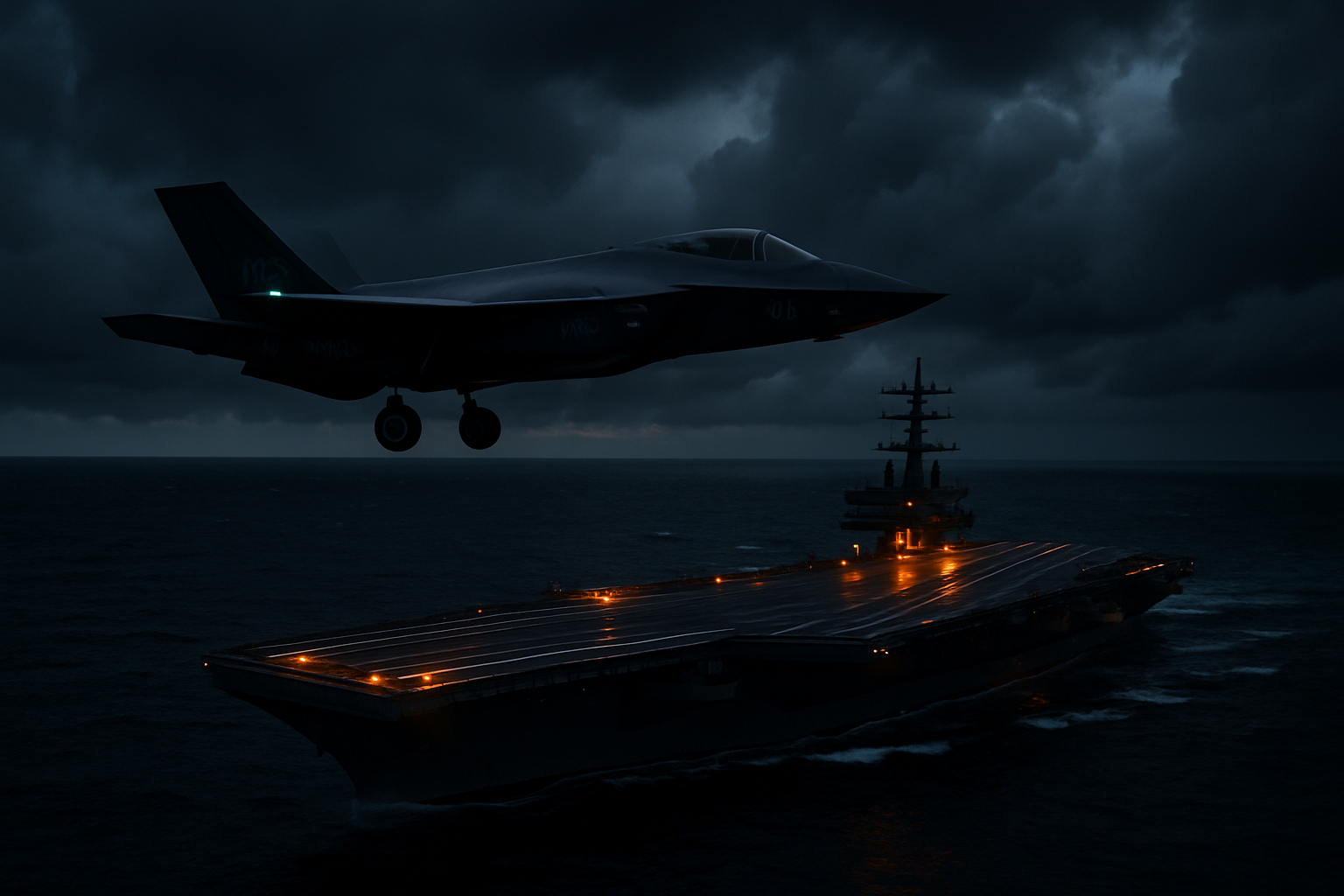
US military forces shot down an Iranian drone that "aggressively" approached the USS Abraham Lincoln aircraft carrier in the Arabian Sea on February 3, 2026, representing the most serious US-Iran military confrontation in months as both nations prepare for crucial nuclear talks scheduled for February 7 in Istanbul.
The Iranian Shahed-139 drone was intercepted by an F-35C fighter jet from the Abraham Lincoln after flying toward the carrier "with unclear intent," according to Navy Captain Tim Hawkins, spokesperson for US Central Command. The incident occurred approximately 800 kilometers from Iran's coast amid heightened regional tensions.
"An F-35C fighter jet from Abraham Lincoln shot down the Iranian drone in self-defense and to protect the aircraft carrier and personnel on board," Captain Hawkins confirmed. The US military reported no casualties or equipment damage from the encounter.
Multiple Iranian Provocations in Strategic Waters
The drone incident was not isolated. On the same day, Iranian Islamic Revolutionary Guard Corps (IRGC) vessels harassed a US-flagged merchant tanker in the critical Strait of Hormuz shipping lane. According to British maritime security firm Vanguard Tech, Iranian gunboats intercepted and detained the Stena Imperative tanker before allowing it to continue.
These provocations occurred as Iran conducted naval exercises in the Strait of Hormuz featuring live-fire drills, demonstrating Tehran's ability to disrupt global oil shipments through the waterway that handles approximately 21% of worldwide petroleum liquids.
Oil futures prices rose more than $1 per barrel following news of the drone shootdown, reflecting market concerns about potential escalation in the strategically vital region.
Critical Timing Before Nuclear Negotiations
The military confrontation comes just days before historic nuclear talks scheduled for February 7, 2026, in Istanbul between US Special Envoy Steve Witkoff and Iranian Foreign Minister Abbas Araghchi. These negotiations represent the first major diplomatic engagement between the two nations since the collapse of the Joint Comprehensive Plan of Action (JCPOA) in 2018.
Iranian President Masoud Pezeshkian had ordered preparation for "fair and equitable" nuclear negotiations just hours before the drone incident, setting conditions that talks must be "free of threats and unreasonable expectations." The confrontation highlights the delicate balance both nations are attempting to maintain between military readiness and diplomatic engagement.
"The plan is that Iran is talking to us, and we'll see if we can do something. Otherwise, we'll see what happens."
— President Donald Trump, speaking to Fox News
Turkey is serving as the primary venue for the talks, with the United Arab Emirates as an alternative location. Multiple regional powers including Saudi Arabia, Egypt, Qatar, and the UAE are supporting the diplomatic process, suggesting broad Middle Eastern consensus on preventing military escalation.
Regional Tensions and Military Posturing
The USS Abraham Lincoln carrier strike group has been deployed to the Arabian Sea as part of increased US military presence in response to Iran's violent crackdown on anti-government protests. The deployment represents Washington's commitment to deterring Iranian aggression while maintaining freedom of navigation in critical shipping lanes.
Supreme Leader Ayatollah Ali Khamenei previously warned that any US attack on Iran would trigger a "regional war" in the Middle East. IRGC spokesperson Ali Mohammad Naeeni has claimed Iran maintains "action plans for any hostile scenario," demonstrating Tehran's military preparedness despite diplomatic openings.
The incident occurs against a backdrop of significant domestic pressure within Iran, where authorities have arrested over 42,000 people during recent protest crackdowns, with human rights organizations documenting 6,842 deaths according to Human Rights Activists News Agency (HRANA).
Historical Context and Stakes
The confrontation represents the continuation of decades-long US-Iran tensions that have intensified since the 2018 US withdrawal from the Iran nuclear deal. Previous military incidents have included Iran's attacks on shipping vessels, the downing of US surveillance drones, and retaliatory strikes following the assassination of IRGC Quds Force commander Qasem Soleimani in January 2020.
The current diplomatic initiative carries enormous stakes for regional stability. Success could prevent a broader Middle East conflict and address international concerns about Iran's nuclear program through negotiations rather than military action. Failure could lead to renewed sanctions, increased military confrontation, and potential nuclear proliferation concerns.
Iranian Media Response and Diplomatic Complications
Iranian state media have disputed US accounts of the incident, reflecting Tehran's consistent pattern of challenging American narratives about military encounters. These conflicting reports complicate diplomatic efforts and highlight the information warfare component of US-Iran tensions.
Despite the military incident, both sides have indicated they remain committed to the upcoming Istanbul negotiations. However, the timing raises questions about whether hardline elements in either country are attempting to sabotage diplomatic progress through provocative actions.
Regional and Global Implications
The incident demonstrates the challenges of conducting diplomacy while maintaining military pressure. Both the US and Iran continue naval operations and military exercises even as their diplomats prepare for negotiations, creating risks of miscalculation or unintended escalation.
The involvement of multiple regional mediators in the diplomatic process suggests recognition that US-Iran tensions affect broader Middle Eastern stability. Turkey's role as primary venue reflects Ankara's growing importance as a regional diplomatic broker, while Gulf Arab states' support indicates their preference for negotiated solutions over military confrontation.
For global energy markets, the incident serves as a reminder of the fragility of oil supplies from the Persian Gulf region. Any significant escalation could disrupt shipping through the Strait of Hormuz, potentially affecting worldwide energy prices and economic stability.
Looking Ahead to Istanbul Talks
As diplomats from both sides prepare for the Istanbul negotiations, the drone incident underscores the urgency of finding diplomatic solutions to prevent more serious military confrontations. The talks will need to address not only nuclear issues but also broader questions of regional security, sanctions relief, and the framework for future US-Iran relations.
The success or failure of these negotiations could determine whether the Middle East moves toward greater stability through diplomatic engagement or faces escalating military tensions that could draw in regional and global powers. With both sides maintaining military readiness while exploring diplomatic solutions, the coming weeks will be critical for regional peace and security.