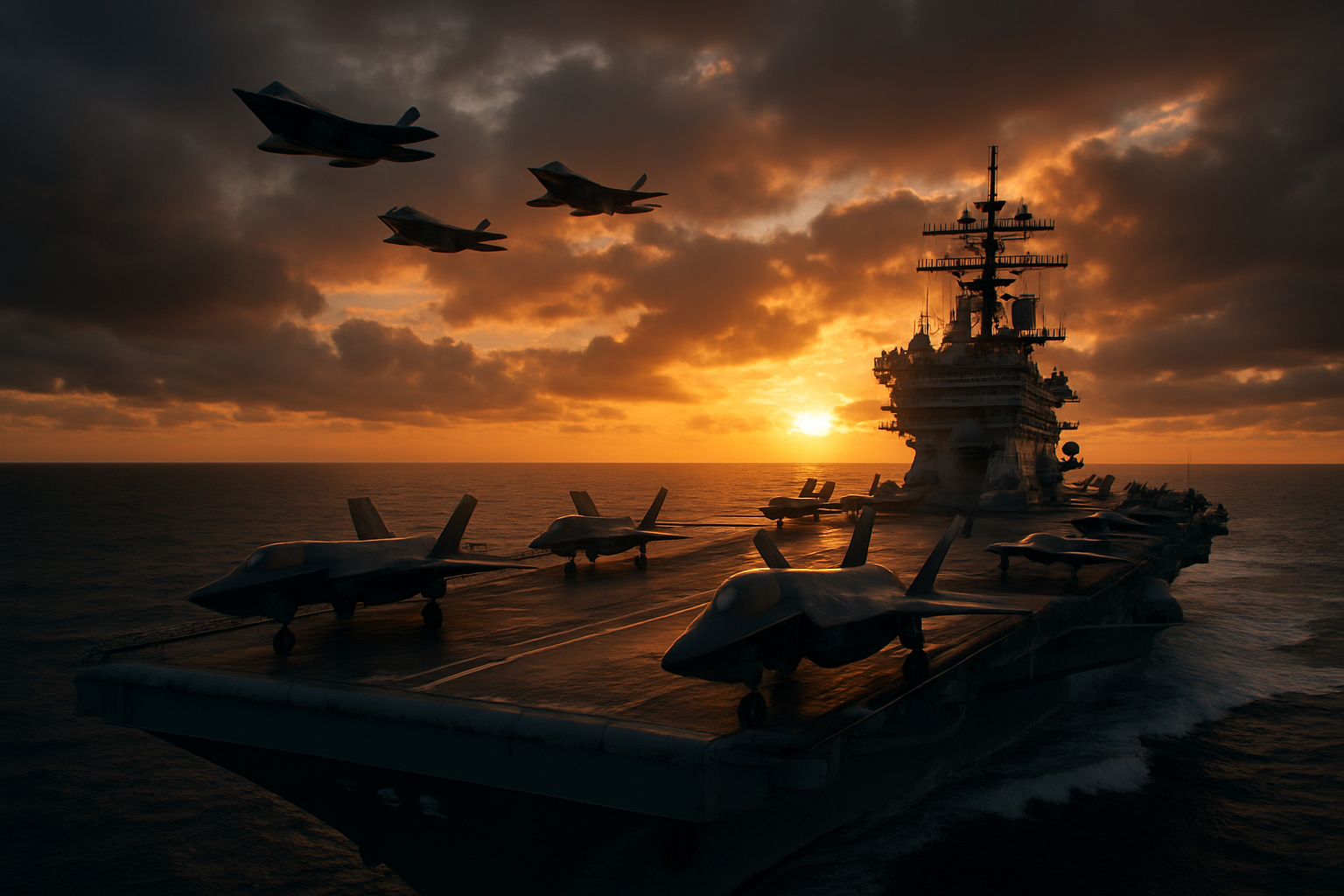
The US military shot down an Iranian drone that "aggressively approached" the USS Abraham Lincoln aircraft carrier in the Arabian Sea on Tuesday, February 3, 2026, marking a dangerous escalation in tensions between Washington and Tehran just days before scheduled nuclear negotiations.
An F-35C fighter jet operating from the Abraham Lincoln intercepted and destroyed the Iranian Shahed-139 drone after it continued flying toward the carrier "with unclear intent" despite de-escalatory measures taken by US forces, according to US Central Command (CENTCOM).
"An F-35C fighter jet from Abraham Lincoln shot down the Iranian drone in self-defense and to protect the aircraft carrier and personnel on board," said Navy Captain Tim Hawkins, a spokesperson at CENTCOM. The incident occurred approximately 800 kilometers (500 miles) from Iran's southern coast in international waters.
Critical Timing Amid Diplomatic Breakthrough
The military confrontation comes at a particularly sensitive moment, as diplomats from both nations have been working to arrange nuclear talks scheduled for Friday, February 7, 2026, in Turkey. Iranian President Masoud Pezeshkian had officially ordered his Foreign Minister Abbas Araghchi to prepare for "fair and equitable" negotiations with the United States just hours before the drone incident.
The timing threatens to complicate what many viewed as the most significant diplomatic opening between the two nations since the collapse of the Joint Comprehensive Plan of Action (JCPOA) nuclear deal in 2018.
President Donald Trump, speaking on the potential for negotiations, had warned that "bad things" would probably happen if a diplomatic agreement could not be reached. Despite the drone shootdown, White House officials confirmed that the scheduled talks in Istanbul remain on track.
Multiple Confrontations in Strategic Waters
The drone incident was not an isolated confrontation. Within hours of the shootdown, Iranian naval forces harassed a US-flagged merchant vessel, the Stena Imperative, in the Strait of Hormuz. Six armed Iranian boats approached the tanker as it transited the crucial shipping lane, according to US military sources.
The dual incidents underscore Iran's strategy of applying pressure in the world's most important oil transit route, through which approximately one-fifth of global crude oil passes. Oil futures prices rose more than $1 per barrel following news of the drone shootdown.
US CENTCOM emphasized that no American personnel were injured and no equipment was damaged in either confrontation. However, the incidents demonstrate Iran's willingness to test US military responses even as diplomatic channels remain open.
Military Posture and Regional Dynamics
The USS Abraham Lincoln carrier strike group has been positioned in the Arabian Sea since late January as part of increased US military presence in the region. The deployment occurred following Iran's Supreme Leader Ayatollah Ali Khamenei's warning that any American attack on Iran would trigger a "regional war" in the Middle East.
Iranian forces have been conducting their own naval exercises in the Strait of Hormuz, featuring live-fire drills that concluded just days before the drone incident. The Islamic Revolutionary Guard Corps (IRGC) has claimed to have "action plans for any hostile scenario" involving US forces.
The Shahed-139 drone model involved in the incident represents Iran's increasingly sophisticated unmanned aerial capabilities. These drones have been used extensively in regional conflicts and have been supplied to Russian forces for use in Ukraine, according to Western intelligence assessments.
Diplomatic Stakes and International Reactions
Multiple regional powers, including Turkey, Saudi Arabia, Egypt, Qatar, and the UAE, have been supporting the diplomatic process between Washington and Tehran. Turkey is serving as the primary venue for the scheduled talks, with the UAE positioned as an alternative location.
The incident occurs against a backdrop of significant domestic pressure within Iran, where authorities have arrested over 42,000 protesters following anti-government demonstrations, with human rights organizations documenting more than 6,800 deaths during the crackdown.
European allies have expressed concern about the timing of the military confrontation. The European Union recently designated Iran's IRGC as a terrorist organization, prompting Iran's parliament to reciprocally designate all EU military forces as "terrorist groups."
Nuclear Negotiations Framework
Despite the military tensions, Iranian officials have indicated willingness to make significant concessions in the upcoming talks. According to diplomatic sources, Iran may consider transferring uranium stockpiles to Russia and implementing substantial restrictions on its nuclear program in exchange for sanctions relief.
However, fundamental disagreements remain about the scope of negotiations. Iran insists that talks focus exclusively on nuclear issues, while the United States seeks a comprehensive agreement addressing Iran's missile program and support for regional proxy groups.
The scheduled Friday talks in Istanbul represent the highest-level diplomatic engagement between the two nations since the Trump administration withdrew from the JCPOA. US Special Envoy Steve Witkoff is expected to lead the American delegation, while Foreign Minister Araghchi will represent Iran.
Regional Security Implications
The drone incident highlights the volatile security environment in the Arabian Sea and Persian Gulf region. Military analysts note that such confrontations risk escalating into broader conflicts that could disrupt global energy supplies and destabilize the broader Middle East.
The incident also demonstrates the challenges facing diplomatic efforts when military forces from both nations operate in close proximity. The presence of the USS Abraham Lincoln carrier group serves as both a deterrent and a potential flashpoint for misunderstandings or miscalculations.
Regional allies, including Israel, have expressed concern about Iran's nuclear program and have stressed the importance of including restrictions on Iran's missile capabilities and support for proxy groups in any negotiated agreement.
Looking Ahead
As diplomatic preparations continue for Friday's talks, both sides face the challenge of de-escalating military tensions while pursuing their strategic objectives. The drone incident serves as a reminder of how quickly regional tensions can spiral beyond diplomatic control.
The success of the Istanbul negotiations may depend on both nations' ability to compartmentalize military confrontations from diplomatic engagement. Historical precedent suggests that meaningful nuclear agreements require sustained political commitment and the ability to manage military incidents without abandoning diplomatic progress.
The international community, led by key regional powers, continues to emphasize the importance of diplomatic solutions over military confrontation, viewing the scheduled talks as potentially the last opportunity to prevent a broader regional conflict through negotiated settlement.