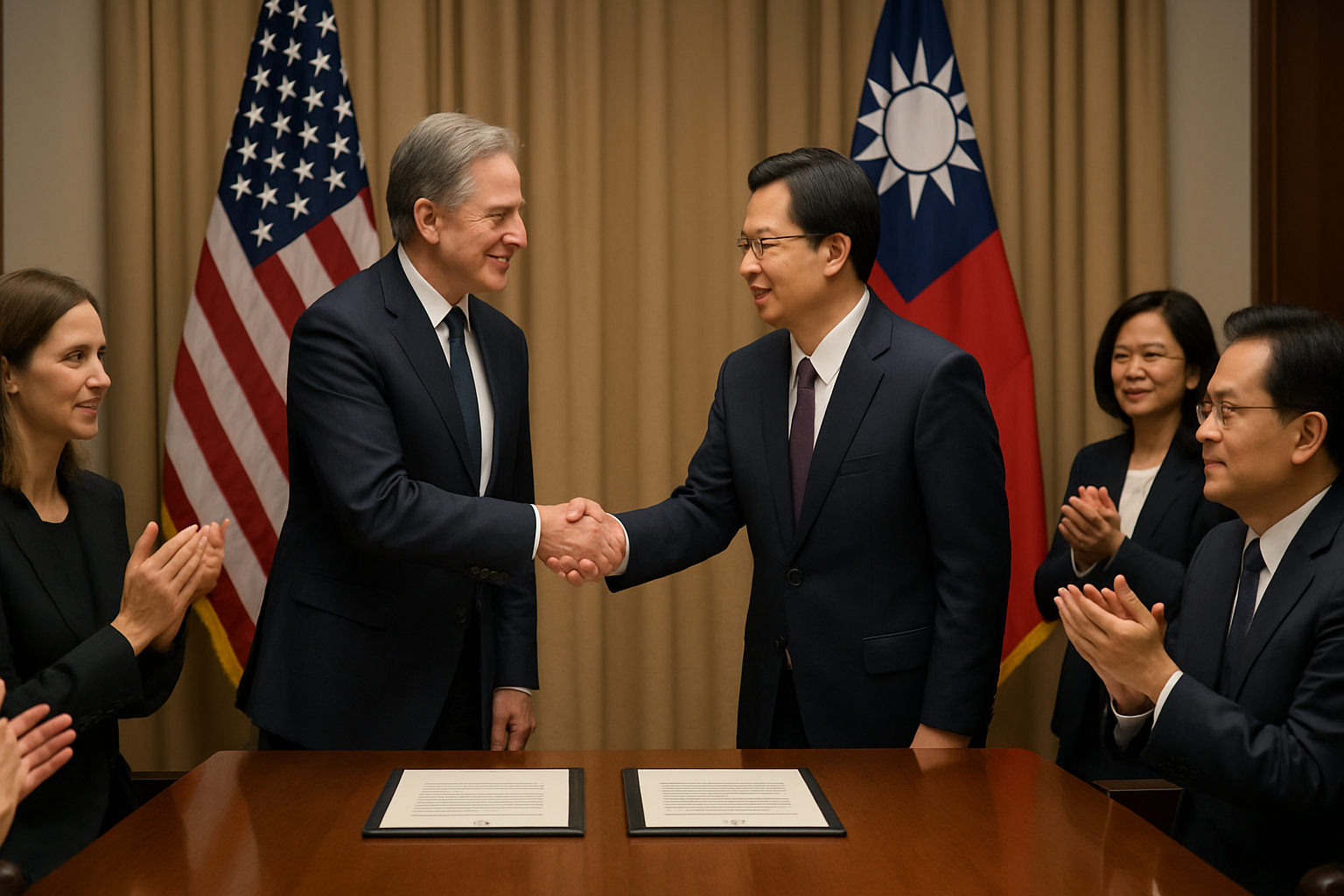
The United States and Taiwan have officially finalized a landmark trade agreement on February 13, 2026, that will eliminate Taiwan's tariffs of up to 26% on many US agricultural imports while securing approximately $85 billion in Taiwanese purchases of American energy, aircraft, and equipment in exchange for a preferential 15% tariff rate.
The comprehensive deal, described by officials as "pivotal" for US-Taiwan economic relations, represents one of the most significant bilateral trade agreements in the Indo-Pacific region in recent years. The agreement comes as part of the Trump administration's broader strategy of strengthening economic partnerships with democratic allies while countering China's growing economic influence in Asia.
Agricultural Market Access Breakthrough
Under the new framework, Taiwan has agreed to immediately eliminate tariffs of up to 26% on a wide range of US agricultural products, including beef, dairy products, and corn. This represents a major victory for American farmers who have long sought greater access to Taiwan's lucrative agricultural market.
The agreement also includes provisions for Taiwan to further open its market to US beef products, including previously restricted items such as beef organs and ground beef. This development has already sparked political debate within Taiwan, with opposition figures calling for greater transparency from the government regarding food safety protocols.
"This unprecedented agricultural access positions both nations for significant economic growth while strengthening our strategic partnership in the Indo-Pacific,"
— Senior US Trade Official
Major Equipment and Energy Purchases
In a reciprocal arrangement, Taiwan has committed to purchasing approximately $85 billion worth of US energy resources, aircraft, and industrial equipment over the coming years. This massive procurement package will receive a preferential tariff rate of 15%, significantly below standard import duties, making American products more competitive in the Taiwanese market.
The energy component of the deal is particularly significant as Taiwan seeks to diversify its energy sources and reduce dependence on regional suppliers. The aircraft purchases will likely include both commercial and defense-related aviation equipment, reflecting Taiwan's ongoing efforts to modernize its transportation infrastructure and defensive capabilities.
Economic and Labor Market Implications
The timing of the trade agreement's signing has coincided with positive developments in Taiwan's labor market. According to Taiwan's Ministry of Labor, the number of workers on unpaid leave has decreased significantly by 105 companies and 2,052 people during the recent period, bringing the total number of affected workers to its lowest level in six months.
This improvement in employment conditions is attributed partly to the stabilizing effect of the trade agreement, which has reduced concerns about tariff-related impacts on worker employment that had previously weighed on the labor market.
Strategic and Geopolitical Context
The agreement comes at a time of heightened tensions in the Taiwan Strait, with China continuing military exercises and diplomatic pressure campaigns aimed at Taiwan. The trade deal represents a significant strengthening of US-Taiwan economic ties, which Beijing has historically viewed with suspicion as part of broader efforts to support Taiwan's de facto independence.
The deal follows the Trump administration's pattern of pursuing bilateral trade agreements with key partners, including recent successful negotiations with India and Argentina. This approach reflects a broader strategic shift away from multilateral trade frameworks toward bilateral relationships that can be more closely tailored to specific US interests and partner needs.
Implementation Timeline and Challenges
While the agreement has been officially signed, implementation will require careful coordination between US and Taiwanese agencies to ensure smooth execution of the new trade terms. The agricultural provisions are expected to take effect immediately, providing quick relief to US exporters who have faced high tariff barriers.
The larger equipment and energy purchases will be phased in over several years, allowing Taiwanese companies and government agencies to properly plan their procurement schedules while ensuring compliance with the new preferential tariff structures.
Industry analysts note that the success of the agreement will depend heavily on both countries' ability to maintain the political will necessary for full implementation, particularly given the complex geopolitical environment in the Indo-Pacific region.
Opposition and Political Reactions
The trade agreement has generated mixed reactions within Taiwan's political landscape. While governing party officials have praised the deal as evidence of strong US-Taiwan relations, opposition leaders have raised concerns about specific provisions, particularly those related to US beef imports.
Critics have called for the government to "speak clearly" about the implications of opening Taiwan's market to previously restricted US agricultural products, demanding greater transparency about food safety standards and consumer protection measures.
Regional and International Impact
The US-Taiwan trade agreement is being closely watched by other nations in the region as an indicator of America's commitment to strengthening economic partnerships with democratic allies in Asia. The deal sends a strong signal about US priorities in the Indo-Pacific, particularly as competition with China intensifies across multiple domains.
Trade experts suggest that the agreement could serve as a template for similar bilateral arrangements with other regional partners, as the Trump administration continues to prioritize bilateral over multilateral trade frameworks.
The timing of the agreement also coincides with broader developments in US trade policy, including ongoing negotiations with Iran on nuclear issues and continued discussions about trade relationships with other key partners in Europe and Latin America.
Looking Forward
As implementation begins, both US and Taiwanese officials will be monitoring the agreement's economic impact closely. Success in expanding bilateral trade could pave the way for additional areas of cooperation, potentially including technology transfer, investment facilitation, and enhanced regulatory coordination.
The agreement represents a significant milestone in US-Taiwan relations and demonstrates both countries' commitment to deepening economic integration despite regional challenges. With Taiwan's economy showing signs of resilience and the US continuing to seek reliable partners in Asia, this trade deal could mark the beginning of an even closer economic partnership between the two democratic allies.