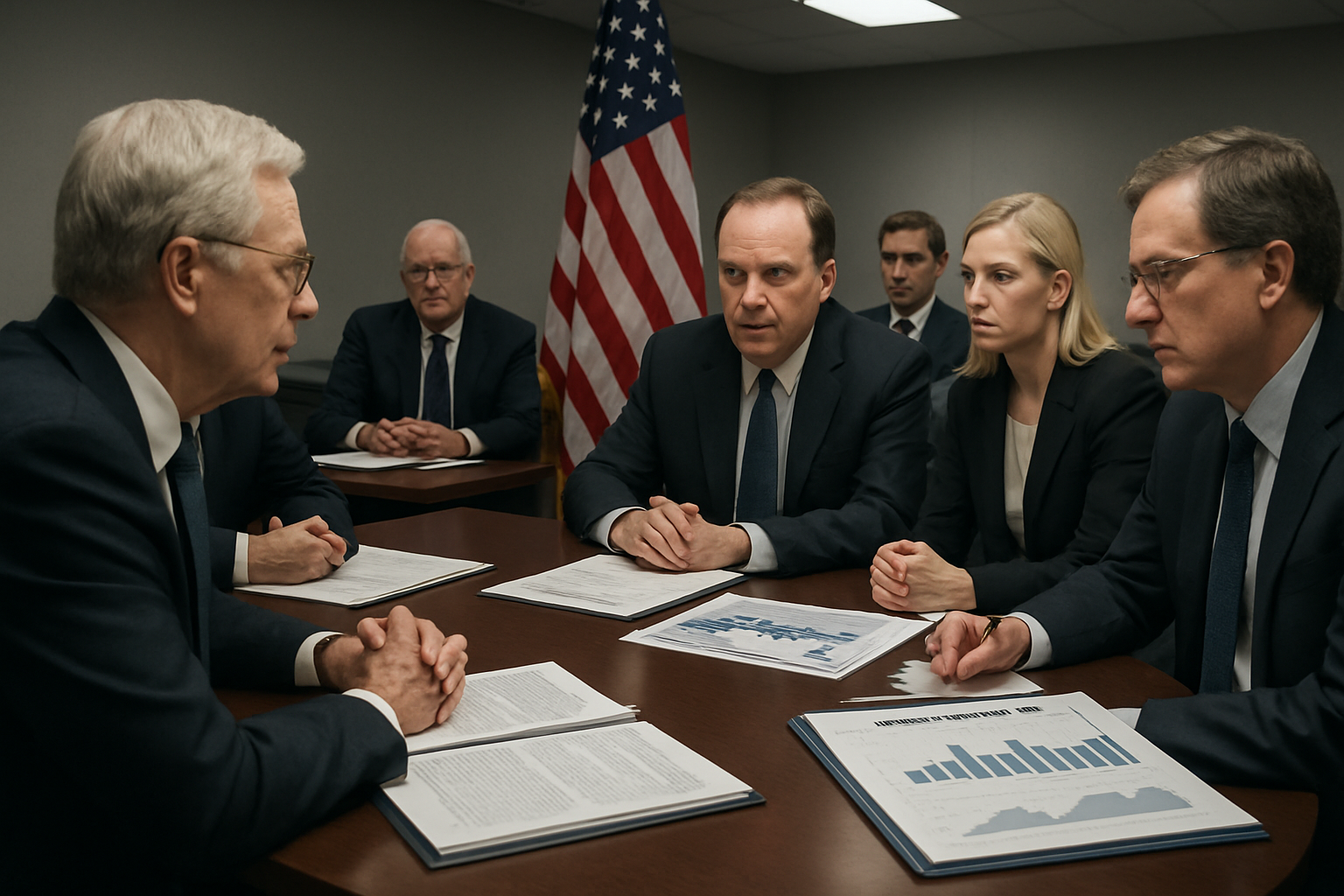
The Trump administration launched comprehensive trade investigations against China, the European Union, India, Japan, South Korea, and Mexico on Wednesday, marking a strategic pivot following the Supreme Court's historic February ruling that stripped the president of his primary tariff authority.
The investigations, conducted under Section 301 of the Trade Act of 1974, represent the administration's most ambitious attempt to rebuild its tariff regime after the devastating 6-3 Supreme Court decision that declared the International Emergency Economic Powers Act (IEEPA) could not authorize presidential tariffs without congressional approval.
Constitutional Crisis Backdrop
The new trade probes emerge from the constitutional wreckage of Trump's original tariff program. In February 2026, Chief Justice John Roberts authored a majority opinion applying the "major questions doctrine," ruling that IEEPA "does not authorize president to impose tariffs" for actions of "vast economic and political significance" without clear congressional authorization.
Trump's immediate response was unprecedented in its defiance. After calling Supreme Court justices "absolutely ashamed," "disgrace to our nation," and "disloyal to Constitution," he escalated to 15% global tariffs using Section 122 of the Trade Act of 1974 – the maximum legal level allowed for 150 days.
"The Court decision made presidential trade power more powerful and crystal clear."
— President Donald Trump, following Supreme Court ruling
New Investigation Framework
The Section 301 investigations target what the administration terms "unfair trade practices" in manufacturing across six major economies. According to sources familiar with the proceedings, these probes could lead to new tariffs being imposed by summer 2026, providing the administration with an alternative legal framework after congressional resistance blocked other approaches.
The investigations represent a calculated response to multiple institutional challenges. The House of Representatives passed legislation 219-211 to end Canada tariffs, with six Republican defections marking the first significant bipartisan rebuke of Trump's trade authority in his second term. Speaker Mike Johnson's inability to prevent the floor vote highlighted growing GOP anxiety about unpredictable trade approaches.
Spanish reporting indicates the administration is simultaneously finalizing "una serie de investigaciones comerciales" (a series of trade investigations) designed to "restablecer el muro arancelario" (reestablish the tariff wall) that was previously struck down by the Supreme Court.
International Reactions and Implications
The timing of these investigations coincides with significant international developments that complicate the global trade landscape. China has strengthened its position through a zero-tariff policy for 53 African countries beginning May 1, 2026 – the most comprehensive China-Africa trade expansion in history. This move positions Beijing as a champion of multilateral cooperation while Washington pursues bilateral pressure tactics.
European Union officials have expressed serious concerns about American policy predictability. The European Parliament is preparing to suspend the EU-US trade agreement implementation for the first time due to what German Social Democrat Bernd Lange calls policy "chaos." This would represent an unprecedented strain in transatlantic economic relations.
German Chancellor Friedrich Merz's recent Beijing visit, which secured a 120-aircraft Airbus deal worth billions of euros, demonstrates how European leaders are hedging against American trade uncertainty by strengthening alternative partnerships.
Economic Reality Check
Despite the administration's aggressive trade policies, fundamental economic indicators suggest limited effectiveness of tariff-based approaches. The US trade deficit reached $901.5 billion annually in December 2025, essentially unchanged despite extensive tariff implementations, demonstrating the structural nature of trade imbalances beyond tariff solutions.
Treasury Secretary Scott Bessent has defended the administration's approach, arguing that while the Court "took away leverage," it "made it more draconian because [they] agreed president has right to full embargo." However, economic data indicates that tariffs have primarily increased consumer costs rather than fundamentally altering trade patterns.
Congressional and Legal Challenges Ahead
The new investigations face immediate scrutiny from multiple directions. Constitutional experts predict challenges to Section 301 authority, questioning whether the administration can use administrative procedures to circumvent the Supreme Court's major questions doctrine. World Trade Organization rules also limit unilateral trade actions, potentially creating international legal complications.
The 150-day limit on current Section 122 tariffs creates urgent pressure for congressional approval or policy alternatives. With Trump's approval ratings "underwater on all top ten issues except border security" according to University of Virginia's Larry Sabato, the administration faces mounting domestic political pressure as midterm elections approach.
Strategic Competition Context
These trade investigations occur amid broader strategic competition with China, which has emerged from recent diplomatic setbacks with strengthened international positions. Beijing welcomed the Supreme Court ruling as vindication before Trump's scheduled March 31-April 2 Beijing visit, while simultaneously expanding its global economic footprint through sector-specific agreements.
China's recent dairy tariff reductions for the EU, from 21.9%-42.7% to 7.4%-11.7%, demonstrate sophisticated economic diplomacy that contrasts with Washington's confrontational bilateral approach. The timing suggests Beijing is capitalizing on American institutional constraints to advance multilateral partnerships.
Looking Forward
The success of these new trade investigations will largely determine whether the Trump administration can reconstruct effective trade pressure mechanisms following its constitutional defeats. With international partners pursuing alternative arrangements and domestic opposition growing, the window for unilateral American trade action appears increasingly constrained.
As one senior European official noted, the investigations represent "a test of whether democratic institutions can maintain trade policy coherence during constitutional transitions." The outcome will influence not only bilateral trade relationships but also the broader framework for international economic cooperation in an increasingly multipolar world.
The coming months will prove critical as these investigations proceed alongside ongoing diplomatic negotiations, congressional oversight, and international legal challenges. Success or failure will establish precedents for executive trade authority that will influence American economic policy for decades to come.