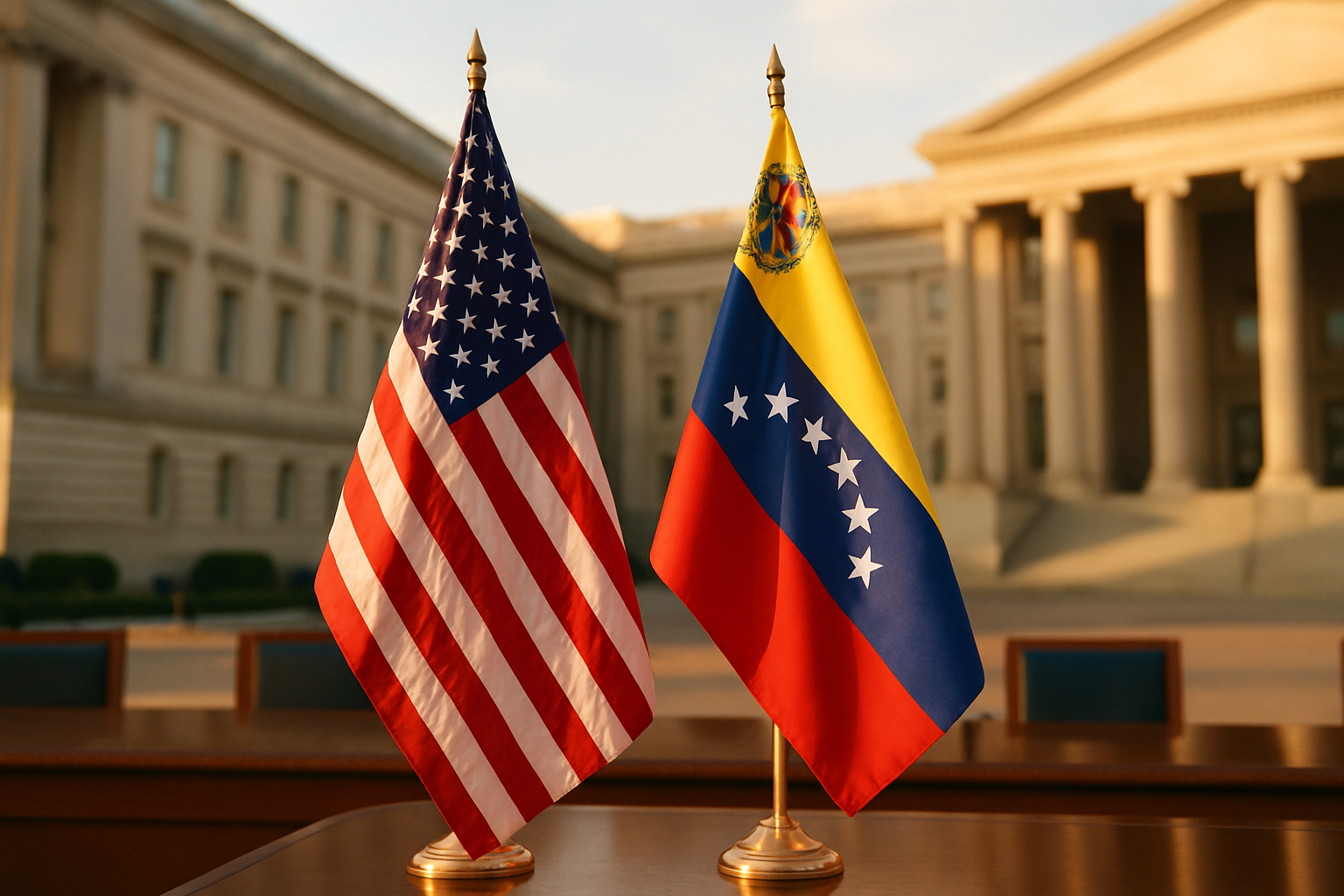
The United States and Venezuela formally restored diplomatic relations Thursday, marking a historic breakthrough after years of diplomatic isolation and the January 2026 ouster of Nicolás Maduro's authoritarian regime.
Acting President Delcy Rodríguez announced that Venezuela was committed to a "new stage" in relations with the United States based on "mutual respect" and "constructive dialogue grounded in sovereign equality and cooperation between the two nations."
The diplomatic breakthrough follows months of unprecedented engagement between Caracas and Washington, initiated after U.S. military forces captured former president Nicolás Maduro in January 2026, ending nearly three decades of authoritarian rule under the Chávez-Maduro regime.
Diplomatic Reset After Seven-Year Break
The restoration comes after diplomatic ties were severed in January 2019, when President Maduro announced the break following Washington's recognition of opposition leader Juan Guaidó as interim president. The new agreement represents the most significant diplomatic realignment in Latin America in decades.
Portuguese and Italian sources confirmed the decision was made through sustained diplomatic dialogue between Venezuelan and U.S. authorities. The announcement follows a high-profile visit to Caracas by U.S. Interior Secretary Doug Burgum, demonstrating the Trump administration's commitment to the democratic transition.
"Venezuela is ready to pursue constructive dialogue grounded in sovereign equality and cooperation," Rodriguez's government stated in an official communique. The German press reported that this represents "a turning point in relations between the two countries" after the capture of the "authoritarian ruler."
Economic Transformation and Energy Cooperation
The diplomatic restoration has already yielded dramatic economic results. Venezuelan oil exports have surged 60% from 498,000 to 800,000 barrels daily since January, with the United States displacing China as Venezuela's top oil customer. Energy Secretary Chris Wright's February visit to Caracas resulted in comprehensive cooperation agreements, effectively ending Trump's 2019 oil embargo.
American Airlines has announced plans to restart direct flights between the United States and Venezuela for the first time since 2019, symbolizing the broader normalization of relations. The aviation restart represents not just economic cooperation but the restoration of people-to-people connections severed during the diplomatic crisis.
Major oil companies including Chevron, BP, Shell, Eni, and Repsol have been authorized to expand operations in Venezuela, marking a complete reversal of the "maximum pressure" campaign that characterized previous U.S.-Venezuela relations.
Political Reconciliation Progress
The diplomatic breakthrough has been accompanied by significant progress in Venezuela's internal reconciliation. Over 750 political prisoners have been released since January 2026 under Acting President Rodriguez's comprehensive amnesty program, covering political offenses from 1999-2026.
"This is a historic moment for democracy in Venezuela and throughout the hemisphere."
— Former Spanish PM José Luis Rodríguez Zapatero, International Mediator
The amnesty law, passed unanimously by Venezuela's National Assembly, represents the most comprehensive political reconciliation effort in recent Latin American history. However, human rights organizations report that over 600 political prisoners remain detained, with some releases subject to restrictive conditions including house arrest and electronic monitoring.
The release program has freed prominent opposition figures, journalists, and activists who were detained on terrorism and treason charges during the Maduro era. However, implementation challenges persist, with civil society groups demanding "inclusive rather than selective" coverage for all political detainees.
Regional and International Implications
The diplomatic restoration has prompted varied regional responses. The Dominican Republic has reopened commercial relations with Venezuela, while Brazil and the European Union maintain cautious support for the democratic transition. Caribbean nations are watching closely as the changes could reshape regional power dynamics.
Secretary of State Marco Rubio has outlined a three-phase reconstruction plan for Venezuela: stabilization (achieved through Maduro's removal and initial prisoner releases), economic recovery (through sanctions relief and investment), and democratic transition (toward free and fair elections).
China faces diminished influence as Venezuela reorients toward U.S. markets and partnerships. The shift represents a template for what the Trump administration calls "bilateral energy diplomacy" - using economic incentives to counter Chinese influence throughout Latin America.
Challenges and Ongoing Concerns
Despite the diplomatic progress, significant challenges remain. Venezuela's oil production capacity stands at only 700,000 barrels daily compared to its historical peak of 3 million barrels. The country continues to face hyperinflation, infrastructure decay, power outages, and fuel shortages that will require sustained international investment and technical assistance.
The sustainability of democratic reforms remains a key concern for international observers. Some released political prisoners, including Juan Pablo Guanipa, a close ally of Nobel Peace Prize laureate María Corina Machado, have been placed under house arrest with electronic monitoring, raising questions about the depth of political changes.
Congressional Democrats in the United States have introduced legislation demanding transparency on Venezuelan oil sales, expressing concerns about the rapid reversal of sanctions without guarantees of sustained democratic progress.
Looking Forward
President Trump has announced his intention to visit Venezuela, which would make him the first U.S. president to visit the country since 1997. Such a visit would cap what represents the most dramatic foreign policy transformation in recent history - from maximum pressure to strategic partnership.
The success of U.S.-Venezuela diplomatic restoration could provide a template for resolving other international crises through combined military pressure, economic incentives, and selective engagement. However, its sustainability will depend on Venezuela's continued progress toward genuine democratic governance and respect for human rights.
As both nations work to rebuild trust and cooperation, the restoration of diplomatic relations marks not just an end to years of confrontation, but the beginning of what could become a new model for hemispheric cooperation in the 21st century. The coming months will be crucial in determining whether this diplomatic breakthrough translates into lasting democratic transformation and regional stability.