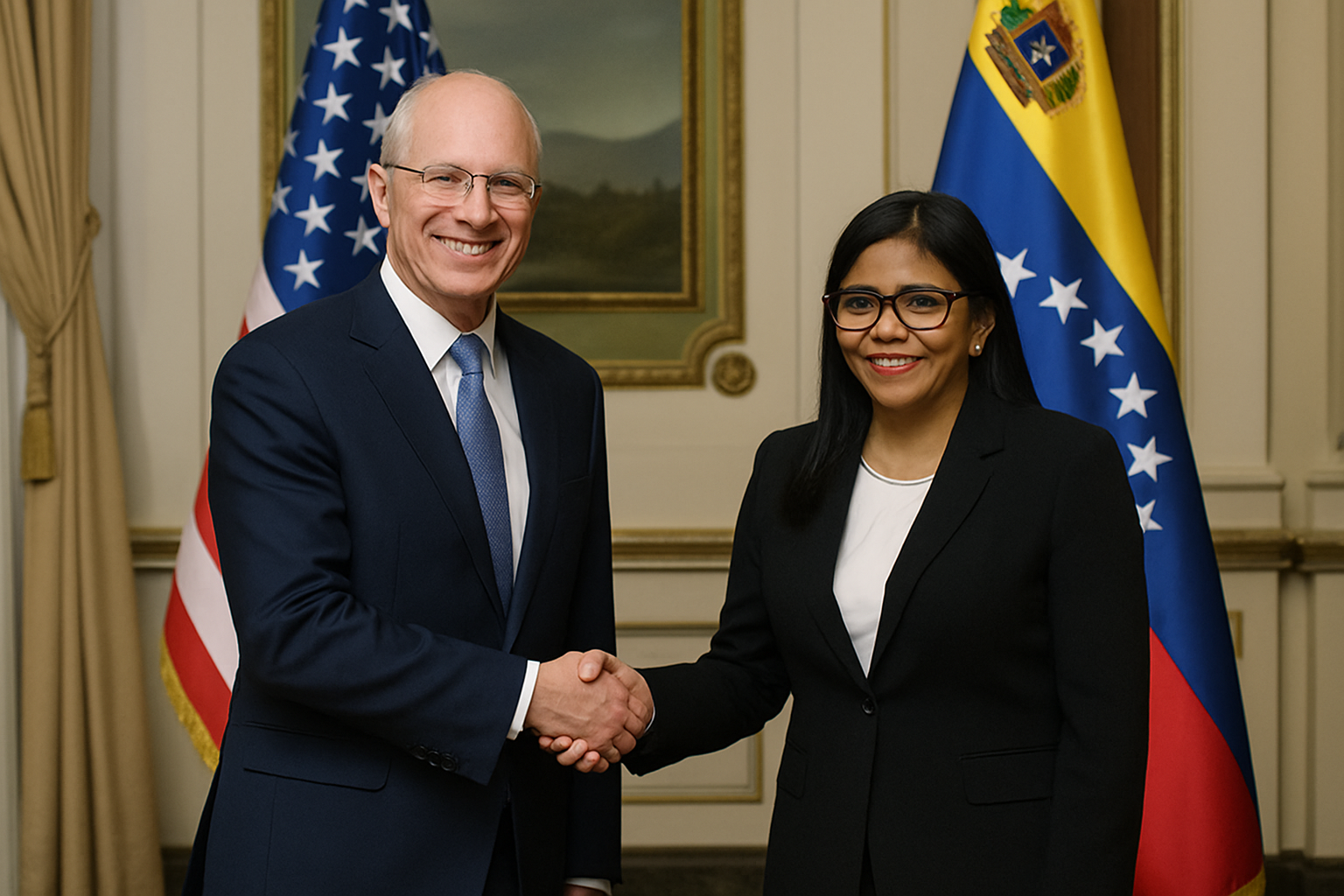
The United States and Venezuela have signed a historic energy cooperation agreement that formally ends the Trump-era oil embargo and opens a new chapter in bilateral relations, Energy Secretary Chris Wright announced following high-level talks in Caracas.
In what Bulgarian media characterized as a "povratna tochka" (turning point), Wright met with Acting President Delcy Rodríguez at the Miraflores Presidential Palace on February 12, 2026, becoming the highest-ranking US official to visit Venezuela since Nicolás Maduro's removal in January 2026.
The agreement represents the culmination of weeks of intensive diplomatic engagement between the two nations following Venezuela's political transition. Wright declared that Trump's 2019 oil embargo on Venezuela has "essentially ended" and predicted an "absolutely spectacular change" in Venezuela's trajectory.
Energy Cooperation Framework
The partnership agreement establishes a comprehensive framework for bilateral energy cooperation encompassing oil, natural gas, and electricity production. Wright announced the potential for "tremendous increases" in Venezuelan energy output through US technical assistance and investment.
Venezuelan oil exports have already surged 60% from 498,000 to 800,000 barrels daily since January 2026, with the United States displacing China as Venezuela's top oil customer. Chevron has more than doubled its Venezuelan shipments, while the US released 40 million barrels from strategic reserves to support the transition.
"This opens a new cycle of cooperation with Washington, with the energy sector and economy at the center."
— US Energy Secretary Chris Wright
The agreement promises to "liberate the Venezuelan people and the economy" through increased employment opportunities, higher wages, and improved quality of life. Wright emphasized that the partnership would create a "dramatic increase" in Venezuelan oil production capacity.
Political Context and Diplomatic Breakthrough
The energy deal builds on unprecedented diplomatic engagement initiated following Venezuela's political transformation in January 2026. Acting President Delcy Rodríguez has conducted multiple high-level meetings with US Chargé d'Affaires Laura Dogu at Miraflores Palace, representing the highest US-Venezuelan diplomatic contact since relations were severed in 2019.
The agreement aligns with Secretary of State Marco Rubio's three-phase reconstruction plan for Venezuela: stabilization, economic recovery through sanctions relief, and democratic transition. The energy partnership represents a cornerstone of the second phase, providing economic incentives for continued democratic reforms.
Venezuela's interim government has already demonstrated its commitment to democratic principles through a comprehensive political prisoner amnesty program that has freed over 400 opposition figures, journalists, and activists since January 2026. The National Assembly unanimously approved amnesty legislation covering political offenses from 1999-2026.
Strategic Implications for Regional Dynamics
The US-Venezuela energy partnership represents a fundamental shift in Trump administration strategy for the Caribbean region. The agreement serves as a template for "bilateral energy diplomacy" that combines economic incentives with strategic engagement to counter Chinese influence in Latin America.
Dominican Republic has reopened commercial relations and diplomatic ties with Venezuela, while Brazil and the European Union have expressed cautious support for the democratic transition. The partnership creates a model for regional energy cooperation that prioritizes Western hemispheric integration over extra-regional dependency.
French media characterized Wright as pledging to "make Americas great again," while Italian outlets called the visit a "historic turning point in Washington relations." The agreement demonstrates how rapidly geopolitical alignments can shift through sustained diplomatic engagement backed by economic incentives.
Economic Transformation and Challenges
Despite the optimistic outlook, significant challenges remain in Venezuela's energy sector recovery. Oil production stands at only 700,000 barrels daily compared to the historical peak of 3 million barrels. The nation continues to face infrastructure decay, hyperinflation, power outages, and fuel shortages that require sustained international investment.
The partnership agreement includes provisions for technical assistance to modernize Venezuela's aging oil infrastructure and restore production capacity. Success will depend on sustained political will, continued security cooperation, and Venezuela's ability to maintain democratic reforms while rebuilding its economy.
Congressional Democrats have introduced legislation demanding transparency on Venezuelan oil sales, reflecting domestic political concerns about the rapid reversal of the maximum pressure campaign. Republicans generally support the reset as a strategic victory against Chinese influence in the Western Hemisphere.
International Reactions and Future Prospects
Russia has noted the potential for diplomatic resolution, while China faces the prospect of reduced influence as Venezuela reorients toward US markets. The agreement creates pressure on other regional powers to adapt their relationships with Venezuela's new government.
The partnership extends beyond simple commodity exchange to encompass technology transfer, institutional capacity building, and security cooperation. The agreement includes provisions for ongoing consultation mechanisms, technical working groups, and progress monitoring to ensure sustainable implementation.
Acting President Rodríguez expressed conviction that US-Venezuela issues can be resolved diplomatically, representing a dramatic shift from the hostile rhetoric of the Maduro era. The partnership demonstrates how economic cooperation can serve as a foundation for broader political reconciliation.
Looking Ahead
The US-Venezuela energy partnership represents the most significant test of the Trump administration's bilateral energy diplomacy approach. Success could provide a model for similar strategies to counter Chinese influence globally, while failure might undermine the credibility of economic coercion as a diplomatic tool.
The agreement's sustainability will depend on Venezuela's continued democratic progress, successful economic reconstruction, and the ability of both nations to manage domestic political pressures. International observers will monitor the partnership as a potential template for 21st-century conflict resolution and economic integration.
As Venezuela embarks on its democratic transition, the energy partnership with the United States provides both economic opportunity and political validation for the interim government's reform agenda. The success of this cooperation will influence not only bilateral relations but also broader patterns of hemispheric integration and global energy security.