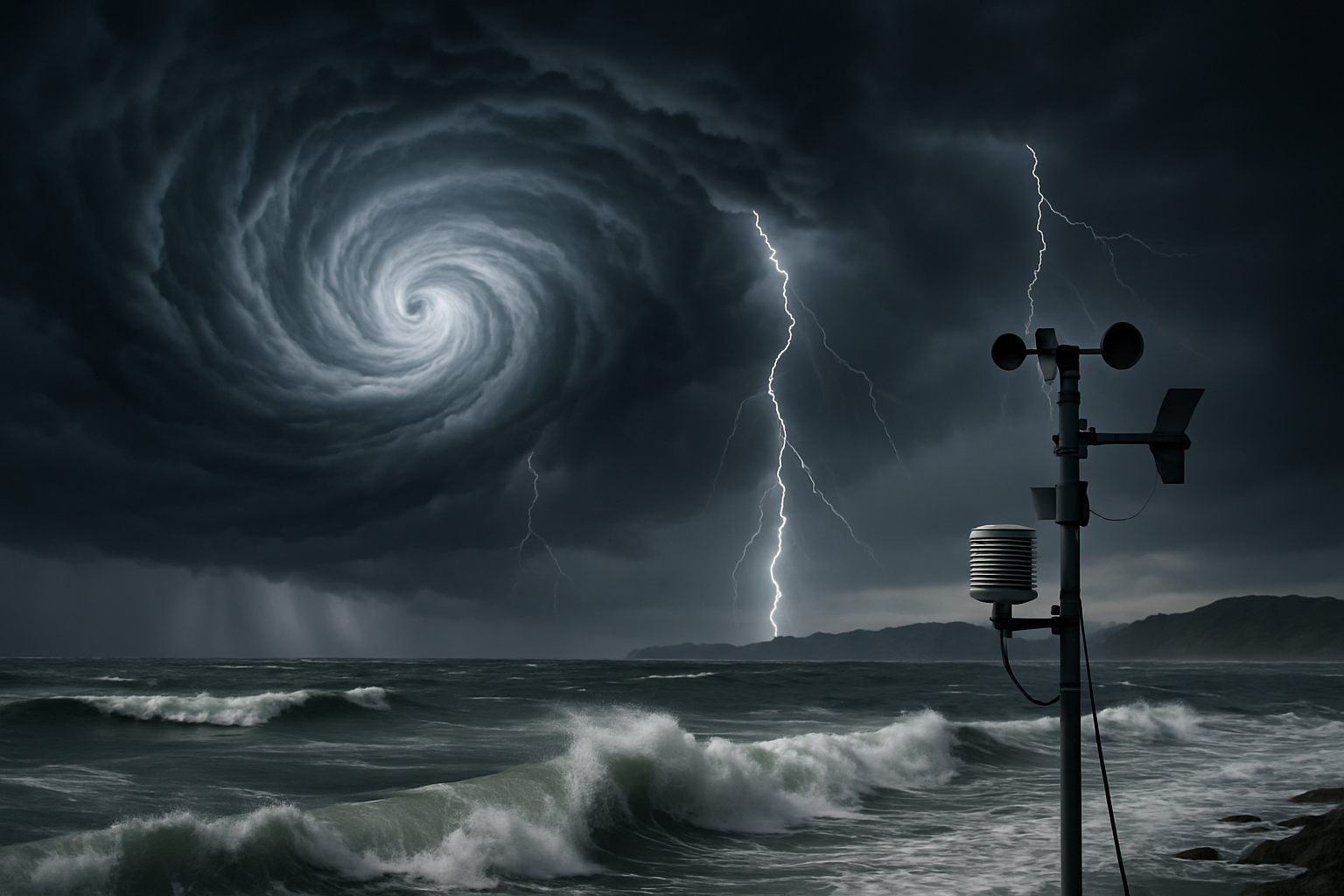
Thousands of New Zealanders are preparing to evacuate their homes as Cyclone Vaianu, a powerful Category 2 system, churns toward the North Island with dangerous winds up to 130 kilometers per hour and the potential for life-threatening coastal flooding.
The tropical cyclone, currently positioned east of Vanuatu and gaining strength as it tracks toward New Zealand waters, is expected to make landfall Saturday night, bringing what meteorologists are calling a "major wind event" to the nation's most populated regions.
States of Emergency Declared
Local authorities have declared states of emergency for Northland, Whakatāne, and Hawke's Bay as communities brace for the storm's arrival. The timing could not be worse for the flood-saturated Northland region, which is still recovering from severe weather events that have battered the area repeatedly throughout 2026.
Multiple emergency alerts have been issued across New Zealand today, including in Auckland, urging residents to "prepare now" and have plans ready to shelter at home, deal with potential power outages, or evacuate if necessary.
"The system is set to reach New Zealand by Saturday night. Prepare now. Have a plan to shelter at home, deal with potential power outages, or evacuate if necessary."
— Emergency Services Alert
MetService has upgraded weather warnings and issued live updates as the cyclone approaches, with brown swells and whitecaps already rolling along the Coromandel Coast as an ominous preview of what's to come.
Transportation Networks Bracing for Impact
The approaching storm is already causing major disruptions to New Zealand's transportation infrastructure. The Auckland Harbour Bridge is expected to close on Sunday, while ferry services have been cancelled as a precautionary measure.
Aucklanders have been advised to delay all non-essential travel on Sunday, with authorities warning that the storm's impact could extend well beyond the weekend as cleanup and recovery operations begin.
Global Climate Crisis Context
Cyclone Vaianu's approach comes during what scientists are describing as an unprecedented period of global climate instability. This marks the 23rd consecutive month that global temperatures have exceeded 1.5°C above pre-industrial levels—the longest sustained extreme warming period in recorded human history.
The cyclone is part of a broader pattern of extreme weather events affecting multiple continents simultaneously, putting enormous strain on emergency response systems worldwide. Traditional mutual aid mechanisms, designed for sequential rather than concurrent disasters, are proving inadequate as countries face overlapping climate emergencies.
Enhanced Preparedness Efforts
Despite the severity of the approaching storm, New Zealand communities are better equipped than in previous years thanks to lessons learned from recent extreme weather events. Many households now have Starlink satellite internet connections, backup generators, and strengthened community networks that have been developed through successive weather emergencies.
The National Emergency Management Agency (NEMA) has been issuing urgent warnings, emphasizing that "later on is too late" as the storm continues to gain speed and power while approaching New Zealand waters.
Infrastructure Under Pressure
The cyclone threatens infrastructure systems that are already operating beyond their historical design parameters due to the unprecedented frequency and intensity of extreme weather events throughout 2026. Emergency management experts have identified a paradigm shift toward what they call "compound disasters"—multiple emergency types occurring concurrently across vast geographic areas.
This challenges traditional resource allocation and mutual aid mechanisms that were designed for isolated, regional emergencies rather than the simultaneous, multi-continental disasters that are becoming increasingly common.
Economic and Social Impact
The approaching cyclone represents another significant blow to sectors still recovering from previous weather disasters. Agricultural communities face potential crop and livestock losses during critical growing seasons, while the tourism industry braces for cancellations and infrastructure damage.
Mental health services have reported increased demand for support related to climate anxiety and repeated trauma, as families face the prospect of potentially losing their homes multiple times within a single decade.
Looking Ahead
As Cyclone Vaianu approaches, meteorologists are tracking its progress with the most advanced forecasting technology available, combined with traditional knowledge systems that have helped New Zealand communities prepare for storms for generations.
The World Meteorological Organization reports a 50-60% probability of El Niño conditions developing between July and September 2026, which could potentially drive unprecedented temperatures through a combination of baseline warming and natural climate cycle amplification.
Recovery timelines from such extreme weather events have fundamentally shifted from weeks to months or even years, representing a permanent change in how communities must approach disaster response and climate adaptation.
As New Zealand braces for Cyclone Vaianu's arrival, the nation faces yet another test of its emergency preparedness and community resilience during what experts describe as the most environmentally challenging period in recorded human history.