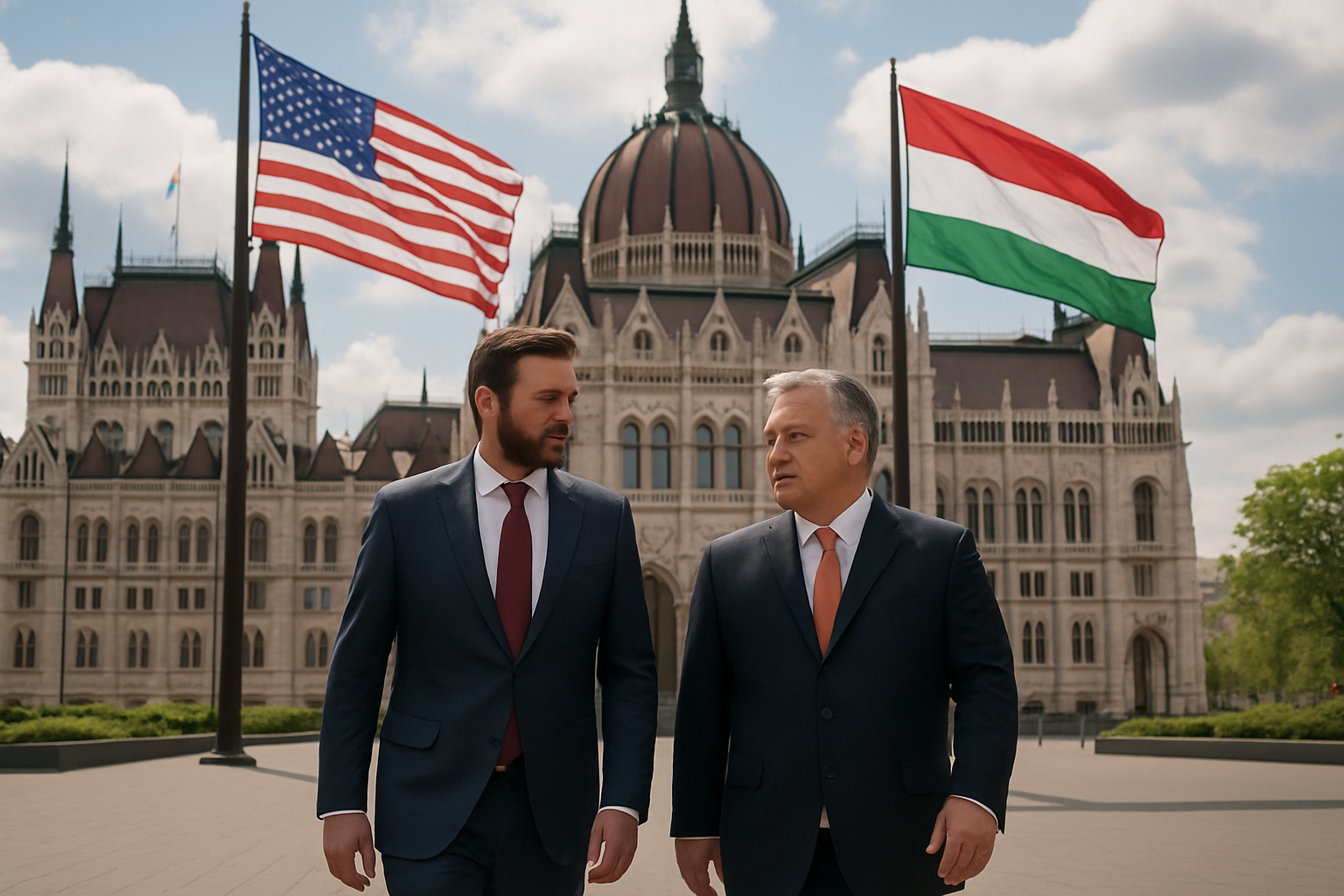
US Vice President JD Vance has arrived in Hungary for a two-day visit to support Prime Minister Viktor Orbán ahead of the April 12 parliamentary elections, marking the most direct American intervention in European Union electoral politics in modern history.
The visit comes just five days before what observers are calling the most contested Hungarian elections since 2010, with Orbán's Fidesz party trailing opposition coalitions in polls for the first time in over a decade. Vance is scheduled to meet with Orbán and deliver a speech at a campaign event, representing an unprecedented departure from traditional American diplomatic neutrality in EU member state elections.
Historic Electoral Challenge for Orbán
Viktor Orbán faces his most serious political challenge in 16 years of dominance, with opposition leader Péter Magyar's Tisza Party gaining significant momentum through a pro-European platform. Recent polling data shows Magyar leading the race, creating genuine electoral uncertainty that has shaken Hungary's political establishment.
"I look forward to seeing my good friend Viktor and discussing various topics related to our bilateral relations, Europe, and Ukraine,"
— JD Vance, US Vice President
The opposition has organized massive demonstrations, including the "Greatest National March" that drew an estimated 500,000 participants to Budapest – the largest opposition gathering since 2010. Magyar's campaign centers on corruption allegations, economic stagnation concerns, and promises of stronger EU integration, including euro adoption and wealth taxation.
International Political Dynamics
Vance's visit represents the culmination of sustained Trump administration support for Orbán, following earlier endorsements and Secretary of State Marco Rubio's February diplomatic mission to Budapest. The American backing comes at a critical moment when Hungary has been increasingly isolated within EU institutions over rule of law concerns and its blocking of aid packages to Ukraine.
The timing is particularly significant given Hungary's ongoing disputes with the European Union. Orbán has consistently blocked the historic €90 billion EU loan package to Ukraine over energy pipeline disputes, leading Lithuanian Foreign Minister Kestutis Budrys to warn that "the EU cannot become Budapest's hostage."
European Unity Under Strain
Hungary's relationship with Brussels has reached new lows, with the European Commission freezing approximately €19 billion in funding over rule of law concerns – one of the largest financial penalties ever imposed on an EU member state. The crisis has accelerated discussions about enhanced cooperation mechanisms that would allow willing member states to proceed without Hungarian participation.
Intelligence restrictions have also been imposed on Hungary following allegations that Foreign Minister Péter Szijjártó systematically leaked EU Council details to Russian Foreign Minister Sergei Lavrov during official meetings. The breach represents one of the most severe EU-member state intelligence crises in modern history.
Foreign Interference Concerns
The American political support for Orbán has been complemented by documented Russian interference operations. Investigative journalist Szabolcs Panyi revealed through VSquare reporting that Russian teams are actively operating in Budapest to support Fidesz, marking the first concrete evidence of Kremlin operatives participating in European electoral campaigns.
This dual foreign intervention – Russian operational and American political – creates an unprecedented international dimension to Hungary's domestic election. Ukrainian Foreign Ministry spokesperson Heorhii Tykhyi characterized recent pipeline sabotage allegations as "most likely Russian operation under false flag as part of Moscow's large-scale interference in Hungary's elections."
Economic and Energy Policy Stakes
The election outcome will significantly impact European energy security and economic policy. Hungary and Slovakia remain the only EU countries dependent on Russian oil under special sanctions exemptions, creating ongoing vulnerabilities in European unity. The opposition has proposed fundamental policy shifts, including accelerated EU integration and adoption of the euro, contrasting sharply with Orbán's nationalist economic approach.
Energy disputes have reached crisis levels, with Hungary threatening to halt gas deliveries to Ukraine until the Druzhba oil pipeline resumes operations. The standoff has created humanitarian concerns as winter conditions affect millions of Ukrainians dependent on energy supplies.
Democratic Governance at Stake
The April 12 elections represent more than a routine political contest – they constitute a fundamental test of democratic resilience within the European Union. Opposition victory would remove Brussels' most persistent internal critic and restore Hungary to mainstream EU alignment on foreign policy and rule of law issues.
Conversely, Orbán's survival despite unprecedented pressures would demonstrate the resilience of his political system and potentially embolden similar approaches across Central and Eastern Europe. The election has become a template-setting moment for democratic governance in the 21st century.
International Implications
The outcome will influence EU decision-making capacity, NATO cohesion, and broader transatlantic relationships. Success for the opposition could facilitate resolution of ongoing crises, including the Ukraine aid package and sanctions policies toward Russia. An Orbán victory would likely entrench existing divisions and force fundamental alterations to European decision-making structures.
Regional powers are closely monitoring developments, with the election potentially affecting Central Eastern European political patterns, EU institutional mechanisms, and democratic governance precedents for managing foreign interference and institutional pressure.
The stakes extend beyond Hungarian borders to encompass European security architecture, international law enforcement credibility, and the effectiveness of democratic institutions under authoritarian pressure. As Europe faces its most challenging period since World War II, the April 12 elections in Hungary have become a crucial test case for continental democracy and institutional resilience.