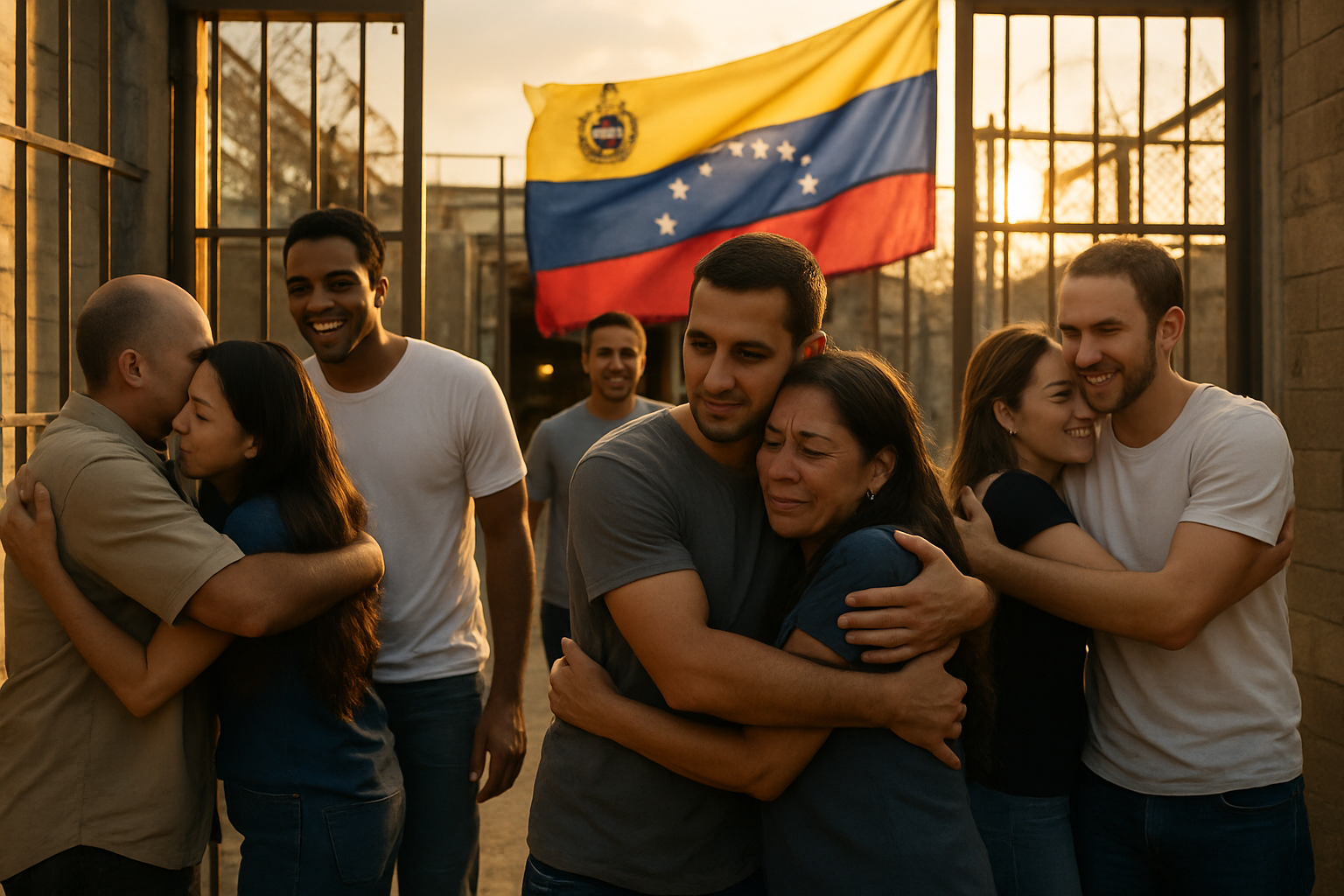
Venezuela's interim government has signed into law a comprehensive amnesty covering political offenses from 1999-2026, with Venezuelan courts immediately ordering the release of 379 political prisoners in what represents the most ambitious political reconciliation effort in recent Latin American history.
Acting President Delcy Rodríguez signed the historic amnesty legislation on Thursday, February 20, 2026, calling for "maximum speed" implementation while acknowledging the national healing process ahead. The law, which received unanimous approval from Venezuela's National Assembly without a single dissenting vote, covers a 27-year period spanning the entire Chávez-Maduro era.
"One must know how to ask for forgiveness and one must also know how to receive forgiveness, and this is the process that opens with this amnesty," Rodríguez stated during the signing ceremony, striking a notably conciliatory tone that marks a dramatic departure from the confrontational rhetoric of the previous regime.
Immediate Implementation Yields Rapid Results
Venezuelan courts wasted no time in implementing the new legislation, with judicial authorities announcing the liberation of 379 political prisoners within hours of the law taking effect. The releases are expected to continue throughout the weekend as courts process additional cases covered under the amnesty's broad scope.
The 13-article legislation represents the culmination of weeks of intense parliamentary debate and civil society advocacy. Portuguese news sources report that the law establishes amnesty for all political detentions since 1999, covering opposition figures, journalists, and activists who were imprisoned on what human rights groups have long characterized as politically motivated charges including terrorism and treason.
This latest wave of releases brings the total number of political prisoners freed under the Rodríguez administration to over 750 since January 2026, when Venezuela began its democratic transition following the removal of former President Nicolás Maduro by U.S. forces.
International Mediation and Religious Support
The amnesty process has received significant international backing, with former Spanish Prime Minister José Luis Rodríguez Zapatero serving as a key mediator in Caracas since early February. Cardinal Baltazar Porras has organized nationwide prayer vigils supporting the reconciliation effort, adding moral authority to the process.
The Catholic Church's involvement has proven particularly significant, with "Saturday of prayers" events held outside detention centers across the country, creating a spiritual dimension to what Venezuelan officials describe as a national healing process.
International observers view the unanimous parliamentary approval as remarkable given Venezuela's historically polarized political landscape. The broad consensus reflects a genuine desire for reconciliation that transcends traditional party lines, suggesting the democratic transition has created space for previously impossible political cooperation.
Scope and Limitations of the Amnesty
While comprehensive in its temporal coverage, the amnesty law includes several important exclusions that have drawn criticism from some human rights organizations. Article 9 specifically excludes individuals who "promoted attacks on national territory by foreign states or corporations," language that could potentially affect some prominent opposition figures.
The legislation covers peaceful political activities and those detained on terrorism or treason charges under the previous regime, but excludes constitutionally forbidden crimes including hate crimes, though the scope of this exclusion remains undefined and has raised concerns among advocacy groups.
Civil society reactions have been mixed, with Cofavic, a leading human rights organization, emphasizing that the releases represent "restitution of rights, not State favor." Opposition leader Andrés Velásquez questioned the necessity of amnesty legislation entirely, arguing that political prisoners "are innocent" and should never have been detained in the first place.
Families' Long Vigil Nears End
The amnesty's implementation brings hope to families who have maintained vigils outside detention centers for weeks, some staging hunger strikes to pressure authorities for complete prisoner releases. At facilities like Zona 7 detention center and El Helicoide prison, relatives have maintained around-the-clock protests demanding the freedom of their loved ones.
Sandra Rosales, wife of detained police officer Dionnys Quintero, represents countless family members who have endured psychological and physical exhaustion during their prolonged campaign. The Committee for Liberation of Political Prisoners (CLIPP) had warned that government indifference was putting protesters' lives at "grave risk" as hunger strikes extended beyond 72 hours.
Recent health assessments by Laboratorio de Paz documented severe conditions among some detainees, with 32 "Operation Gedeón" prisoners showing "severe malnutrition, physical weakening, cognitive disorientation, and psychological trauma" from inadequate detention conditions.
Economic and Diplomatic Context
The amnesty law's passage occurs amid Venezuela's broader democratic and economic transformation under Acting President Rodríguez. The country has experienced a dramatic shift in international relations, with oil exports surging 60% to 800,000 barrels daily as the United States displaced China as Venezuela's top customer.
Energy Secretary Chris Wright's historic February 12-13 visit to Caracas resulted in comprehensive U.S.-Venezuela energy cooperation agreements, effectively ending the Trump administration's 2019 oil embargo. Major international oil companies including Chevron, BP, Shell, Eni, and Repsol have received Treasury Department authorization for expanded operations.
This economic opening has been carefully coordinated with political reforms, including the amnesty process, as part of Secretary of State Marco Rubio's three-phase reconstruction plan encompassing stabilization, economic recovery, and democratic transition.
Implementation Challenges Ahead
Despite the unanimous legislative approval and immediate court orders, significant implementation challenges remain. Previous delays centered on Article 7, which initially required prisoners to "present themselves to justice" – language that Chavista party members interpreted as requiring acknowledgment of alleged crimes, while opposition groups rejected this as further criminalization of persecution victims.
The case of Juan Pablo Guanipa, a close ally of Nobel Peace Prize laureate María Corina Machado, illustrates these complexities. Initially released in February, Guanipa was re-arrested within hours and placed under house arrest with electronic monitoring, raising questions about the durability of the reconciliation process.
Human rights advocates emphasize the need for comprehensive reintegration guarantees, monitoring mechanisms to prevent future persecution, and safe return provisions for political exiles. The success of the amnesty will ultimately be measured not just by prisoner releases, but by the establishment of democratic institutions that prevent future cycles of political persecution.
Regional and Historical Significance
The Venezuelan amnesty law represents the most comprehensive political prisoner release in recent Latin American history, covering a 27-year period that encompasses nearly three decades of political conflict. International observers are closely monitoring the implementation as a potential template for other post-authoritarian transitions throughout the region.
The Dominican Republic has already reopened diplomatic and commercial relations with Venezuela, while Brazil and the European Union have expressed cautious support for the democratic transition. The success or failure of Venezuela's reconciliation process could influence similar efforts across Latin America, where several countries continue to grapple with the legacy of authoritarian governance and political persecution.
Looking Forward
As Venezuelan courts continue processing cases under the new amnesty law, attention now turns to the broader challenges of democratic consolidation. The release of 379 political prisoners marks a significant milestone, but observers emphasize that genuine reconciliation requires fundamental institutional reforms beyond prisoner releases.
These reforms must address justice system restructuring, press freedom guarantees, and opposition rights protection to ensure the democratic gains are sustainable. The international community, having invested significant diplomatic capital in Venezuela's transition, will be closely monitoring whether the amnesty represents genuine democratic reform or merely cosmetic changes.
With over 600 political prisoners still detained according to human rights organization Foro Penal, the coming days and weeks will be crucial in determining whether Venezuela can break decades of political polarization and establish lasting foundations for democratic governance. The unanimous passage of the amnesty law offers hope that such transformation is possible, but implementation will ultimately determine its historical significance.